
Senate passes labor-law change to clarify recovered-wage remedies in class actions
Get AI-powered insights, summaries, and transcripts
Subscribe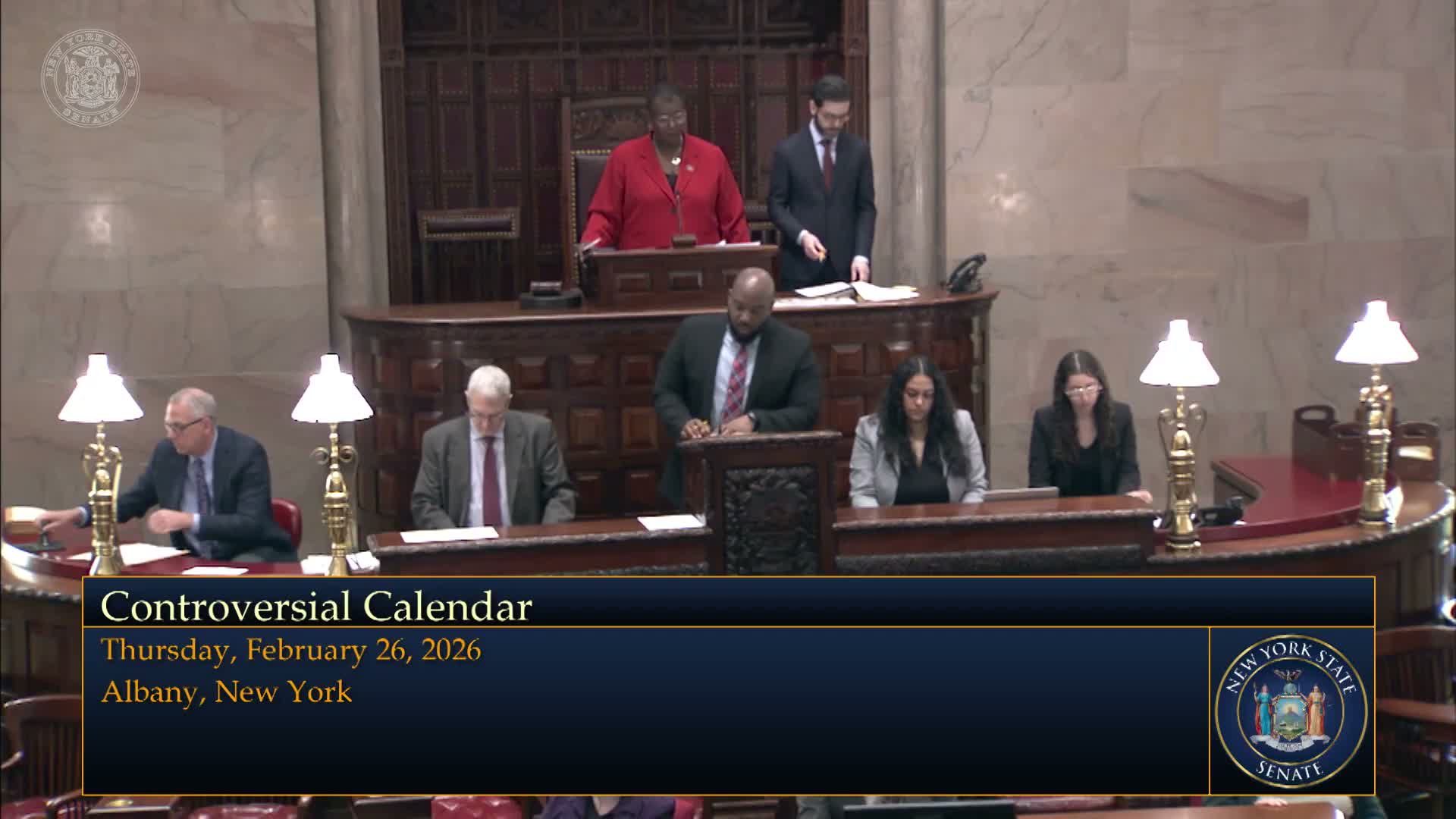
Summary
After floor questioning about impacts on small businesses and statutory damages, the Senate approved Senator Ramos’s amendment to state labor law to align wage-recovery remedies in class actions with federal standards; roll-call announced Ayes 47, Nays 8.
The State Senate on Feb. 25 passed a labor-law amendment (Calendar 353, senate print 4473) sponsored by Senator Ramos intended to clarify the remedies for recovered wages in class-action litigation.
Senator Walzick asked the sponsor to explain a new reference to "statutory damages" inserted in the bill. Senator Ramos responded that the term was intended to mean "100% of the liquidated damages" in the context of the bill and that the measure’s purpose is to harmonize state law with federal standards so that workers can recover the same remedies in class actions they could obtain individually. "The intent of this bill overall is to provide clarification over language that has been misconstrued in the way different state courts have applied the law," Ramos said.
Questioners raised concerns that allowing class actions for statutory penalties — such as existing $5,000 maximum statutory penalties tied to wage-notice or pay-stub violations — could expose small businesses to disproportionate damages for technical recordkeeping errors. Senator Walzick asked whether the bill would permit class actions against small employers for administrative mistakes; Ramos replied the bill does not create new causes of action but clarifies how recovered wages are to be obtained in class proceedings.
Senator Ramos emphasized the bill aims to make state law consistent with federal rules so that groups of workers have the same recovery options as individuals. Supporters said the measure will enable workers to recover full wages when warranted; opponents said the change risks incentivizing opportunistic litigation against small employers.
The clerk announced the roll-call as Ayes 47, Nays 8, and the presiding officer declared the bill passed.