
OGS seeks procurement overhaul and capital funding for Empire State Plaza repairs
Get AI-powered insights, summaries, and transcripts
Subscribe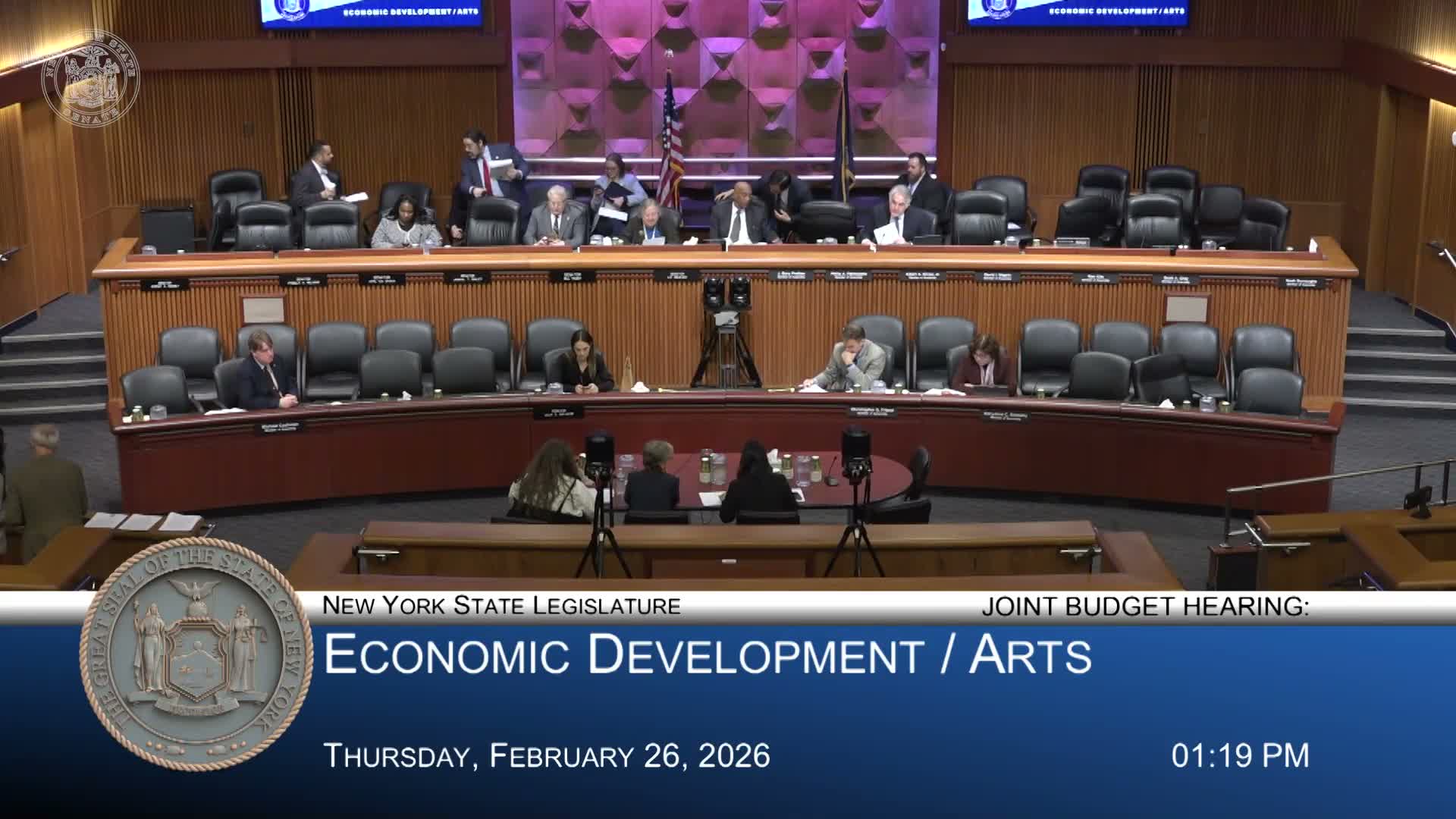
Summary
OGS Commissioner Jeanette Moy asked lawmakers to fund deferred maintenance at Empire State Plaza, streetscape and infiltration repairs, and to approve procurement changes (raising discretionary thresholds and e‑procurement) to speed projects and reduce red tape.
OGS Commissioner Jeanette Moy told joint committees that Governor Hochul’s executive budget includes funding for decades of deferred maintenance at the Empire State Plaza and other state assets and proposed procurement reforms to speed delivery.
Moy highlighted $175,000,000 already provided for Plaza deferred maintenance and new line items in the executive budget for the Swan Street rebuild and Madison Avenue repairs. She described a four‑phase plaza energy master plan in partnership with NYPA to reduce natural gas consumption and greenhouse gas emissions, and said OGS will launch a capital projects dashboard and an Office of Performance Management and Innovation to track permitting timelines and delivery.
On procurement, Moy defended raising the discretionary purchase threshold to $300,000, saying the change would reduce months‑long procurement timelines for low‑risk, high‑volume purchases such as groundskeeping and window washing. She also said OGS will pilot AI‑enhanced search tools for centralized contracts and roll out e‑signature and e‑procurement systems to accelerate state buying.
Lawmakers asked for more data on MWBE participation by district, timelines for charging‑station rollouts and geothermal pilots at the plaza; Moy committed to follow‑up information and to working with legislators on district‑level questions.
If enacted, the procurement changes would shift some approvals and are intended to shorten multi‑month procurement cycles for routine purchases; lawmakers signaled interest in preserving oversight while reducing administrative delays.