Get Full Government Meeting Transcripts, Videos, & Alerts Forever!
Get email alerts on the International Finance topic
No spam. Unsubscribe anytime.
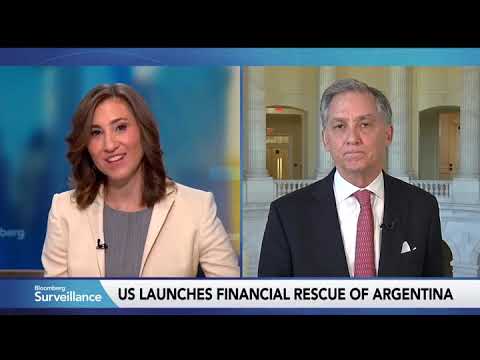
French Hill defends limited U.S. use of Exchange Stabilization Fund for Argentina
Summary
Asked whether a reported $20 billion swap line to Argentina uses taxpayer dollars, Rep. French Hill said the Treasury has historically used the Exchange Stabilization Fund for geopolitical and financial-stability reasons and defended encouraging Argentina’s economic reforms.
An interviewer asked Rep. French Hill whether a reported $20 billion swap line to Argentina — reportedly structured through the U.S. Treasury’s Exchange Stabilization Fund (ESF) — amounted to taxpayer dollars going to Buenos Aires.
French Hill responded that since the 1930s, the U.S. Treasury has used the ESF in circumstances it judges to be in the American interest for geopolitical or international financial-stability reasons, across administrations of both parties. "Treasury has used the Exchange Stabilization Fund when they think it's in American interest for geopolitical reasons, for global international finance stability reasons," he said.
He defended recent Treasury engagement with Argentina as intended to encourage reforms that could reduce inflation and foster private-sector-led growth. French Hill said he visited Argentina in August to assess an International Monetary Fund program and called the country’s initial reforms "substantial macroeconomic reforms" that have improved outcomes for citizens.
The interviewer suggested the Treasury secretary’s visit and U.S. actions might be politically timed for elections in Argentina; French Hill disputed that characterization and described Argentina as a strategic partner in the Southern Hemisphere with broader national-security and commercial interests.
Why it matters: ESF operations and large swap lines can be politically controversial because they involve U.S. financial support to other countries; congressional oversight and public explanation of objectives are typical follow-ups.
What’s next: The interview recorded French Hill’s defense but did not capture formal congressional oversight actions or votes regarding the ESF transaction.