Get Full Government Meeting Transcripts, Videos, & Alerts Forever!
Get email alerts on the Trade And Fiscal Policy topic
No spam. Unsubscribe anytime.
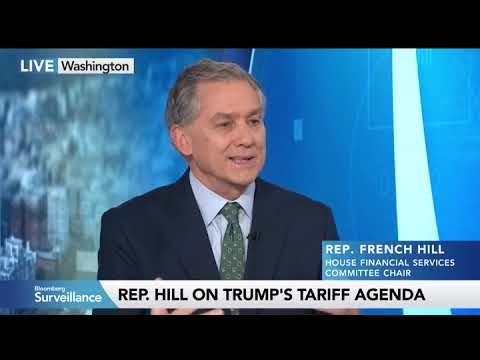
French Hill: Tariff revenue should reduce deficit, not fund one-time $2,000 checks
Summary
Rep. French Hill said Congress could consider $2,000 tariff-dividend checks but argued sustainable tariff revenue should go to deficit reduction; he warned one-off payments risk worsening inflation and urged targeted tariffs for planning certainty.
Congressman French Hill, chairman of the House Committee on Financial Services, said Congress "would certainly consider" the president's idea of $2,000 tariff-dividend checks but urged using sustainable tariff revenue to reduce the federal deficit rather than paying one-time dividends. "I think the tariff revenue that's sustainable, that people believe is sustainable in the years ahead ought to be used to reduce the deficit," he said.
Hill framed his view in the context of post-pandemic inflation, saying that inflation resulted from a mix of fiscal and monetary policy choices. "The origin of this inflation... was due to fiscal mistakes by the Biden administration approving and spending another $6,000,000,000,000 in federal spending that we borrowed," he said, adding that the Federal Reserve's policy choices also contributed.
On trade policy, Hill told the interviewer that he has been reluctant to support across-the-board tariffs because many small U.S. manufacturers cannot easily shift suppliers. "Across the board tariffs... hit in the short run," he said, arguing instead for "targeting countries for bad behavior" or "target particular industries" such as steel and aluminum over a sustained period so businesses have planning certainty.
Hill said certainty around tariff policy is as important as the tariff rate itself. He recommended a deliberate, targeted approach that prioritizes long-term supply-chain adjustments rather than blanket measures that can disrupt small manufacturers.
The chairman did not announce legislation in the interview; he said Congress would consider proposals and that any significant program changes should be weighed against fiscal effects and inflationary risks. He noted that the committee would continue to hold hearings on related economic topics, including housing affordability and deposit insurance.