Lifetime Citizen Portal Access — AI Briefings, Alerts & Unlimited Follows
Congressional subcommittee hears competing views on earned wage access and whether it is credit
Loading...
Summary
A House Financial Services subcommittee heard industry witnesses defend earned wage access (EWA) as a non‑debt payroll timing tool while consumer advocates said some EWA and buy‑now‑pay‑later products function like credit and need stronger safeguards and enforcement. Lawmakers pressed on disclosures, free options and regulator capacity.
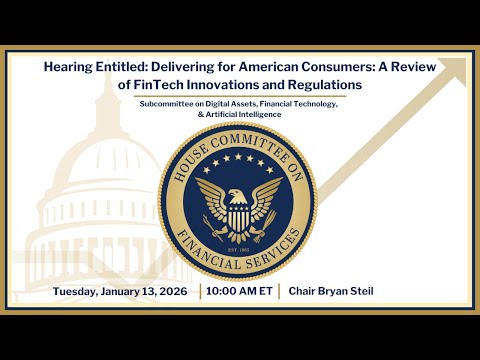
A House Financial Services subcommittee on digital assets, fintech and AI heard competing testimony about earned wage access on Feb. 27, with industry witnesses saying EWA is a nonrecourse service and consumer advocates urging that products that behave like credit be regulated accordingly.
Industry witnesses Kevin Lefton, global general counsel at Stream, and Ram Palaniyappan, founder and chief executive of Earnin, told the panel that EWA shifts the timing of pay rather than creating debt. "EWA services do not constitute credit, are not loans, and should not be regulated as such," Lefton said, arguing the services involve no interest, no underwriting, no credit‑reporting and no collections.
Delicia Reynolds Hann, senior director of the digital marketplace at Consumer Reports, disputed that characterization for some products and urged stronger consumer protections. "If it works like credit, we should regulate it like credit," Reynolds Hann said, and she warned that features such as hidden fees, stacking of short‑term advances and defaults in direct‑to‑consumer models can functionally resemble high‑cost credit.
Members pressed witnesses on disclosure and the appropriate statutory framework. Ranking Member Rep. Lynch and other lawmakers cited research and agency data on BNPL and EWA usage and asked whether tools such as annual percentage rates (APR) meaningfully inform consumers about very short‑term fees. Several witnesses recommended dynamic, timing‑appropriate disclosures that show the dollar cost of a transaction and a clear free option when one exists.
Industry witnesses highlighted studies and company data presented to the committee. Kevin Lefton and Ram Palaniyappan pointed to industry‑commissioned research suggesting improved outcomes for many users; Palaniyappan cited a University of Oregon study he said found a sustained monthly income increase of about 11.5 percent (roughly $335 on average) among a large sample of EWA users. Jody Kelly of the Electronic Transactions Association described the payments ecosystem as large and interconnected, noting ETA members process transactions industry‑wide.
Consumer advocates warned that recent reductions in enforcement capacity at the Consumer Financial Protection Bureau could leave consumers exposed if Congress expands fintech activity without ensuring supervisory resources. Reynolds Hann urged that any federal framework include enforceable guardrails, clear disclosure standards, and mechanisms for accountability and audit, especially for AI systems that price or approve access to products.
The subcommittee did not vote on legislation at the hearing. Members asked witnesses to provide additional written information and submitted follow‑up questions; the committee set a deadline for witness responses. The hearing record will remain open for five legislative days for additional material.