Get Full Government Meeting Transcripts, Videos, & Alerts Forever!
Get email alerts on the Property Taxes topic
No spam. Unsubscribe anytime.
Pickens County chairman explains who sets assessments, millage and how appeals work
Summary
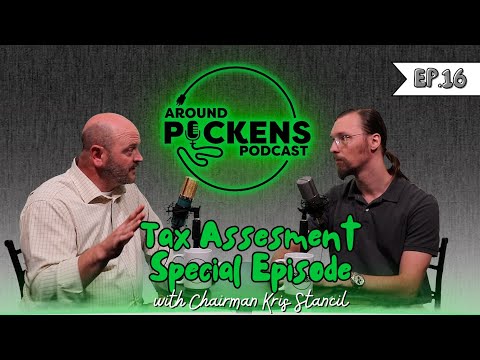
Pickens County Commission Chairman Chris Stansell told the Around Pickens podcast that state law requires properties be appraised at fair market value, local Boards of Assessors conduct appraisals, and taxing authorities set millage rates once digests are finalized after appeals.
Grant Parker, host of the Around Pickens podcast, asked Pickens County Board of Commissioners Chairman Chris Stansell to explain the recent wave of property assessment notices. Stansell said the notices and apparent increases reflect a mix of market-driven reappraisals, a one-time state credit last year and timing of millage decisions.
"It's to be appraised at fair market value," Stansell said, describing the standard set in state law for county assessors. He told listeners that Boards of Assessors — appointed by county commissions and serving six-year terms — hire a chief tax appraiser and staff to carry out valuations and must receive annual training.
Nut graf: The podcast aimed to clarify which offices do what: the state sets appraisal standards and oversight through the Georgia Department of Revenue; local Boards of Assessors calculate values and handle appeals; the tax commissioner's office compiles the final digest; and taxing authorities, including the county and the Board of Education, set millage rates that determine final bills.
Stansell said assessment notices sometimes include a dollar figure that looks like a bill because they show what a taxpayer would owe if millage stayed the same as the prior year. "That figure is an estimate," he said, and final bills change once rollbacks and the actual millage rates are set. He also noted a roughly $500 state credit that appeared on 2023 tax bills is not being repeated, which can make 2024 amounts appear higher even when valuation changes are not the primary cause.
On timing and appeals: property owners have a window to appeal valuations (Stansell cited a 45-day window and an August 1 filing deadline). After appeals are processed the assessor's office finalizes the digest, which the tax commissioner uses to enter values into the system and distribute digest totals to taxing jurisdictions. Those totals inform the county's and school system's millage-rate decisions.
Stansell provided local budget context: he said Pickens County's county millage was 7.39 mills and that property taxes account for about 41% of the county's revenue, roughly $15,000,000, with the rest coming from sales taxes, fees and intergovernmental sources. He said personnel costs and inflation have driven budget pressures and that the county has adjusted pay to retain staff.
The chairman encouraged residents to use public meetings and the county website for detailed budget and millage history and to verify which taxing authority controls any given exemption or rate. He urged engagement: "show up, ask questions, be heard," adding the county will post budgets and audit reports online.
Ending: The episode closes with Stansell saying county leaders will continue outreach to explain assessments and millage-setting, and with a reminder that taxpayers can find links and prior videos in the episode description for more detail.