Get AI Briefings, Transcripts & Alerts on Local & National Government Meetings — Forever.
Committee advances bill to raise cleanup cap, adjust tank fees for underground petroleum storage tanks
Loading...
Summary
The subcommittee adopted an amendment and reported S.893 favorably; the bill raises the maximum site rehabilitation payout from $1 million to $2 million, reduces the third-party liability fund cap, and phases in higher tank registration fees to bolster the state cleanup fund, the industry advocate said.
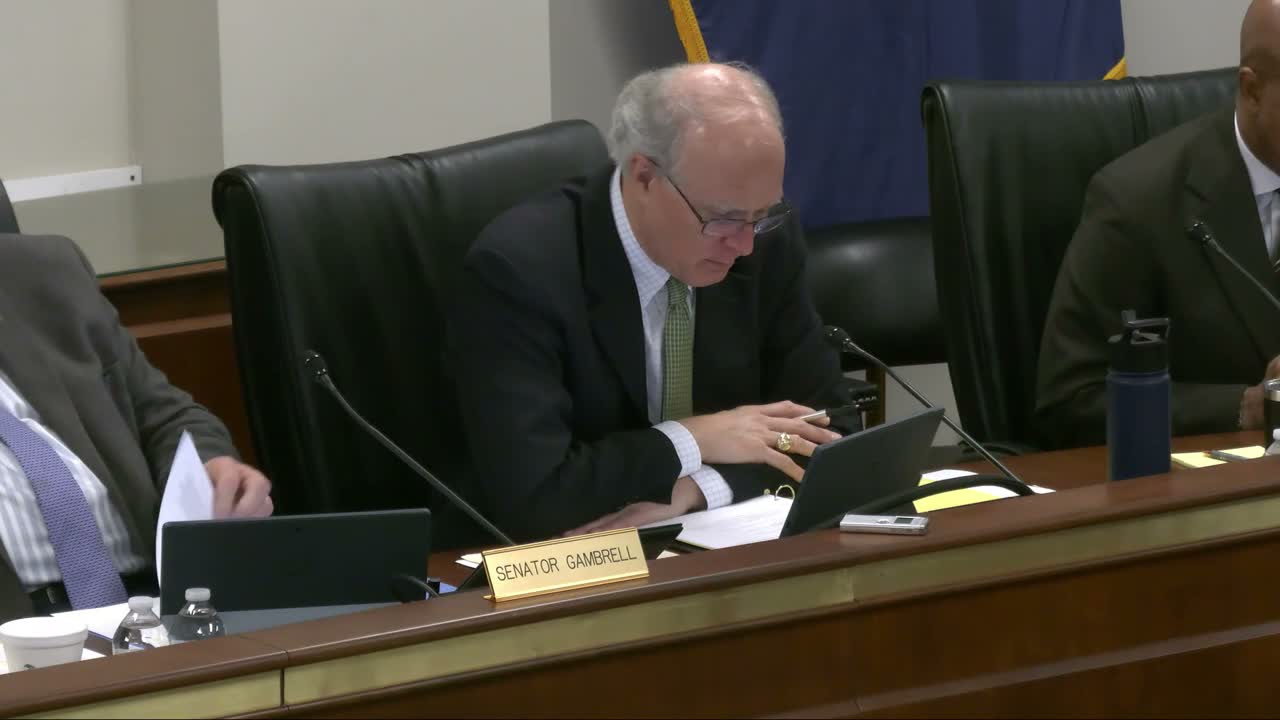
The environmental subcommittee on Thursday adopted a technical amendment and gave a favorable report to S.893, a measure that would increase the state’s maximum site rehabilitation payout for underground petroleum storage tanks and change the mechanics and fees that fund the program.
The bill would raise the maximum reimbursable site rehabilitation amount from $1,000,000 to $2,000,000 and lower the statutory cap for the third‑party financial‑responsibility fund from $2,000,000 to $1,000,000. Sponsor counsel told the committee the draft replaces obsolete references to earlier Federal Pipeline Acts and instead enumerates pipeline facilities under 49 U.S.C. chapter 601 and determinations by the United States Secretary of Transportation. The bill also revises agency references, removing DHEC citations and naming DES as the implementing department, and adds a member to the advisory committee to represent the South Carolina Convenience and Petroleum Marketers Association.
"We're environmentalists. We don't want petroleum spills to be out there without the proper funds to clean it up," Michael Fields, director of the South Carolina Convenience and Petroleum Marketers Association, said in testimony. Fields said his organization convened an underground storage tank task force in late 2022 and worked with DES on the proposal. He said the group supports a phased fee increase so the cleanup program has adequate funds and staff to operate.
Fields told the panel the bill would also require DES to transfer amounts over a set threshold back to the cleanup fund at the end of the calendar year and creates a $500,000 trigger increment for those transfers. The bill would adjust registration fees in a phased schedule the sponsor described as rising from the current $100 to $200 in 2029, $250 in 2034, and to $300 in 2039. Sponsor counsel said the bill should take effect July 1 to align with the state fiscal year.
Senator Sumpter asked whether the program was near insolvency; Fields said the fund remains "financially stable" but noted one site has already reached the $1,000,000 payout level and roughly 126 sites are at about $500,000 or more, with some (about 20) around $800,000 or higher — evidence Fields said supports increasing the cleanup cap. The director also said that historically only about $1.5 million has been paid from the third‑party liability portion of the program since its inception, which is part of the rationale for reducing that cap and redirecting funds toward remediation.
Mr. Hogan, the bill presenter, said the intent is to align state and federal standards and to clarify which pipeline facilities fall under state oversight. He noted the amendment clarifies the reference to the "United States Secretary of Transportation" and sets the effective date to July 1.
The committee adopted the technical amendment by voice vote and later moved and seconded a favorable report on S.893 as amended; the motion carried by voice vote. The committee concluded its business and adjourned.
Votes at a glance: the amendment and the favorable report were adopted by voice vote; no roll‑call tally was recorded in the transcript.