
Subcommittee advances bill requiring local correctional facilities to seek 287(g)-style agreements
Get AI-powered insights, summaries, and transcripts
Subscribe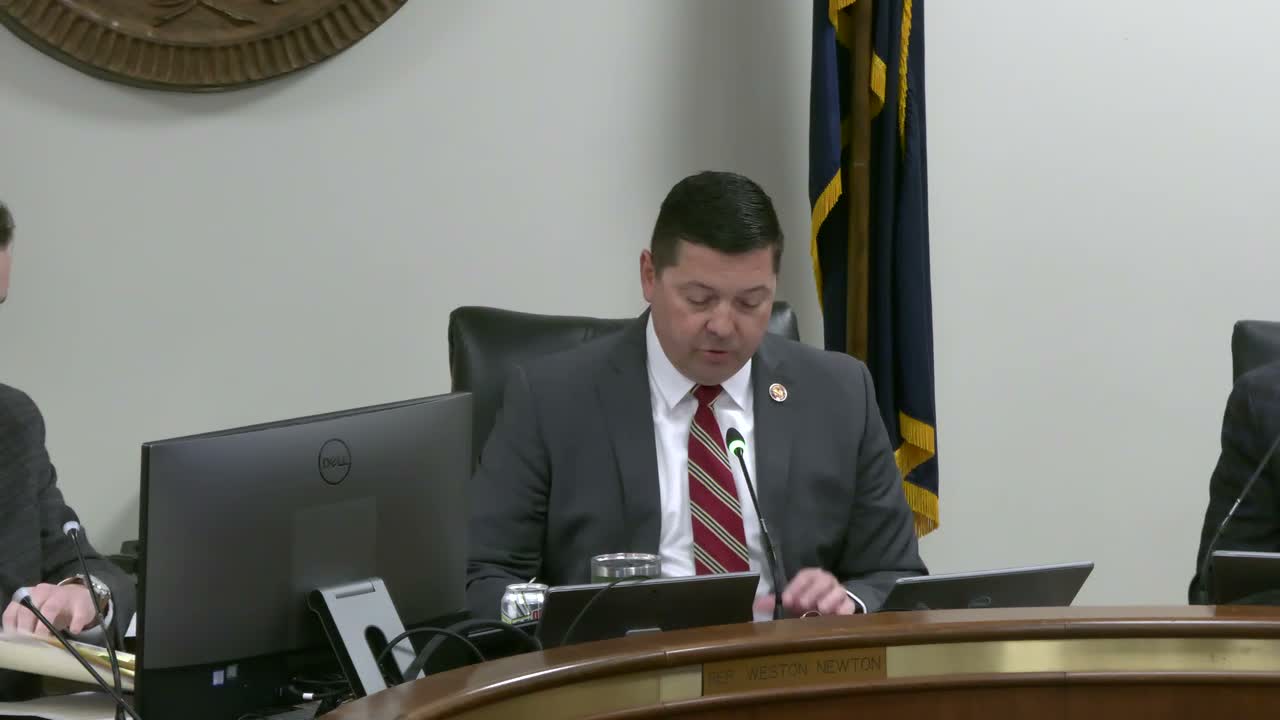
Summary
The House Artificial Intelligence, Cybersecurity and Special Law Subcommittee gave a favorable report to H.4764 as amended, which would require local correctional facilities to attempt written agreements with federal immigration authorities under 287(g)-style programs and file copies with SLED; the amendment narrows enforcement and excludes school resource officers.
Chair Travis Moore and members of the House Artificial Intelligence, Cybersecurity and Special Law Subcommittee voted to give House Bill H.4764 a favorable report after adopting a cleanup amendment clarifying scope and enforcement.
The bill would require local law enforcement agencies that operate correctional facilities to enter written agreements with federal immigration authorities under the federal 287(g) program or similar models, specifying program model, scope, duration, duties and cost allocations, and would require a copy of any agreement be filed with the South Carolina Law Enforcement Division (SLED) and the attorney general. The amendment clarifies that the statute applies to operational and correctional facilities (excluding holding cells as defined by the Department of Corrections) and adds definitions intended to reduce drafting ambiguities.
Chair Moore said the amendment provides training through SLED’s immigration enforcement unit and grants good-faith immunity to officers acting within the scope of such agreements while also limiting certain enforcement mechanisms. "The immunity clause was cleaned up," he said, explaining the change was to ensure protection for officers acting lawfully within agreements but not to shield "bad actors" acting outside their authorities.
The Moore Amendment also narrows the attorney general’s enforcement authority: under the change, the attorney general may bring declaratory actions in circuit court for noncompliance rather than pursue broader administrative penalties. Moore said the bill does not require the attorney general to maintain a registry; SLED’s existing unit will maintain the registry instead.
The amendment explicitly prohibits school resource officers from being included in any agreement under 287(g). It also creates a safe-harbor process allowing a governing body to demonstrate financial or operational impracticability—intended to address concerns from smaller agencies about undue hardship.
Representative Jerry Govan raised concerns about local liability and the bill’s effect on home rule, saying the "must attempt" language risks overriding local discretion and could erode trust between communities and law enforcement. "I don't think it's necessary," Govan said, noting worries about coercion and the optics of mandating agreements. Chair Moore and Representative Paul Wickenheimer countered that 287(g) agreements have existed since 1996 and that requiring agencies to document attempts to enter agreements helps create consistent statewide practices.
The subcommittee adopted the Moore Amendment by voice vote and then ordered a roll call on the bill as amended. On the roll call Representative Moore, Representative McCabe and Representative Wickenheimer voted "Aye"; Representative Govan voted "No." The clerk announced the bill received a favorable report (recorded as 3 in favor, 1 against, and 1 not voting). The favorable report sends the amended H.4764 to the next stage in the House process.
The chair closed discussion by encouraging stakeholders to contact judiciary staff with continuing concerns as the bill proceeds.