
Committee advances bill to require clearer disclosures in legal advertising after heated debate
Get AI-powered insights, summaries, and transcripts
Subscribe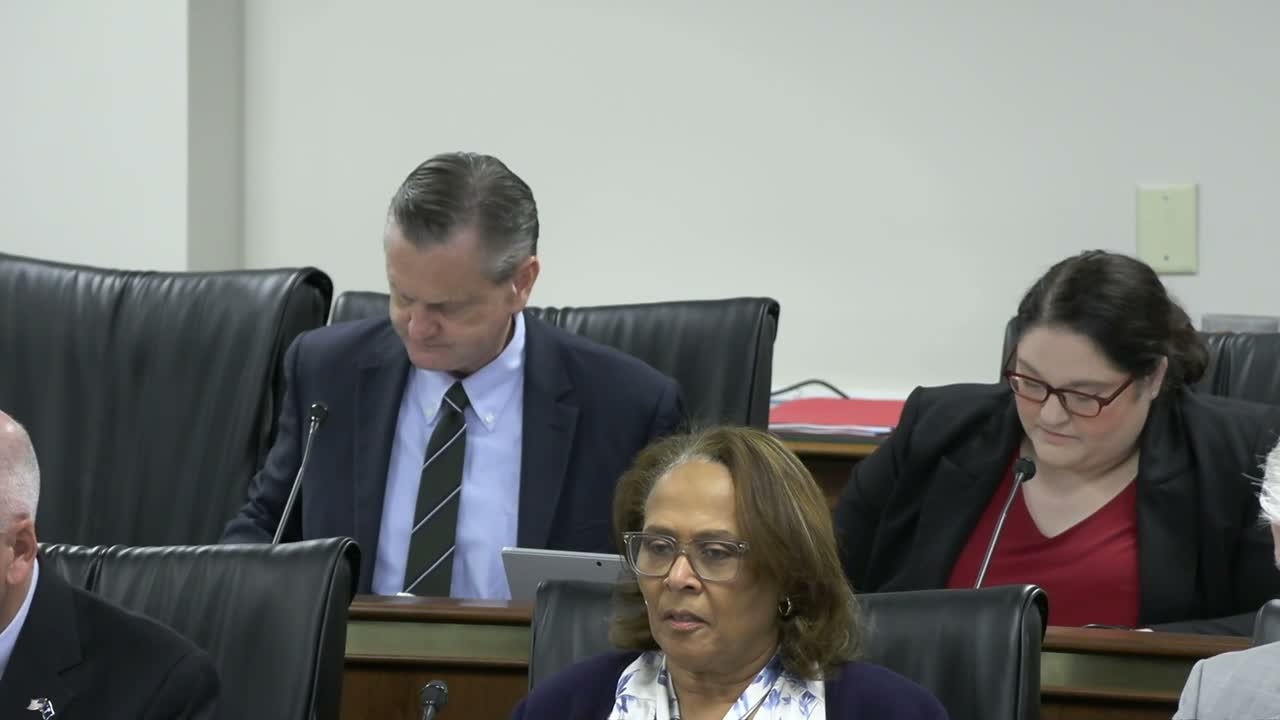
Summary
S.821 would require attorneys and legal advertising services to disclose attorney fees and litigation costs when ads reference a specific dollar settlement, require naming the attorney handling a case, expand coverage to third‑party lead generators, and leave enforcement to the Department of Consumer Affairs; the committee adopted a subcommittee amendment and reported the bill favorably by 15‑3.
The committee advanced S.821, the "Lawyer Advertising Unfair Practices Act," after extended debate and adoption of a subcommittee amendment that broadened the bill’s scope.
Staff described the bill as defining false, deceptive or misleading advertising for legal services and requiring that any advertisement referencing a specific dollar amount of a settlement disclose the amount or percentage of attorney fees and litigation costs taken from that recovery. The bill also requires a clear disclaimer that an example result is not representative of all cases and, for ads depicting suits against insurance companies or other third parties, specific clarifying language about who the defendant is. Violations would be enforceable by the Department of Consumer Affairs and would not create a private cause of action.
The senator from Dorchester, who chaired the subcommittee, summarized an amendment that expands the bill’s reach to include third‑party lead generators and referral services and would require identification of the attorney actually handling a referred case. He said practicing attorneys on the subcommittee generally supported the amendment and that many recommended amendments originated from those practitioners.
Committee members voiced a range of concerns. Senator Garrett urged fairness, asking whether the bill would require the same disclosures of defense‑side advertising and insurance companies; the sponsor responded the bill targets deceptive advertising irrespective of which side places it. Several senators questioned practical implementation, including how fee disclosures could be shown on television or billboards and whether attorney‑client confidentiality or settlement structures (trusts, annuities) would be forced into public disclosure. The sponsor said the requirement applies only when a practitioner chooses to advertise a particular outcome and that an attorney must decide whether a given ad is deceptive.
Some senators urged broader coverage for other professions and raised constitutional free‑speech concerns about restricting advertising; the sponsor said the bill narrowly addresses legal advertising and that other industries could be addressed in separate legislation.
After debate, the committee adopted the subcommittee amendment, considered the bill as amended, and reported S.821 out favorably. The chair reported a vote tally of 15 to 3 in favor of reporting the bill.