
Subcommittee advances bill to let family courts consider no-contact orders in adoptions
Get AI-powered insights, summaries, and transcripts
Subscribe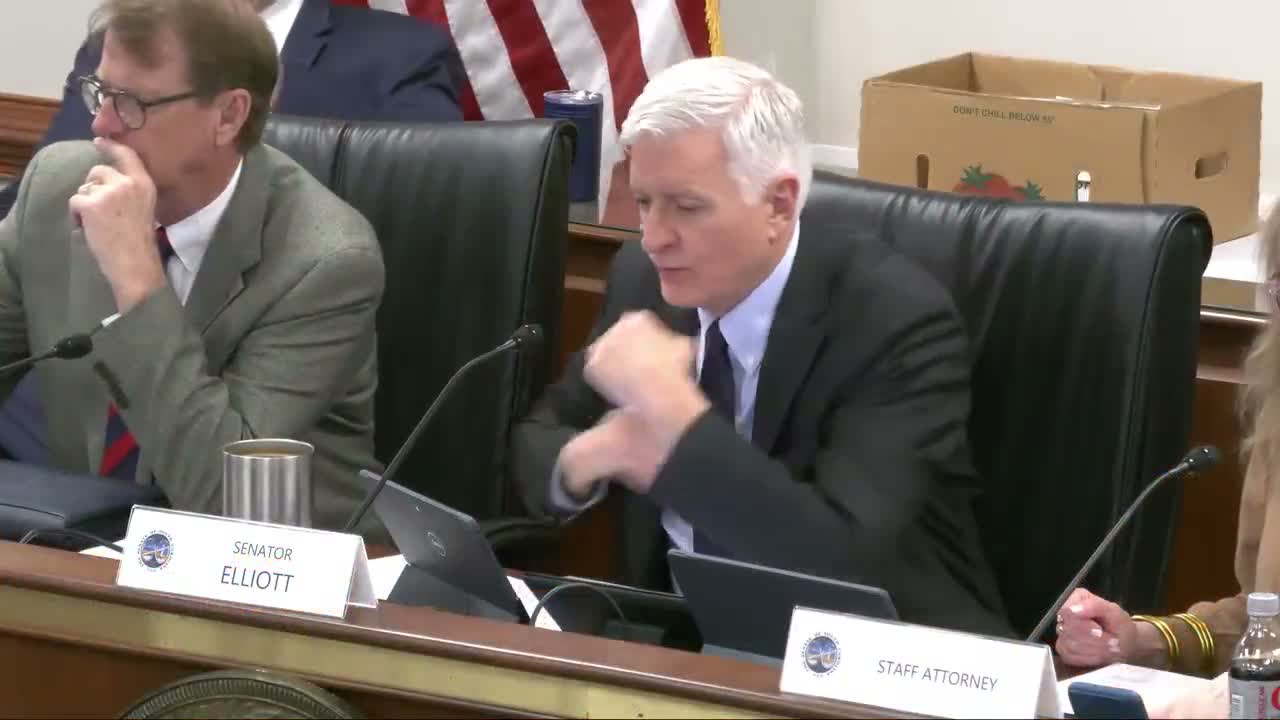
Summary
A Joint Committee on Children subcommittee moved HS 8 23 — which would require family courts to consider no-contact or supervised-contact orders in termination-of-parental-rights and adoption cases — to the full committee with instructions to draft targeted amendments after testimony from adoptive parents, an adoption attorney and the Department of Social Services.
A legislative subcommittee voted to advance HS 8 23 after hearing testimony from adoptive parents who say post-adoption contact has endangered their children and from an attorney who urged narrower language to protect open-adoption practices.
Senator Rickenbach, sponsor of HS 8 23, told the panel the bill “requires family courts to consider the implementation of no contact orders or supervised contact orders when terminating parental rights or TPOs for final adoptions” and supplies factors for judges to weigh when deciding whether such an order is appropriate. He said the change is intended to align court practice with the child’s best interests.
The bill drew sharply different perspectives. Attorney Jim Thompson said the measure, as drafted, is “overly broad” and could produce unintended consequences for open adoptions by making courts conduct a detailed inquiry in every case. Thompson suggested narrowing the default so that courts act only on a motion by a litigant or at the court’s discretion, and proposed language to permit amending a TPR order later to add no-contact or supervised-contact provisions when new evidence emerges.
Two adoptive mothers described harms they attribute to post-adoption contact. Kelly Beasley recounted that after adopting in 2019 her son was later taken across state lines by his birth mother and that ongoing contact via Xbox, school devices and social media disrupted the family; she said when a parent’s rights have been terminated for abuse and neglect “this ought to be automatic across the board.” Miss Engelbert said similar contact has threatened a child’s stability, undermined school performance and left her family feeling unprotected by existing remedies.
Conley Ann Ragley of the Department of Social Services told the subcommittee that public adoptions are a small portion of overall adoptions — DSS finalized 575 adoptions in 2022, 645 in 2023, 549 in 2024 and 510 in 2025 — but that even a single harmful incident justifies attention. Ragley said DSS does not expect a fiscal impact from the change and described it as a beneficial shift of responsibility to family court.
Committee members said Thompson’s proposed clarifications could preserve protections for adoptive families while avoiding a mandatory, resource-intensive inquiry in every adoption. The subcommittee agreed to develop written amendments incorporating Thompson’s targeting ideas and an affirmative duty for courts to notify similarly situated adoptive families when appropriate. Senator Devine moved the concept amendment; the subcommittee seconded and approved it by voice. The panel then voted to advance HS 8 23, with staff to draft the amendments before the full committee considers the bill.
The subcommittee’s action is procedural: it advanced the concept with directions to staff to prepare narrower language that would (per Thompson’s suggestion) allow courts to act on motion and permit limited amendment of prior orders. The full committee will receive the amended language for further consideration.