
Revenue committee hears broad support for LB1165, a performance‑based incentive tied to large employers
Get AI-powered insights, summaries, and transcripts
Subscribe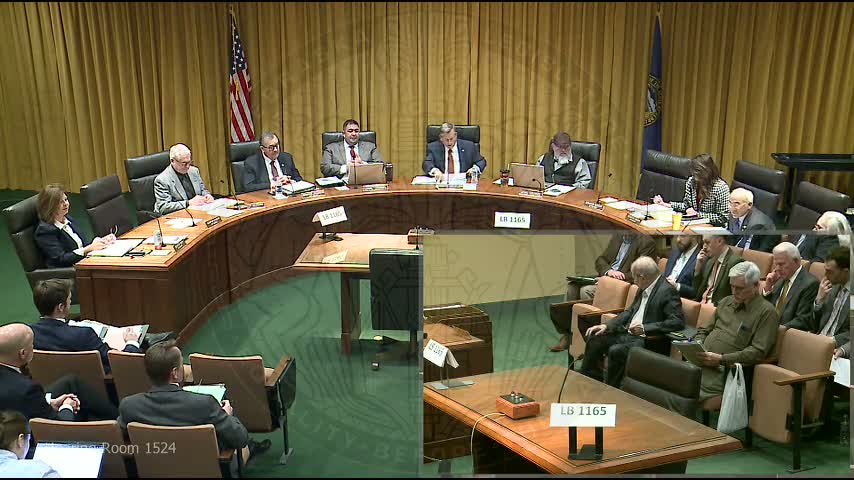
Summary
Supporters told the Revenue Committee LB1165, the 'Grow the Good Life Act,' is a performance‑based package aimed at retaining and attracting large employers by tying tax credits to job creation, pay and retention thresholds; proponents said it is targeted, accountable and would help keep potential headquarters in Nebraska.
Senator Brad Von Gillern introduced LB1165, titled the Grow the Good Life Act, saying the bill is designed to “encourage large in‑state employers to retain workforce in state as well as attract or relocate workforce to the state.” He told the Revenue Committee the bill requires applicants to employ at least 3,000 people, retain 90 percent of those employees, hire at least 500 new employees, pay a minimum $100,000 annual wage and retain jobs for 10 years to qualify for its incentives.
The bill creates wage retention credits valued at $5,000,000 annually for 10 years (the sponsor said credits would not begin to be paid until 2032) and limits credit use to 5 percent of total payroll. It also creates a site and building development grant of $5,000,000 capped at $5 per square foot for capital improvements. Senator Von Gillern framed the package as pay‑for‑performance: “If the applicant does not perform … they do not receive the incentives,” he said.
Testimony in favor came from administration officials, chambers of commerce, economic development groups and private employers. Kenny Zoeller, director of the governor’s policy research office, said LB1165 expands existing tools — the Key Employer and Jobs Retention Act and the Imagine Nebraska Act — and adds a 1 percent bonus credit for employees who relocate to Nebraska. Jason Ball of the Lincoln Chamber, Matt Williams of the Nebraska State Chamber and Heath Mello of the Greater Omaha Chamber all said the enhanced credits and new flexibility (including allowing earned credits to be used for employer‑supported childcare) would help Nebraska compete nationally.
Union Pacific’s senior vice president and chief human resources officer, Josh Perkes, described the company’s deep Nebraska ties and said the proposed nationwide rail consolidation with Norfolk Southern could create an opportunity to retain or grow headquarters jobs in Omaha if the state had matching incentives. “Union Pacific proudly calls Nebraska home,” Perkes said, and he urged the committee to consider tools to keep high‑paying positions in the state.
Supporters emphasized accountability provisions in the bill including recapture and clawback language if commitments are unmet. Several economic analyses and chamber‑produced impact statements were distributed to the committee; Senator Von Gillern and proponents repeatedly contrasted the bill’s later payout schedule with the earlier timing of tax benefits to the state and said the state’s net tax receipts from payroll and sales would offset the incentive costs over time.
There were no in‑person opponents at the hearing; committee staff noted receipt of proponent and opponent letters in the record. Vice Chair Jacobson and other senators asked for clarifications about the fiscal note and acknowledged that the fiscal note on file reflected an earlier (green) version rather than the white copy amendment being discussed.
The committee concluded the hearing after sponsor closing remarks and said it would consider economic analyses and fiscal detail before advancing the measure.
The committee received multiple proponent letters and two opponent letters in the official record; no formal vote was taken during the hearing.