
Debate in Nebraska committee over separating PDMP procurement from statewide HIE splits tech vendors and health leaders
Get AI-powered insights, summaries, and transcripts
Subscribe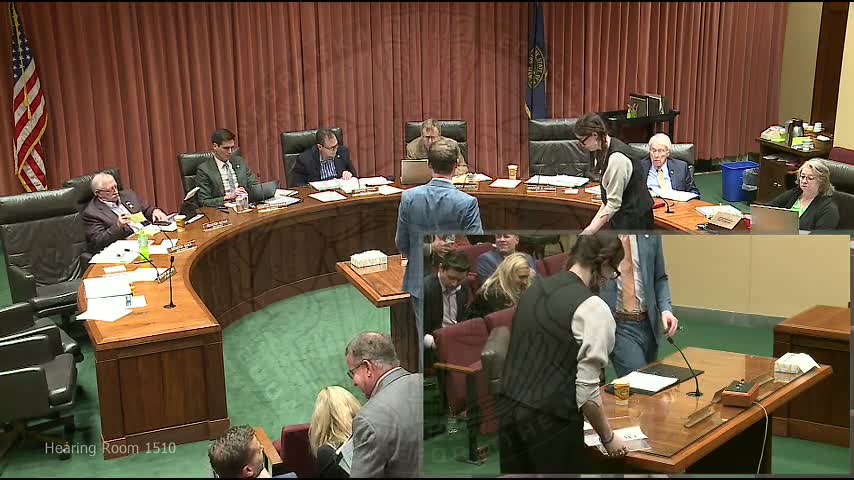
Summary
Sen. Beau Ballard's LB949 would let DHHS procure the Prescription Drug Monitoring Program separate from the statewide Health Information Exchange. Vendors and pharmacy groups supported decoupling to spur competition and improve interstate PDMP sharing; Sync Health, clinical informaticists and vendors warned separation would fragment data, add costs and threaten patient safety.
Senator Beau Ballard introduced LB949 as a measure intended to give the Department of Health and Human Services greater flexibility to manage and procure the state's Health Information Exchange (HIE) functions and the Prescription Drug Monitoring Program (PDMP) separately. "LB949 is solely about ensuring the Department of Health and Human Services has the flexibility it needs to responsibly manage taxpayer dollars," Ballard said in opening remarks.
Proponents from pharmacy and PDMP vendor communities argued that PDMPs and HIEs serve different purposes and require distinct procurement approaches. Andrew Funk of the National Association of Boards of Pharmacy described separation as a way to reduce costs and improve interstate PDMP interoperability. LogiKoi and Bamboo Health representatives said independent procurements and competition would accelerate functionality such as integrations with pharmacies and state-to-state data sharing.
Multiple vendors and pharmacy stakeholders emphasized gaps in Nebraska’s current PDMP integration with other states and federal actors — a barrier they said decoupling could ease. "Flexibility reduces long term tendencies on a single vendor structure and supports more responsive governance," a vendor representative told the committee.
Opponents, including Sync Health (the Nebraska statewide HIE), Leap Orbit (current PDMP technology partner), academic informaticists, and rural health stakeholders, cautioned that severing the PDMP from the HIE could fragment data flows, disrupt clinical workflows and threaten federal matching arrangements. Carrie Majors of Sync Health said the state's integrated model is nationally respected and that "LB949 would separate the state's PDMP from the statewide HIE, effectively dismantling Nebraska's integrated and certified health information infrastructure." She said the current public‑private partnership allows coordinated procurement, shared governance, and federal match eligibility.
Leap Orbit cofounder David Finney and other opponents argued that removing the statutory linkage would risk reimplementation costs, reduced data completeness (Nebraska reports all medications into the PDMP), and additional gateway or integration fees that other states have experienced. Clinical informaticists warned that forcing clinicians to log into separate platforms would reduce PDMP utilization at the point of care and could increase patient safety risks.
Committee discussion ranged from constitutional questions raised by the Nebraska Insurance Federation about statutory “closed class” language to operational questions about timelines and costs for changing vendors and reconnecting hospitals. Senator Ballard characterized the bill as restoring procurement authority to the state and said it would allow DHHS to choose vendors directly; opponents said that in practice such a change risks years of reconnection work and high expense for rural hospitals.
The committee heard extensive pro and con testimony and did not vote on the bill at this hearing; members signaled interest in further technical review, procurement documents, and cost estimates before advancing the proposal.