Senate HHS interviews four candidates for Nebraska Rural Health Advisory Commission; focus on rural workforce and loan-repayment programs
Loading...
Summary
Four gubernatorial reappointments to the Nebraska Rural Health Advisory Commission described persistent provider shortages, long dental and medical wait times in rural communities, and support for expanding programs such as RHOP and student loan repayment to recruit clinicians.
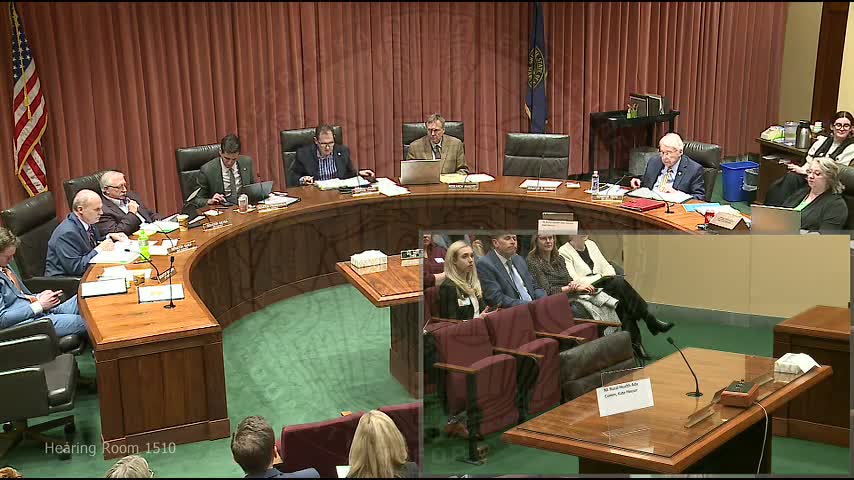
Chair Brian Harden opened the Health and Human Services Committee’s meeting by taking four remote gubernatorial appointments for the Nebraska Rural Health Advisory Commission and conducting brief interviews.
The first appointee, Dr. Kate Hesser, told the committee she is a family physician in Crete and has served multiple terms on the commission. "I am a family physician in Crete. I have been here for 16 and a half years," she said, and described recruitment and retention as the commission’s principal challenge: "It comes down to money...if somebody is able to provide them some loan repayment toward that debt, they're gonna be more likely to look at those communities." Hesser recommended expanding the Rural Health Opportunities Program (RHOP) and state loan-repayment incentives to attract clinicians back to small towns.
Dr. Catherine Cusick, a general dentist in Albion, described long wait times for dental care in many rural counties and limited capacity even among practices that accept Medicaid. "There are a lot of practices...some of them take Medicaid, some of them don't," she said, adding that private-practice dentists frequently reach capacity and cannot take new patients.
Myra Stoney, who said she has worked in rural public health and nursing-home administration in Southwest Nebraska, highlighted administrative burdens and low Medicaid reimbursement as drivers that push providers away from accepting Medicaid patients. "Some of our dentists in our area...are no longer accepting Medicaid patients because of the reimbursement," she told the committee.
April Dexter, a family nurse practitioner who works at a critical access hospital and a rural health clinic, emphasized workforce shortages in nursing as well as medicine. She described student loan repayment and RHOP as successful recruitment tools: "Once providers get to rural Nebraska, they learn to love it...Student loan reimbursements in that 5 year period...many times they've married, they've started a family...they stay there."
Committee members used the appointment interviews to press for concrete examples and to probe the scope of local shortages, particularly obstetric services and pediatric specialty access. No formal action or vote on the nominations occurred in the hearing; the interviews were presented to the committee record for consideration by the governor and senators.
The applicants’ testimony repeatedly framed the payoff of recruitment programs as long-term: short-term financial incentives and targeted education pipelines help produce clinicians who remain in rural communities, while telehealth and mobile outreach clinics can partially mitigate access gaps.
The committee concluded the appointments and moved on to scheduled bill hearings.