Evanston council adopts zoning RFP with new consultant requirements after extended debate
Loading...
Summary
After hours of public comment and council debate, Evanston approved a revised request for proposals (RFP) to update its zoning code, adding explicit consultant qualifications for economic and fiscal analysis; a separate motion to require an independent third‑party impact study failed on a tied vote.
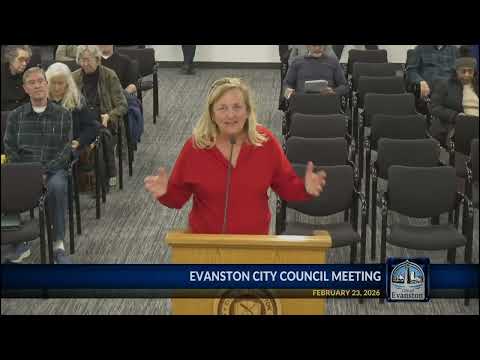
Evanston’s City Council voted Feb. 23 to adopt a revised request for proposals to update the city’s zoning code, adding explicit technical requirements for consultant teams and preserving a phased public‑engagement approach.
Liz Williams, senior city planner, told the council the draft RFP was revised in response to public feedback to clarify whether the effort should be an update or full rewrite and to emphasize broad community input. Council members spent more than an hour debating sequencing, the role of the consultant versus the council, and whether an independent third‑party impact study should be required.
Why it matters: the zoning code determines allowable building types, density, and land‑use rules across Evanston. The adopted RFP frames how future consultants will translate the Envision Evanston comprehensive plan into regulatory text, and it includes new expectations that will shape which firms bid and how they measure impacts on housing supply, displacement risk and municipal finances.
What the council did: After extended discussion and several proposed amendments, council added consultant selection criteria requiring demonstrable expertise in urban economics, quantitative land‑use modeling, housing market analysis and municipal fiscal impact analysis. A separate motion to mandate the impact analysis be prepared by an independent third‑party consultant tied 4–4 and failed when Mayor Biss cast the tie‑breaking no vote. The package — as amended on the council floor to clarify phasing and selection criteria — was adopted by roll call 8–0.
Key details and process: Staff expects the winning consultant to propose a clear approach to implementation that aligns with the comprehensive plan, to test multiple zoning scenarios with the Land Use Commission, the council and the public, and to provide accessible graphics and technical appendices. Council also voted by consensus to split the RFP’s assessment and drafting phases so a stand‑alone community assessment precedes production of implementation‑ready regulations.
Votes at a glance (items discussed alongside the RFP): the council also approved a series of other agenda items this evening (see below for roll calls and outcomes).
What happens next: Staff will issue the RFP on the amended terms, receive proposals, conduct interviews and return to council with recommended finalists and the negotiated scope. Councilmembers emphasized the need to prioritize equity in outreach and to insist on transparent reporting of assumptions in any impacts analysis.
Provenance: Council discussion and final adoption began with staff presentation to the council (presentation opening at SEG 2340) and concluded with the roll call adopting the amended RFP (final action at SEG 4423–SEG 4425).