Get Full Government Meeting Transcripts, Videos, & Alerts Forever!
Get email alerts on the Parks Master Plan topic
No spam. Unsubscribe anytime.
Planning commission recommends council adopt 10-year Parks & Recreation Master Plan, flags costs and equity issues
Summary
The Charlottesville Planning Commission voted March 11, 2025, to recommend City Council adopt a 10-year Parks & Recreation Master Plan (dated 01/27/2025). The plan proposes about $78 million in capital needs over 10 years, major shared-use path expansion and new equity-focused priorities; commissioners and public raised data-consistency and gender-equity concerns.
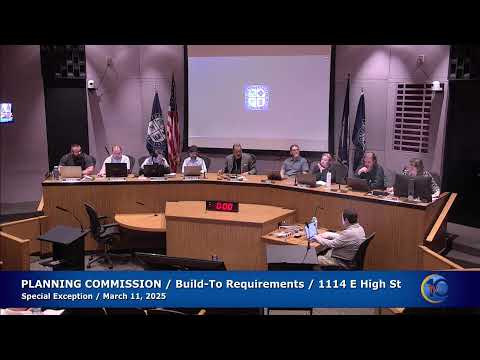
The Charlottesville Planning Commission voted March 11, 2025, to recommend City Council adopt a 10-year Parks & Recreation Master Plan dated Jan. 27, 2025, after a presentation from city parks staff and the consultant team and a brief public comment period.
The plan lays out a 10-year implementation horizon focused on city-owned and co-owned parks, proposing roughly $78 million in capital improvements across three buckets — sustainable maintenance, expanded services and visionary projects — and includes a proposal to add about 12 miles of off-road shared-use paths. Consultant Mike Spetz described the effort as centered on city needs: "This is a City Of Charlottesville centric plan," and said the plan was developed to be "realistic, implementable, and financially sustainable."
Why it matters: the plan sets priorities that will guide the city's capital improvement programming and staffing decisions for the next decade. It highlights river access, greenways and walkable access to parks as community priorities and identifies social-equity criteria for prioritizing projects. Spetz told the commission the outreach effort produced about 2,400–2,500 engagement touch points across roughly 33 events and on-line opportunities.
Key details and debate
- Cost and funding: The consultant presented a three-part cost estimate — roughly $16 million for sustainable (life-cycle) work, $17 million for expanded services and about $44 million for visionary projects — totaling about $78 million over 10 years. Spetz and staff emphasized the total is not expected to be borne entirely by Charlottesville taxpayers and pointed to grant opportunities and partnerships as funding sources.
- Trails and connectivity: The plan proposes some 22–23 shared-use-path segments that would add about 12 miles of off-road multiuse trails — more than doubling the current on-street/off-road network. The proposal prioritizes off-road alignments and uses social-equity criteria to guide where to build first.
- Access metrics: The presentation included level-of-service comparisons and walkability figures. Spetz said the plan-based figures show a notably higher acreage-per-1,000-residents ratio than a national median for similarly sized jurisdictions and reported that about 84% of residents live within a 10-minute walk of a park; a commissioner noted a slide-to-document mismatch on acreage figures that staff said would be corrected.
- Equity and programming concerns: Public commenter Jackie Temkin said the data did not support several recommendations and raised concerns about programming equity and facility access, particularly for girls and women: "I have a lot of severe concerns about this report," she told the commission, arguing that some recommendations (for example, adding cricket pitches or new futsal courts) did not match the community's stated priorities or the plan's data. In response, parks director Rian Anthony acknowledged gaps and said the plan is a tool to identify those gaps and then pivot programs and partnerships: "This plan is to find our gaps, and then also how we can improve those gaps or meet those gaps."
- Demographics and inclusion: Commissioners asked about demographic cross-tabulations and some presentation inconsistencies; the consultant said the statistically valid survey included household-type cross-tabs and geography-based results, and that the presentation slides would be aligned to the plan text. Anthony and staff emphasized that the Office of Racial Equity, Diversity and Inclusion participated on the steering committee and informed equity-focused prioritization.
Public comments and next steps
Supporters and critics spoke during the public hearing. Peter Kreps of the Piedmont Environmental Council said many requested improvements — especially for bicycling and greenways — were incorporated and urged the commission to recommend frontline funding: "a lot of the things that I asked for did get incorporated in the plans," he said. Advisory-board leader Ned Mickey urged prompt adoption so implementation can begin.
The commission amended the recommendation to include an explicit reference to planning for future connections to the 3 Notch Trail. Commissioners then polled and recorded affirmative votes with no opposition, and the commission certified the recommended amendment to City Council for consideration.
What happens next: City Council will consider the Planning Commission's recommendation and the master plan as an amendment to the comprehensive plan. If Council adopts the plan, staff said site-specific project plans, budgeting and phased hiring or reorganizations would follow as part of implementation.
Sources and attribution: quotes and attributions in this article come from the Parks & Recreation presentation and public hearing as recorded in the March 11, 2025, Planning Commission transcript.