Get Full Government Meeting Transcripts, Videos, & Alerts Forever!
Get email alerts on the Investigations topic
No spam. Unsubscribe anytime.
WMSC adopts five investigation reports into derailment, track fires and evacuations
Summary
The WMSC voted 5–0 to adopt five investigation reports covering a May 17 maintenance‑vehicle derailment, multiple station evacuations and smoke events (including incidents at L'Enfant Plaza, Foggy Bottom, Benning Road and WMATA’s Eisenhower Avenue headquarters).
The Washington Metrorail Safety Commission on March 4 adopted five safety‑investigation reports that documented procedural failures, equipment issues and communication breakdowns in recent Metrorail incidents.
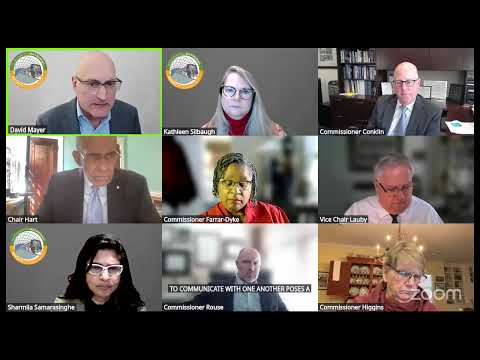
The commission voted 5–0 to adopt investigations Whiskey0360 (a May 17, 2024 derailment of a Nordco tie‑removal/insertor maintenance vehicle known as TR05) and four evacuations/smoke events (Whiskey0361, 0362, 0363 and 0364). Chair Hart called for adoption after presentations and the motion passed with Commissioners voting yea; Commissioner Higgins voted for Maryland as Commissioner Conklin had left the meeting.
Investigation Whiskey0360 found that TR05 derailed near Naylor Road while being transported because the operator switched from travel mode to work mode while in motion and exceeded allowable speeds for the selected mode. The report noted the operator failed to immediately report the derailment, and post‑incident inspection showed both front and rear hydraulic drive motors required replacement. Mr. Quigley summarized the finding: “These violations of standard operating procedures directly contributed to the derailment.” As a corrective measure, Metro removed Nordco trip machines from service pending upgrades and issued technical changes to address insufficient torque in hydraulic motors.
The adopted evacuation reports documented multiple life‑safety issues and coordination shortfalls. Whiskey0361 (a L'Enfant Plaza arcing and smoke event) found an old stud‑bolt installation method had allowed a stud to contact rebar and cause arcing and smoke; fan reconfiguration approvals and multiple approval layers delayed full ventilation. Whiskey0362 (a Foggy Bottom–Farragut West tunnel fire) and Whiskey0364 (Benning Road smoke) both revealed misreported incident locations, single‑controller staffing at times, fan‑desk dependence on precise chain markers and radio failures that delayed coordinated response. Whiskey0363 (an Eisenhower Avenue headquarters planter fire) traced the cause to improperly discarded smoking materials; the facility installed additional signage and a designated exterior smoking area afterward.
Commissioners used the presentations and Q&A to emphasize recurring themes: inadequate controller staffing, gaps between procedures and practice, radio and communications failures in tunnels, and the need for exercises and field‑level training to translate policy into responses. Vice Chair Laube described one incident as “a dog breakfast of everything that could go wrong,” reflecting concern that multiple independent failures compounded risks.
WMSC adopted the reports to formalize findings and to direct oversight follow‑up. Commissioners asked WMSC staff to continue monitoring Metro’s corrective actions and to consider whether the current audit cadence and training exercises sufficiently test field execution of emergency procedures.