Get Full Government Meeting Transcripts, Videos, & Alerts Forever!
Get email alerts on the Scholarships topic
No spam. Unsubscribe anytime.
Winslow workshop lays out scholarship steps, deadlines for Navajo and Native students
Summary
At a National Congress of American Indians workshop in Winslow, Lisa Vandiver walked students through scholarships — tribal, nonprofit and federal — highlighted documentation (CIB, official transcripts), and shared deadlines including the American Indian College Fund closing 05/31/2023.
Lisa Vandiver, Native Youth Program Manager with the National Congress of American Indians, led a scholarship workshop in Winslow, Arizona, on practical steps for high school seniors applying for college aid.
Vandiver outlined what scholarships cover and why students should apply, distinguishing merit-based awards from need-based aid tied to FAFSA and federal programs such as Pell Grants. "Scholarships are definitely a funding source to provide to you as a student," she said, adding they reduce out-of-pocket costs and do not need to be repaid.
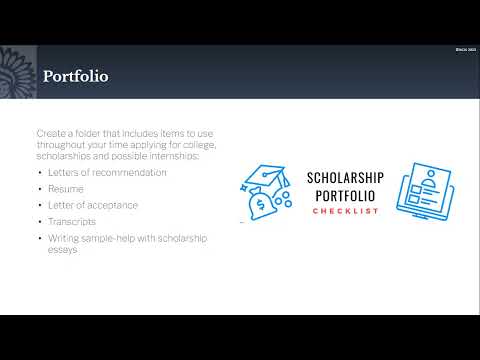
She urged students to assemble a portfolio with writing samples, activity lists and letters of recommendation well before application deadlines. "Please don't ask them to write you a letter the day of a deadline," Vandiver said, recommending students build relationships with teachers and regional representatives to secure timely recommendations.
On documentation, Vandiver stressed the importance of official, unopened transcripts from school registrars and of tribal enrollment proof. "We have CIB, the certificate of Indian blood," she said, referring to the green paper many tribes use to document enrollment. She also advised checking each scholarship's photo and document requirements when uploading files.
Vandiver pointed students to tribal and nonprofit resources and cited Arizona institutions and tribal offices as potential sources of support. "I think U of A and NAU offer free tuition for Native Americans," she said; the workshop did not include an institutional confirmation of that claim.
A recorded walkthrough from the American Indian College Fund explained its online application: applicants need proof of tribal affiliation or enrollment (or, for descendants, a birth certificate with relatives' enrollment), a professional photo and an unofficial transcript. The video instructed applicants to use a desktop or laptop to complete the form and to prepare reflective responses (300-word maximum, 100-word minimum) before starting. "To contact your tribal government and get more info about their enrollment requirements, visit the Bureau of Indian Affairs website," the video advised.
Vandiver shared examples and deadlines from Navajo Nation scholarship listings (one example showed a June 25 deadline) and confirmed that the American Indian College Fund application cycle referenced in the workshop closes on 05/31/2023. She also warned students to account for living costs beyond tuition — citing dorm fees of roughly $2,000 to $5,000 as an example — and to mind time-zone differences (Arizona observes Mountain Standard Time year-round; Navajo Nation often observes Mountain Daylight Time).
The workshop closed with Vandiver offering follow-up help, saying she would share links and templates and collaborate with local staff so students could complete applications and portfolios.
The session combined general application advice, tribal-specific documentation guidance and a step-by-step walkthrough of a major scholarship portal; students were encouraged to start early, save drafts and gather recommendation letters and official documents well before listed deadlines.