Get AI Briefings, Transcripts & Alerts on Local & National Government Meetings — Forever.
NCAI leaders say foundations give only a sliver to Native causes and urge measurable commitments
Summary
NCAI panelists cited data showing a tiny share of foundation giving reaches Native communities and urged funders to quantify commitments, develop tribe-led strategies and fund immediate needs including youth programs, legal/policy capacity and infrastructure.
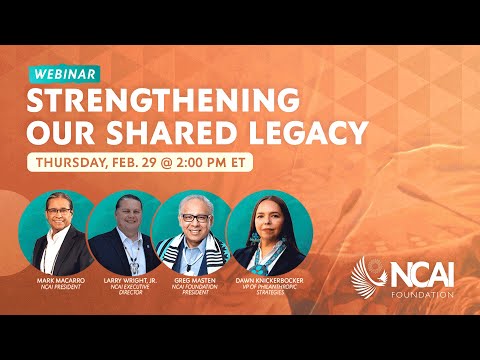
Leaders of the National Congress of American Indians told philanthropies during a webinar that foundations and corporate funders direct only a tiny share of giving to Native American peoples, and they urged foundations to set measurable targets and engage in long-term partnerships.
Greg Mastin, president of the NCAI Foundation, said "last year, foundations spent a $105,000,000,000" and that "less than half of 1%" of that total supported Native peoples; he added the data are imperfect and discussed a figure near 0.04%. "For an industry that is committed to doing good in an equitable and in a just way, these are dismal numbers that philanthropy needs to own up to," Mastin said.
Mastin challenged program officers and foundation leaders to quantify their organizations' commitments: "What is your actual percentage or your dollar amount that your organization is using to support Native American peoples?" He urged funders to ground giving in tribal-identified needs and to move beyond checkbox engagements to "meaningful partnerships based on mutual respect."
President Mark Macaro said philanthropy can play a vital role in addressing urgent public-safety and wellbeing challenges on tribal lands. Citing research in his State of Indian Nations address, Macaro said "84.3 percent of American Indian and Alaska native women have experienced violence in their lifetime" and that more than half — "56.1 percent" — have experienced sexual violence in their lifetime; he added that in some places Indigenous women are killed at more than 10 times the national average and that Alaska shows marked overrepresentation for victims of domestic violence. Macaro framed those statistics as connected to policy choices that limit tribal criminal jurisdiction, court capacity and chronic underfunding of infrastructure and services.
Larry Wright Jr. listed immediate areas where philanthropic support could strengthen tribal capacity: youth programs (including the Wilma Mankiller Fellows), leadership development cohorts (he cited an initial Harvard governance cohort with 80 participants, 55 representing tribal nations), expansion of the policy team, and sponsorship for NCAI conferences. "We need to continue to grow our staff so we can be even stronger advocates," Wright said.
Mastin said the foundation will offer regranting, technical assistance and training in philanthropic strategies to help foundations and tribes connect. He also advised tribes to appoint an internal point person for philanthropy so they can respond quickly to funding opportunities.
Panelists said they have begun discussions with large foundations and corporations about multi-million-dollar engagements and hope those conversations will expand. No specific, binding commitments were announced during the webinar.