Get Full Government Meeting Transcripts, Videos, & Alerts Forever!
Get email alerts on the Elections Gotv topic
No spam. Unsubscribe anytime.
NCAI launches "sovereignty ticket" get‑out‑the‑vote push, offers mini‑grants and local outreach tools
Summary
The National Congress of American Indians used a virtual webinar to promote a "sovereignty ticket" platform, announce mini‑grants and toolkits for tribal voter registration and mobilization, and coordinate regional outreach—emphasizing that Native turnout can be the margin in close battleground races.
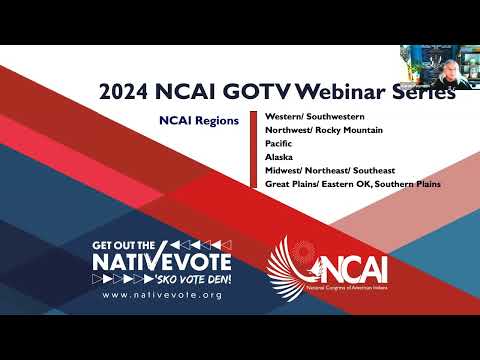
The National Congress of American Indians convened a virtual Get Out the Vote webinar that outlined a one‑month campaign to boost Native voter registration and turnout, rolled out a "sovereignty ticket" policy platform for vetting candidates, and announced mini‑grants and resources on nativevote.org to support local organizing.
"Bad officials are elected by good people who don't vote," said Larry Wright Jr., the executive director of NCAI, as he framed the effort around the power of Native turnout. Organizers said the campaign will produce a launch video, trusted‑messenger content and a refreshed toolkit for tribal leaders and on‑the‑ground volunteers.
Dr. Aaron Payman, introduced as NCAI's Get Out the Vote campaign manager, described the "sovereignty ticket" as a set of priorities tribal voters can use to judge candidates, including honoring treaty and trust obligations, advancing mandatory or advance appropriations for Indian programs, improving IHS funding and health‑care portability, strengthening government‑to‑government consultation, and advancing climate‑resilience and environmental justice for tribal lands.
Payman and Wright cited data showing Native voters can be decisive in close battleground states. Payman urged tribal nations to use targeted outreach and the campaign's toolkits to increase registration, absentee voting and turnout, while stressing the nonpartisan nature of NCAI's work.
NCAI said the organization's new foundation has expanded fundraising for on‑the‑ground support. Wright said NCAI recently received a $500,000 grant and has multiple proposals pending for additional millions to be distributed as mini‑grants. Eligible recipients described in the webinar include tribal governments, Native‑led 501(c)(3) and 501(c)(4) organizations, and Native vote collectives; potential uses range from printed toolkits and T‑shirts to volunteer recruitment and local events.
Regional partners described planned and ongoing activities. Margo Gray, executive director of the United Indian Nations of Oklahoma, said her group will run registration drives through October 11, host a candidates forum and coordinate a volunteer‑recruitment tour; she also said organizers are deploying QR codes linking to registration tools. Tribal leaders on the call described voter‑registration booths at powwows and clinics, candidate forums, and education advising people to register both with tribal governments and with state/local election authorities.
Speakers raised concerns about voter suppression in some states and cited specific claims made during the discussion—participants referenced large removals from voter rolls in Texas and Arizona and urged verification of registration status. The webinar materials and toolkits, they said, include guidance on how to respond to suppression and where to report issues.
Organizers closed the session by urging participants to take advantage of mini‑grants and the nativevote.org materials, to tailor messaging to local communities, and to continue coordination between NCAI, regional partners and tribal leaders.
Next steps: NCAI plans to post the sovereignty ticket priorities and campaign toolkits to nativevote.org, continue mini‑grant solicitations, and follow up with interested tribal offices and nonprofits to distribute funds and technical resources.