Lifetime Citizen Portal Access — AI Briefings, Alerts & Unlimited Follows
EPA's reserved-rights rule requires states to consider tribal rights when tribes assert them
Loading...
Summary
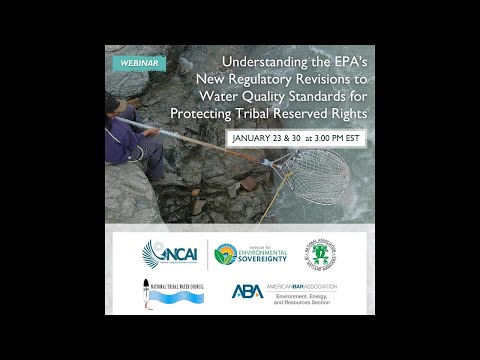
A webinar hosted by NCAI explained the EPA's Tribal Reserved Rights rule (40 CFR part 131), effective June 2024, which requires states to "take into consideration" tribal reserved rights asserted in writing when developing water quality standards and provides EPA technical support and review factors for consistency with the Clean Water Act.
The National Congress of American Indians hosted a webinar on the EPA's Tribal Reserved Rights rule, which took effect in June 2024 and revises 40 CFR part 131 to require states to consider tribal reserved rights when tribes assert them in writing. Viswatej Attili, an environmental analyst at NCAI, opened the session and Ken Norton, chair of the National Tribal Water Council, said the rule "memorializes tribal reserve rights in federal law" by incorporating those asserted rights into the Clean Water Act section 303(c) state standards process.
The rule defines "tribal reserved rights" for this context as rights to Clean Water Act-protected aquatic and aquatic-dependent resources reserved by tribes through federal treaties, statutes, or executive orders, but it does not itself adjudicate those rights or claim to create new tribal rights. "EPA in its preamble to the rule, hastens to say that they are not purporting to establish or interpret rights," Donna Downing, senior legal policy adviser at the National Association of Wetland Managers, said during the webinar.
When a tribe submits an assertion of a reserved right in writing to the state and EPA, states must, "to the extent they have available data and information," take into consideration the tribal use and anticipated future exercise of that right when developing or revising water quality criteria, the presenters explained. The rule also asks states to consider "suppression effects" (for example, where limited fish populations or low observed consumption have suppressed historical tribal uses) and, where appropriate and feasible, to use available data and methods that reflect unsuppressed tribal uses.
The rule responds to public comments in several ways, including clarifying that (1) tribes trigger the process by asserting rights in writing rather than the state being required to conduct independent treaty inquiries; (2) EPA will provide technical assistance to states and tribes; and (3) states should consider suppression effects using available methods rather than being forced to build entirely new datasets. Norton noted the final rule language changed during rulemaking from mandatory command language to a "shall consider" formulation in some places, which may affect how state adoption plays out.
Why it matters: water quality standards serve as the foundation for many Clean Water Act programs and permitting decisions. Several panelists explained that standards inform section 401 certifications, NPDES permits and other permitting decisions. When standards explicitly protect tribal reserved rights (for example, by using fish-consumption rates that reflect tribal consumption), those standards must be considered in subsequent permitting and regulatory reviews.
The webinar panelists emphasized practical steps for tribes: document the geographic scope and nature of asserted rights, provide data and methods (including monitoring and health-impact assessments), and engage early with state agencies and EPA to request consultation and technical assistance. The panel also cautioned that the rule's statutory reach depends in part on the scope of "waters of the United States," which courts and agencies continue to define.
The panel answered audience questions on scope, implementation, and legal risk. Panelists said the rule does not require adjudication of tribal water rights; clearer legal records make integration into standards easier but are not a precondition. Panelists also noted litigation and administrative review are active risks to the rule's stability. Donna Downing said EPA will use factors listed in the rule and available science when reviewing whether state-submitted standards appropriately protect asserted tribal reserved rights.
What comes next: the webinar presenters encouraged tribes to assert rights where appropriate, prepare data-driven submissions to states and EPA, and pursue consultations and collaborative approaches. NCAI said unanswered questions would be posted and addressed in a follow-up session scheduled for January 30, 2025.