Get Full Government Meeting Transcripts, Videos, & Alerts Forever!
Get email alerts on the State Implementation topic
No spam. Unsubscribe anytime.
Oregon, Minnesota describe consultation approaches as states adapt to EPA’s tribal reserved‑rights rule
Summary
State implementers from Oregon DEQ and Minnesota MPCA described existing government‑to‑government consultation frameworks, examples of joint projects (PFAS fish sampling, Red Lake site‑specific standards, Bowstring lake modeling), and said they are still designing how to operationalize tribal reserved rights assertions in triennial reviews and rulemakings.
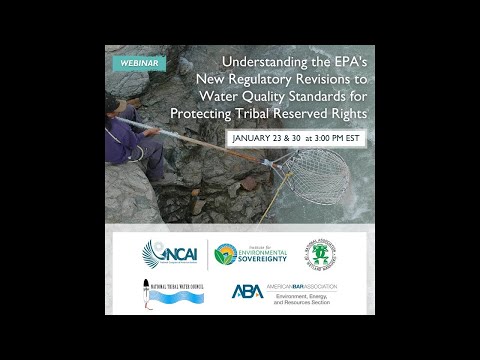
State officials from Oregon and Minnesota told a national webinar they are relying on existing consultation structures and incremental, collaborative approaches to implement the EPA’s tribal reserved‑rights rule while grappling with procedural uncertainty and limited resources.
"We don't really have a specific process by which that we've developed for implementing this rule," Jennifer Weigel, water quality administrator at the Oregon Department of Environmental Quality, said, adding that Oregon is using its triennial review process to prioritize projects and solicit tribal input. Weigel described past DEQ work that incorporated tribal fish consumption rates into human health criteria and a recent update to designated uses that drew on tribal and agency data for anadromous salmon life stages.
Dana Vanderbosch, assistant commissioner for water policy and agriculture at the Minnesota Pollution Control Agency, described Minnesota’s statutory requirement (originating from a governor’s executive order) that state agencies hold at least annual government‑to‑government consultations with tribal governments and maintain tribal liaisons to coordinate engagement. Vanderbosch said MPCA sends major permit documents to tribes in advance of public notice, uses coordination meetings as a screening step before formal consultations, and routinely invites tribal participation in watershed monitoring.
Both presenters gave project examples: MPCA co‑designed PFAS fish tissue sampling with the Prairie Island Indian Community; MPCA is collaborating with Leech Lake Band on Bowstring and Round Lakes modeling and Red Lake Band on site‑specific eutrophication standards that will be packaged for EPA review; Oregon DEQ highlighted salmon‑life stage designation updates informed by tribal data. Vanderbosch also highlighted the Saint Louis River mercury TMDL work with Fond du Lac and regional technical advisory participation.
What officials said they expect next: both agencies anticipate assertions of tribal reserved rights will arise in triennial reviews and rulemakings. They described an iterative, flexible approach—inviting tribal input early, using coordination structures, and prioritizing work given limited staff and budgets. Vanderbosch noted states are watching other states' processes (Wisconsin, in particular) for models they may adopt.
—Reporting based on presentations and audience Q&A during the NCAI webinar, with direct speaker attributions to Jennifer Weigel and Dana Vanderbosch.