Get Full Government Meeting Transcripts, Videos, & Alerts Forever!
Get email alerts on the Privacy Cameras topic
No spam. Unsubscribe anytime.
Nassau Bay council adopts ordinance limiting privately owned exterior cameras, removes grandfathering clause
Summary
The Nassau Bay City Council adopted an ordinance regulating placement of privately owned exterior cameras, removing a section that would have preserved some preexisting devices in easements. Council approved the amended ordinance 7–0 on Feb. 9, 2026.
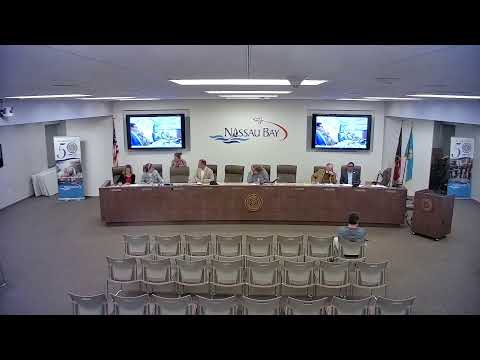
The Nassau Bay City Council on Feb. 9 adopted an ordinance regulating placement of privately owned exterior monitoring and recording devices, establishing setback requirements from public rights of way and city easements and clarifying enforcement for devices that encroach on public infrastructure.
Council members debated whether a grandfathering clause in section 6 would allow existing cameras in city easements to remain in place. Councilmember 8 argued nonconforming devices should lose their status if they are relocated, replaced or substantially modified; others asked whether cameras already installed in an easement were "lawfully installed." After discussion, Councilmember 14 moved to remove section 6; Councilmember 8 seconded. The amended ordinance passed unanimously, 7–0.
Mayor and council members emphasized that devices located within public easements or that interfere with public infrastructure or create hazards would not be allowed under the ordinance. Council and staff noted the city retains exemptions for devices the city itself owns.
The ordinance was presented as a second and final reading and is intended to balance residents' ability to place private cameras on private property with protections for public rights of way and easements. Council did not adopt additional language to create a separate administrative exemption; instead they removed the grandfathering language and approved the ordinance as amended.
The council vote recorded the motion to adopt the ordinance as amended (motion moved by Councilmember 14; seconded by Councilmember 8) and passed 7–0. The council indicated enforcement would focus on cameras that "encroach into a public right of way or city easement, interfere with public infrastructure, or create a hazard."