Get Full Government Meeting Transcripts, Videos, & Alerts Forever!
Get email alerts on the Housing Fairness topic
No spam. Unsubscribe anytime.
Lorain Fair Housing Board hears training on new source-of-income protections
Summary
The Lorain Fair Housing Board received a training from the Fair Housing Center on the city's 2024 expansion of its fair housing ordinance to add "source of income" as a protected characteristic, covering Housing Choice Voucher rules, common discriminatory practices, and complaint procedures.
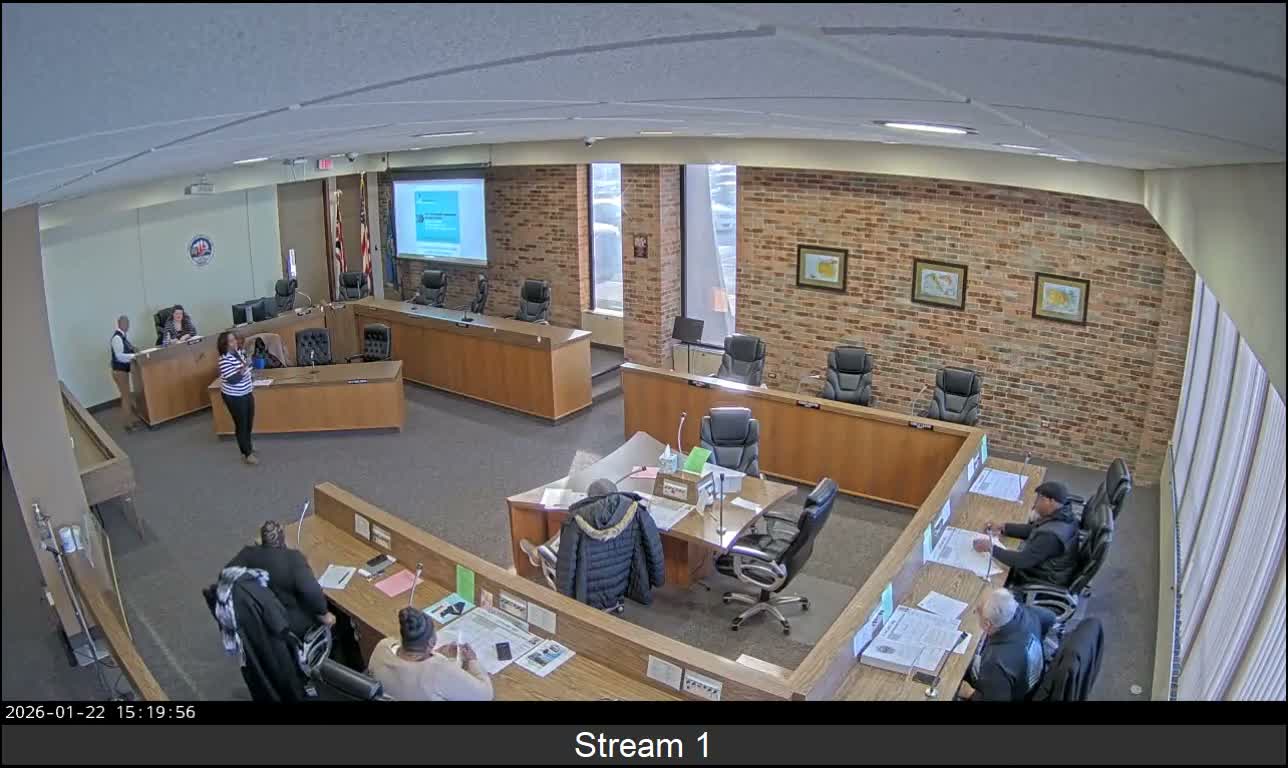
Tanisha Seaborne, director of education and outreach at the Fair Housing Center for Rights and Research, told members of the Lorain Fair Housing Board on Jan. 22 that the city updated its fair housing ordinance in 2024 to add "source of income" as a locally protected class and that the center is available to help residents and landlords navigate the change.
Seaborne said source-of-income discrimination occurs when a housing provider denies housing, offers different terms, or otherwise treats a person unfairly because of a lawful, verifiable income source such as Social Security, Supplemental Security Income, pensions, child-support, or a Housing Choice Voucher (formerly called Section 8). "Source of income discrimination is the practice of housing providers denying housing ... because of their lawful source of income," she said.
The presentation explained how voucher programs work: voucher holders typically pay about 30% of adjusted household income toward rent and utilities, and the local public housing authority pays the remainder through a housing assistance payment (HAP) once a unit passes a Housing Quality Standards (HQS) inspection. Seaborne identified the local administrator named in materials as Raise Up Partners (formerly LMEJ) and said units must meet basic health and safety requirements before HAP funds are released.
Seaborne gave examples of practices that can violate Lorain's local ordinance, including blanket advertisements that state "no Section 8," requiring income equal to three times the rent of voucher holders, charging higher fees or different leasing terms based solely on nonemployment income, delaying or falsely denying availability due to a prospective tenant's voucher, and screening out applicants who receive Social Security or other public assistance. She cautioned that failing an HQS inspection is not by itself discriminatory, but she said deliberate misrepresentation of inspection results or intentionally avoiding inspections could be pursued.
The training included case examples from other jurisdictions. Seaborne cited a 2023 Fair Housing Justice Center matter in New York that, according to her slides, resulted in a settlement requiring defendants to pay $220,000 and undertake injunctive relief. She also summarized Chicago and insurer-related cases she said resulted in compensatory and civil damages and procedural remedies; transcript excerpts list amounts such as $750 and $5,000 in one example and various tiers of payments in others.
Board members pressed on local implications: several members asked how complaints would be handled while the local voucher waitlist is closed and expressed concern about the city's limited supply of affordable rental housing. Seaborne replied that existing voucher holders can still move and use vouchers within the local payment standard, but that funding limits mean fewer new vouchers are available; she urged members to refer potential complainants to the Fair Housing Center first so the center can intake and test complaints to strengthen any case before it comes to the board.
Board members and staff explained the board's enforcement role: once staff vet an intake and determine an alleged discriminatory practice exists, the complaint may be placed on the board docket, both parties are heard, and the board can find violations of the local ordinance and impose civil (and potentially criminal) penalties subject to appeal.
The board voted by voice to accept minutes from October 2025 at the meeting start. The presentation concluded with the board thanking Seaborne and noting the center's materials and FAQ packet for members and for posting on the city's website. The board invited the Fair Housing Center and local PHA representatives to return for further explanation and landlord outreach as complaints arise.