Get Full Government Meeting Transcripts, Videos, & Alerts Forever!
Get email alerts on the Council Rules topic
No spam. Unsubscribe anytime.
Lorain committee debates council‑rules rewrite, livestreaming and public‑comment limits
Summary
Committee members reviewed proposed changes to council rules — discussing the presiding officer’s role, a possible parliamentarian, public‑comment procedures, livestreaming costs and conduct/discipline protocols — and voted to send the revised rules to council.
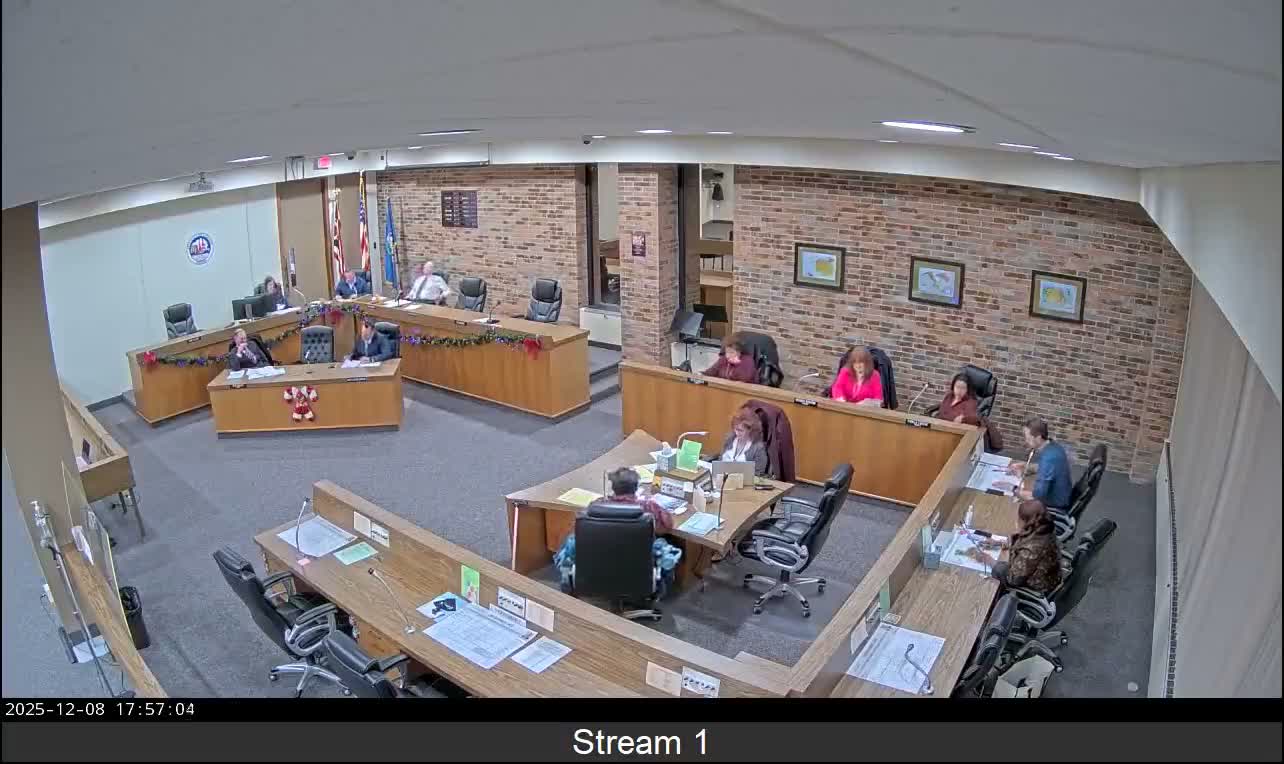
The police, fire and legislative committee of the Lorain City Council spent the second half of its meeting on a broad review of council rules, covering presiding‑officer authority, whether to add a sergeant‑at‑arms or parliamentarian, public‑comment procedures, minutes and the future of livestreaming.
Why it matters: proposed rule changes would shape how the council manages decorum, public input and transparency. Several items discussed could affect how residents participate in meetings (who must provide contact information, how long commenters may speak and whether meetings remain available via livestream).
Key debates and positions - Presiding officer and alternatives: Several members urged a clearer written definition of the council president’s role and powers; Miss Rygalski recommended a parliamentarian to advise on Robert’s Rules, while others said the council president and law department already provide necessary authority. Mayor Bradley stressed that the council president is an administrative officer and emphasized preserving decorum “at all times.”
- Public‑comment procedure and sign‑in information: Members broadly favored requiring contact information (phone or email) on sign‑in sheets but questioned requiring a full home address because of safety concerns. The law director noted House Bill 609 (under consideration in Columbus) frames public‑comment sign‑in as contact information rather than mandatory address disclosure.
- Time limits and committee discretion: Council members disagreed on uniform time limits for committee public comment. Proposals ranged from no time limits (leave to each chair) to 2–4 minute guidelines with chair discretion to extend; many recommended a consistent baseline to avoid confusion across committees.
- Livestreaming and transparency: Members were split over whether to continue paying for live streams that council did not formally adopt. Proponents said livestreaming preserves public access and helps homebound residents. Opponents, including budget‑conscious members and those concerned about poor audio/video quality and ADA issues, urged the body to discover actual costs and equipment needs before committing funds. ‘‘A bad stream is better than no stream,’’ one member said; others replied that unreliable streaming can create more confusion and false perceptions.
- Conduct and discipline: Council reviewed rules for handling disruptive participants and member misconduct (rules 40–42). The law director explained the protocol — point of order, president decision, and council review — and defended a multi‑step warning system as designed to produce a robust record should prosecution be needed later.
What’s next: The committee instructed the law department to reconcile inconsistent rule language, draft the recommended revisions, and send the amended rules back to council. Committee members approved a motion to forward the revised rules to council for consideration.