Lifetime Citizen Portal Access — AI Briefings, Alerts & Unlimited Follows
Office of Government Ethics offers guidance on federal employees' personal social media use
Loading...
Summary
The Office of Government Ethics (OGE) provided training advising federal ethics officials on how standards of conduct apply to employees' personal social media accounts, emphasizing disclaimers, limits on invoking official titles, and caution when posting work-related content.
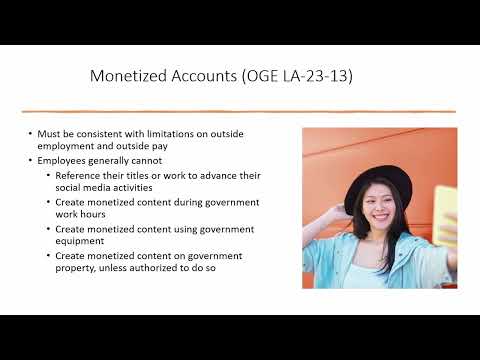
A presenter from the Office of Government Ethics told ethics officials that federal executive-branch employees may maintain personal social media accounts but must take steps to ensure their activity complies with the standards of conduct. "The standards of conduct require that employees take steps to ensure members of the public would not misconstrue their statements as being sanctioned or authorized by the government when they are not," the presenter said.
OGE advised that using a government title or official photo on a personal account is generally permitted in profile sections reserved for professional background, but employees should avoid using their position to advance personal interests. The presenter recommended placing a "prominent disclaimer" in users' profiles — for example, on LinkedIn, in the headline — especially when the employee holds a high-level post, works in a press office, uses an official-looking photo, or frequently posts about agency work.
The training stressed two guiding principles: employees must not misuse their position for personal advantage, and they must avoid actions that could be mistaken for official government communications. The presenter said these principles influence whether employees should reference titles, post work photos, or share content related to their official duties.
OGE told ethics officials to consult agency supplemental regulations and policies because practices on government devices and during work hours vary by agency. The presenter noted that access to personal social media on government computers and mobile devices is "generally disfavored and may, in fact, be prohibited by your agency's policy." Ethics officials were urged to use OGE's published legal advisories and the Institute's training materials when advising staff.
The session concluded with a reminder that, when in doubt, employees should include clear disclaimers, avoid invoking their position in ways that suggest government endorsement, and consult their ethics office for case-by-case guidance.