Get Full Government Meeting Transcripts, Videos, & Alerts Forever!
Get email alerts on the Brinley Court topic
No spam. Unsubscribe anytime.
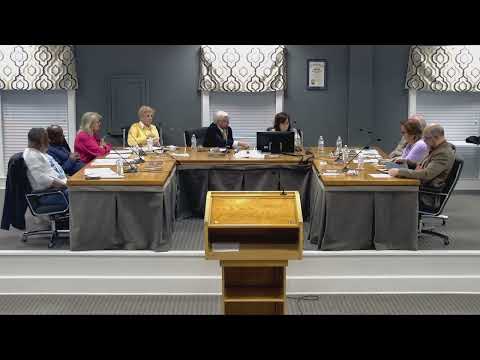
Lewisburg work session examines who should pay to fix Brinley Court
Summary
Council discussed multiple options after finding Brinley Court’s pavement failed; staff and legal counsel told the council a full rebuild may cost about $100,000 and accepting the road without conditions could limit the city’s ability to pursue the developer. Council directed staff to review bonds and legal options.
At a City of Lewisburg work session, council members and staff discussed options for addressing long‑standing pavement failures on Brinley Court and who should pay to repair them. Staff and other speakers said the road appears to have been built on improper subgrade material and that simply adding a top coat would not fix the problem.
Why it matters: The council must decide whether to accept the street — which could obligate the city to repair it — to pursue the developer for repairs, or to create a special assessment that would charge affected residents. Staff warned that accepting one unfinished road without a clear policy could create precedent and expose the city to larger financial liability across multiple subdivisions.
City staff and council described a range of cost estimates discussed in the meeting. Speakers referenced an earlier receipt for roughly $28,000 tied to the subdivision; participants said half of that amount was spent on a base coat and that a top coat alone was estimated in the range of $40,000–$60,000. Several speakers and the city inspector (Brandon, named in the transcript) said a proper full rebuild — removing failed material, importing approved rock/chert, placing base, and two asphalt lifts — could cost about $100,000 or more.
An official (Speaker 7) summarized legal guidance received after speaking with John Waddell of MTAS, saying accepting the road could limit the city’s legal recourse against the developer unless the city negotiated specific conditions. Speaker 7 listed four options relayed from counsel: (1) accept the road and pay to repair it; (2) negotiate a shared‑cost agreement and accept after the work meets standards; (3) provide residents information about pursuing civil claims against the developer; or (4) accept the road and levy a special assessment against residents (the speaker said both the charter and the TCA allow assessments but specifics must be researched).
Council members expressed concern about fairness: about eight houses would share any special assessment and the per‑house cost could be substantial. Several members urged caution and recommended the council not adopt a one‑off fix that would obligate the city to cover developer responsibilities citywide.
What happens next: The council directed staff (Barbara and Richard were named in the discussion) to review subdivision bonds, receipts, and other records to determine exposure and whether previous bonds or receipts were properly recorded. Councilwoman and staff said they will request a written estimate from Lincoln Paving that clarifies what portion of work and removal the contractor would perform. The council also discussed adopting stronger financial guarantees (for example, irrevocable bonds or letters of credit with escalator clauses) and updating subdivision inspection and proof‑rolling requirements to reference current Tennessee Department of Transportation standards.
Votes and formal actions: No binding decision to repair or accept Brinley Court was made at the work session. The council assigned staff to review bonds and bring recommendations to future agendas.
Ending: The council moved on to other agenda items and set follow‑up work on bonding, contractor estimates and policy language before any decision about repairs.