Lifetime Citizen Portal Access — AI Briefings, Alerts & Unlimited Follows
Presentation at Paramount traces Burlington's rise from buffalo trails to mills and downtown revival
Loading...
Summary
At a Paramount Theater talk hosted by the City of Burlington Recreation and Parks, two presenters recounted Burlington's development from early buffalo and trading paths through railroad-led company shops, textile and hosiery mills, the 1900 strike, mid-century industrial booms and late-20th-century downtown decline and preservation efforts.
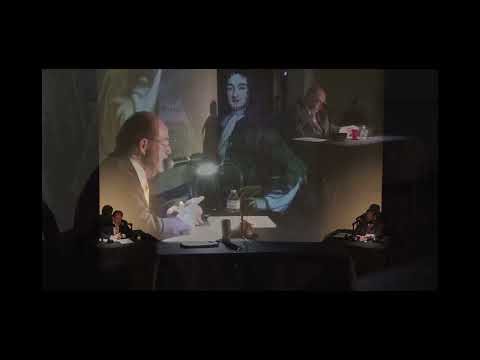
Speaker 1 opened the evening "on behalf of the city of Burlington and the Department of Recreation and Parks and the Paramount Theater," welcoming attendees and introducing a roughly 90-minute illustrated history of the city followed by questions. Speaker 2 then framed the talk: it would touch on highlights from precontact trails through the present day because many early records were lost.
The presenters said Burlington's location grew out of ancient migratory pathways, with Speaker 1 saying "Burlington is where it is solely because of its particular location" and tying that geography to 19th-century railroad decisions. Speaker 2 described how the North Carolina Railroad, chartered in 1849, routed along low-grade corridors that followed older trails; when Walter Gwynne served as the railroad's chief construction engineer in 1853 he proposed siting major repair and maintenance shops near the midpoint of the line. The railroad established extensive "Company Shops" there; the speakers said the shops and related facilities were central to the town's early economy.
The lecture traced the shift from railroad to mill dominance. Presenters described early water-powered textile works (including an 1837 Alamance factory) and later steam-powered mills and hosiery operations that employed whole families. The talk noted social and labor conditions in the mills: long hours, low wages and hazardous tasks for children. Speaker 1 summarized the 1900 textile strike: "At least 5,000 of the 8,000 mill employees walked off the job," the presenters said, and employers such as the Holt family ultimately reopened mills without union labor, an outcome the speakers said left long-standing local grievances.
Speakers also reviewed Civil War and Reconstruction-era events affecting the area, including troop movements near present-day Burlington, the strategic importance of the railroad shops to Confederate logistics, and later violent episodes during Reconstruction. The presenters singled out the lynching of Wyatt Outlaw in Graham and Governor Holden's subsequent militia intervention as high-profile events that shaped the region's postwar politics.
Through the early 20th century presenters described civic improvements (city hall in 1916, new schools, streetcar service beginning in 1911), immigrant merchant communities (Greek, Jewish and others), and growth in downtown commerce. The Great Depression and several fires halted some expansion, but post-World War II industry ' notably Burlington Industries and a Western Electric plant ' brought another economic surge before later global competition and downtown renewal efforts changed the city's commercial patterns.
The presentation closed with the town's more recent history: large-scale demolition and a failed 1970s pedestrian mall followed by preservation successes, including the Paramount Theatre's renovation. Speaker 1 noted that the Paramount will mark its renovation anniversary next year and thanked the city and allied organizations for continuing support.
The presenters illustrated many points with local names and dates (e.g., the North Carolina Railroad work in the 1850s; the town naming meeting of 02/01/1887; the 1900 strike) and cautioned that some early records were incomplete or lost. The talk emphasized how transport infrastructure, industry and civic investment repeatedly reshaped Burlington's economy and downtown fabric.