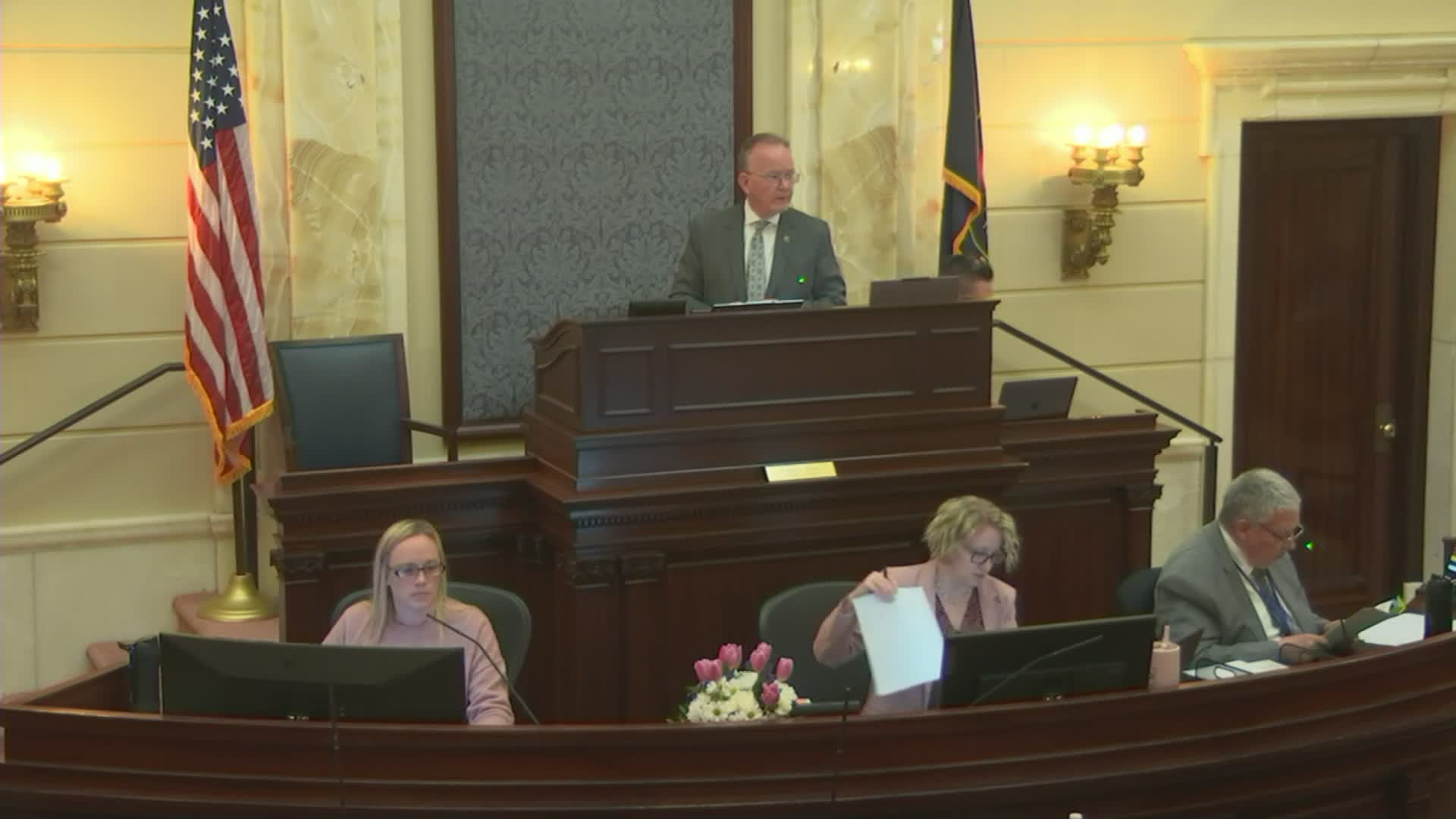
Senate adopts softer timetable and removes penalties in bill addressing "programmable money"
Loading...
Summary
Lawmakers accepted a substitute to SB 298 that removes criminal penalties and delays implementation for a year while preserving protections: non‑programmable payment options and prohibitions on discriminatory coding. The substitute passed on the floor (20–6).
Senators debated SB 298, a bill addressing "programmable money" — digital funds that can be coded with usage rules — and adopted a substitute that softens enforcement and delays implementation.
Sponsor Senator Stratton explained the technology and the substitute’s intent: programmable money could restrict where and how funds are spent, which raises privacy and equity concerns. "Programmable money is different," he said; "it is a digital money that can be designed to follow building instructions" and, as introduced, the bill originally included criminal penalties. The adopted substitute, Senator Stratton said, "takes the teeth out and extends the implementation date for a year" to allow further work and guidance development.
The substitute adds two explicit guardrails the sponsor emphasized: (1) a prohibition on discriminatory or seclusionary uses and (2) a requirement that an option to use non‑programmable money remain available locally. After limited floor discussion the chamber approved the substitute and advanced the bill to third reading with a recorded roll call (20 aye, 6 nay, 3 absent).
Next steps: The bill advanced for third reading with the substitute; additional technical work and stakeholder engagement were signaled by the sponsor before final implementation.