
Panel backs subcontractor transparency measures on public projects to curb payroll fraud
Get AI-powered insights, summaries, and transcripts
Subscribe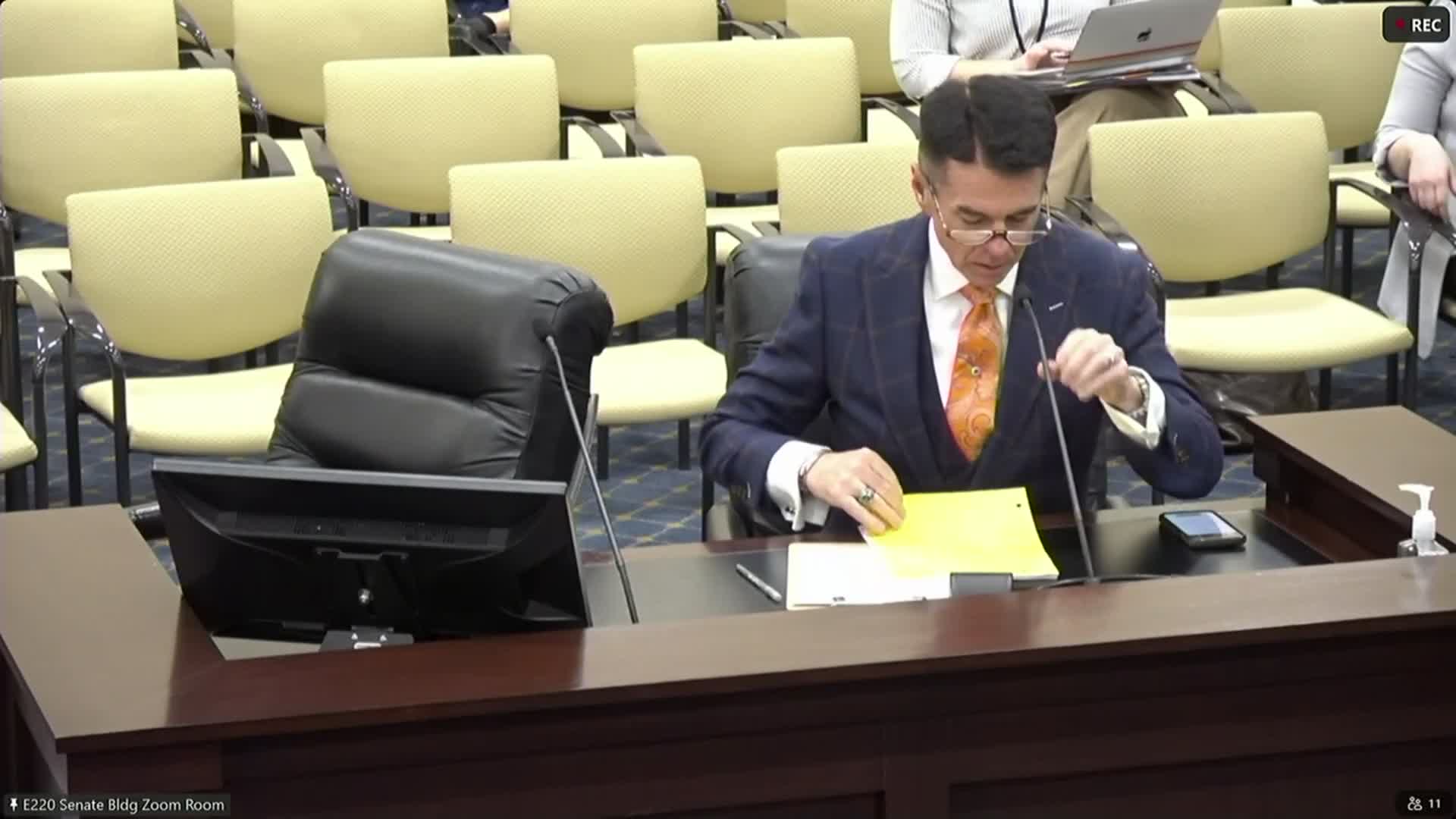
Summary
The committee favorably recommended first substitute HB396, which requires prime contractors on public projects to obtain attestation forms, provide employee lists on request, and include criminal-fraud warnings to address labor-broker practices and alleged tax/workers' compensation evasion.
SALT LAKE CITY — The Senate Government Operations and Political Subdivisions Standing Committee on Friday favorably recommended first substitute House Bill 396, legislation that requires greater transparency of subcontractor payroll on public projects and new attestation requirements for prime contractors.
Representative Burton, the sponsor, said the bill is narrowly targeted to state-funded projects and creates mandatory attestation language and a criminal-fraud warning for contractors. "We try to be very narrow in our focus on this bill," the sponsor said, and added the measure requires contractors to keep a list of employees available upon request from state inspectors.
Industry and labor witnesses testified in support. Tyler Purcell, representing Pete King Corporation, said labor brokers undercut law-abiding contractors by paying workers in cash and saving roughly 25% on labor costs, imperiling legitimate local employers. "If this isn’t addressed, drywall contractors that actually keep the law won't be in Utah," Purcell said. Calvin Forse of the Western States Regional Council of Carpenters described the change as protecting wages and worker protections on public projects. David Spadafore listed multiple construction-industry organizations endorsing the bill and cited an estimate, from past discussions, that underground construction employment may have evaded approximately $25.7 million in payroll-associated costs and $2.6–$5.1 million in state income tax revenue (testimony described those as estimates gathered during stakeholder meetings).
Committee members questioned recordkeeping burdens, how long lists must be kept, and what employee data would be provided on inspection; sponsors and witnesses said records would generally mirror standard payroll documentation (W-2 lists, license numbers when applicable) and only require name and employer on the on-site list with additional data provided when DOPL opens an investigation. The sponsor said the bill avoids overreaching and focuses on taxpayer protection on state projects.
Senator Vickers moved to adopt the first substitute and later moved to favorably recommend the substitute; the committee recorded the motion as approved. The sponsor thanked the committee and noted the bill aims to "get our house in order" on state construction projects.
Next steps: If enacted, affected contractors and prime general contractors will need to implement attestation language and make employee lists available on public-project sites; DOPL and other enforcement bodies may use these records when investigating alleged payroll fraud.