Senator introduces bill to ban certain synthetic food dyes in Alaska school meals; committee holds bill
Loading...
Summary
Sen. Bill Wilikowski introduced SB 187 to prohibit specified synthetic food dyes in public school breakfast and lunch programs, citing research on behavioral and allergic effects; invited dietitians and pediatric advocates supported it and DEED reported no state fiscal impact. The committee held the bill for further drafting.
Anchorage state Sen. Bill Wilikowski introduced Senate Bill 187 on Wednesday, proposing to prohibit several synthetic food dyes in public school breakfast and lunch programs across Alaska.
Wilikowski told the Senate Education Committee he filed the bill after seeing what he described as evidence that these additives affect some children''including personal family experience. "We're doing it because the Food and Drug Administration has been talking about doing this for 35 years and yet has not done it," he said, framing state action as a gap'filling step.
Phoebe Pepper, a legislative intern who presented the bill text, told the panel the measure would ban seven synthetic dyes used for cosmetic coloring and said six of them are petroleum based while the seventh (Blue No. 2) relies on sulfuric acid in its manufacture. Pepper cited research she included in committee packets and said school districts she contacted reported few products in their supply that contain the dyes and did not foresee significant cost increases from switching to natural colorings.
"When many protective factors supporting learning and healthy development are being stripped from our schools, ensuring children have access to healthy, nutrient rich, and minimally processed foods is the least we can do," said Tamar Ben Yosef, executive director of the Alaska Pediatric Partnership, in testimony supporting the bill.
A registered dietitian who testified in support described academic and behavioral benefits from reducing ultra'processed foods and artificial colors. "By removing these dyes from school meals, we can foster better concentration, reduce behavioral challenges, and promote lifelong eating habits that are healthy for children," the dietitian said.
Pepper also noted one industry letter of opposition from a chemical organization in Washington, D.C., and the sponsor acknowledged industry resistance to similar measures in other states.
On fiscal impact, Heather Heineken, director of finance and support services at the Department of Education and Early Development, told the committee the child nutrition fiscal note shows no cost to the department because food procurement is handled at the district level.
Committee members pressed sponsors on scope and definitions'asking whether the proposal would affect after'school, athletic or culinary programs. Pepper said the sponsors' intent was to limit the statute to school breakfast and lunch nutrition programs and that she would work with the committee on tightening the statutory definition.
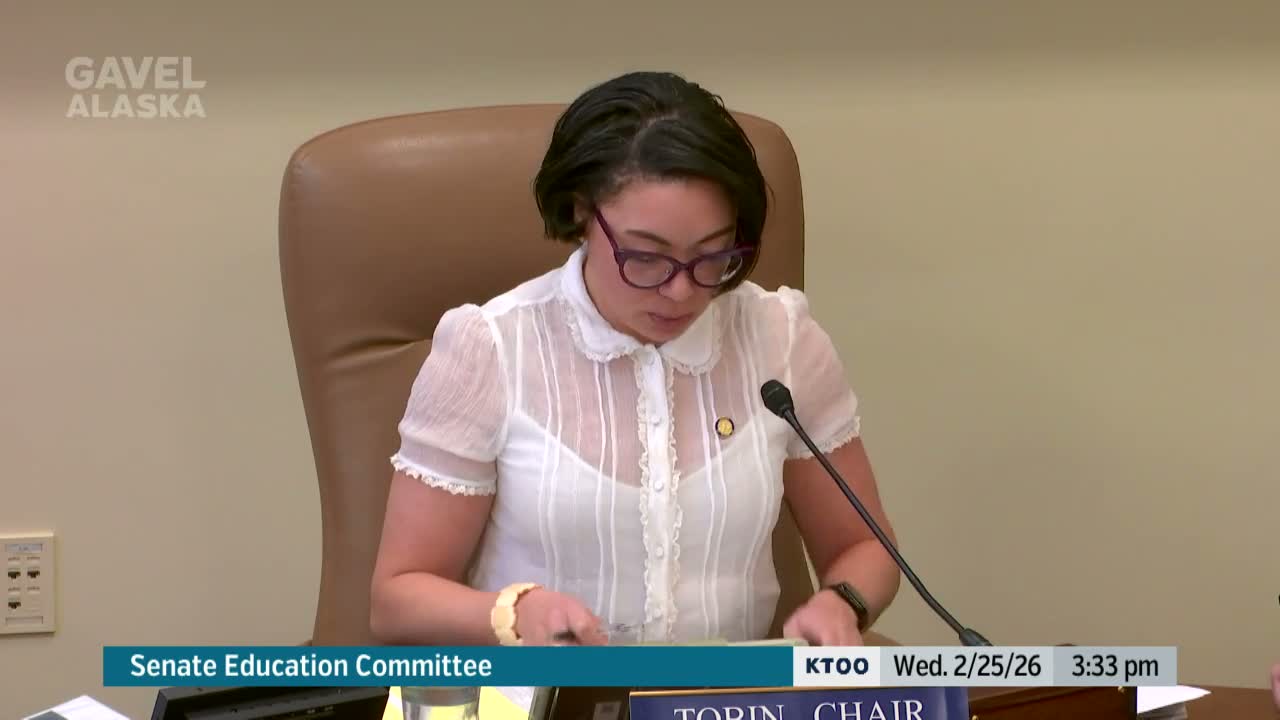
Chair Tobin opened public testimony and reported no in'room or online speakers. After questions and discussion, the committee voted to hold SB 187 for a future meeting so sponsors and staff can refine language and potential amendments, including an effective date and a more specific definition of "school nutrition program."