
DNR pitches vehicle-registration "outdoor recreation endorsement" to fund parks and conservation
Get AI-powered insights, summaries, and transcripts
Subscribe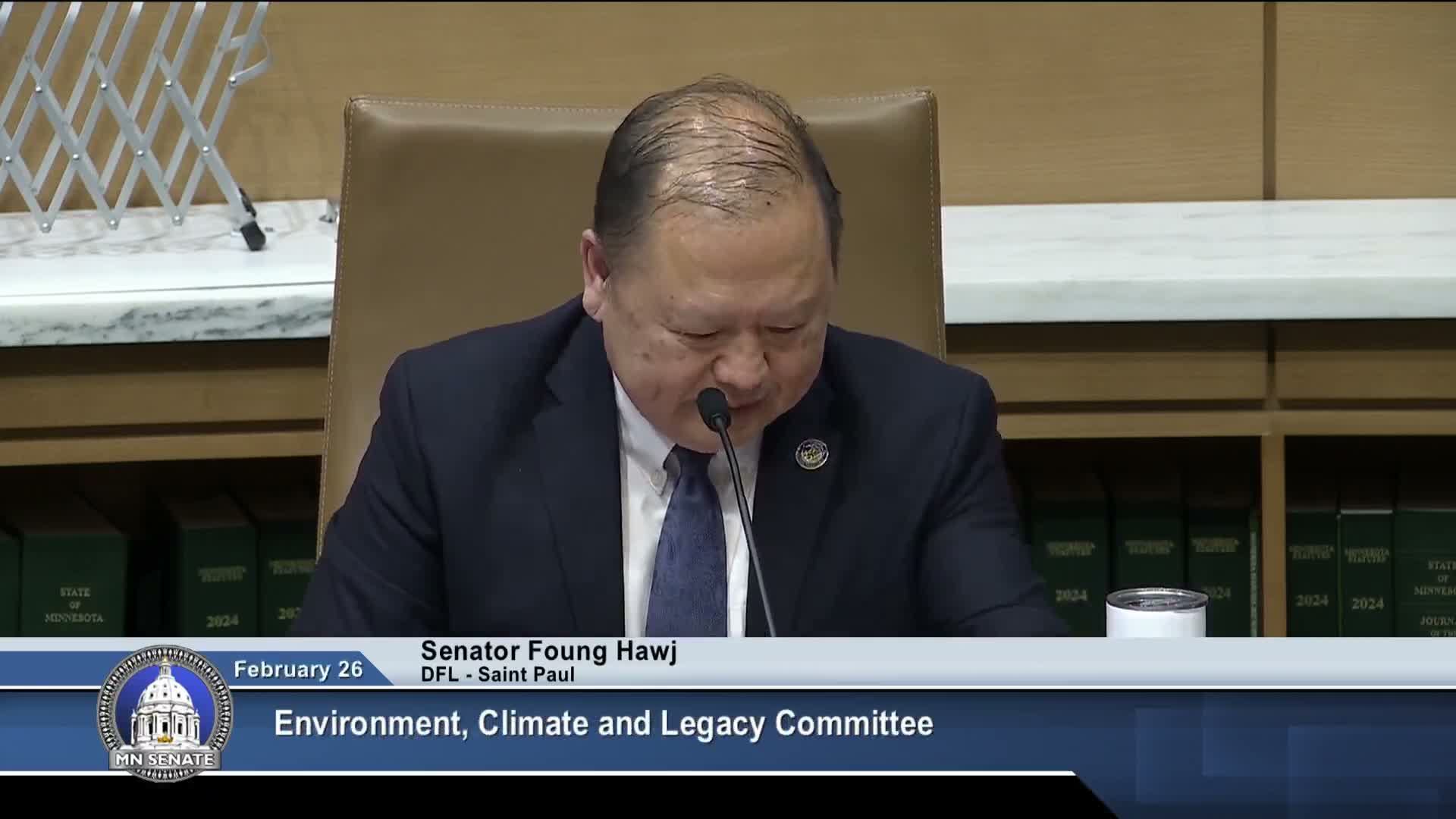
Summary
Minnesota DNR presented a proposal for an opt-in vehicle-registration endorsement that would replace some park stickers, reduce per-user fees over time and distribute revenues across parks, wildlife, forests and enforcement; DNR recommended statutory protections and outlined a phased fee plan.
The Minnesota Department of Natural Resources presented its outdoor recreation endorsement proposal to the Senate Environment, Climate and Legacy Committee on Feb. 26, pitching an opt-in vehicle-registration add-on to replace many annual park stickers and create a stable revenue stream for parks, wildlife areas and other DNR-managed lands.
Commissioner Sarah Stroman described the proposal as the fourth step of a "for the outdoors" initiative and said it emerged from public engagement begun in 2021. Ben Burkey, regional director and lead framework author, told the committee the endorsement would be opt-in at vehicle registration and could substantially broaden participation while lowering the per-user cost.
Burkey described a five-year implementation plan aimed at a $19 annual endorsement price at year five, with early discounted pricing beginning at $15 for the first two years then $17 for years three and four. He said an on-site endorsement would be intentionally more expensive (about $12 additional) to encourage purchase at time of vehicle registration.
DNR provided projected distribution priorities for endorsement revenue: 45% to parks and trails (to replace lost sticker revenue), 25% to wildlife and aquatic management areas, 11% for state forests, 9% to scientific and natural areas and 6% to enforcement and education; 4% would be reserved for the commissioner to address emergent needs.
Senators asked about administrative effects and protections. Senator Hoffman and others urged statutory earmarking to prevent diversion of funds; Commissioner Stroman said the agency recommends placing distributions in statute to protect uses and that administrative savings from fewer sticker transactions would likely be repurposed, not eliminated.
Committee members also questioned the parity between resident and nonresident fees. Director Burkey said the DNR currently does not differentiate some pass prices and cited recent sales of roughly 400,000–420,000 passes to Minnesota-licensed vehicles and about 100,000 to nonresidents as rationale for the proposed structure.
Members requested additional fiscal-detail follow-up, including precise estimates of funding gaps the endorsement seeks to close and confirmations of how the endorsement would interact with existing specialty plates and habitat plates. DNR said the endorsement could be layered with specialty plates and that the agency will provide requested details to the committee.