
Hatoosh Lakish Coalition urges investment in traditional healing during Alaska House tribal affairs hearing
Get AI-powered insights, summaries, and transcripts
Subscribe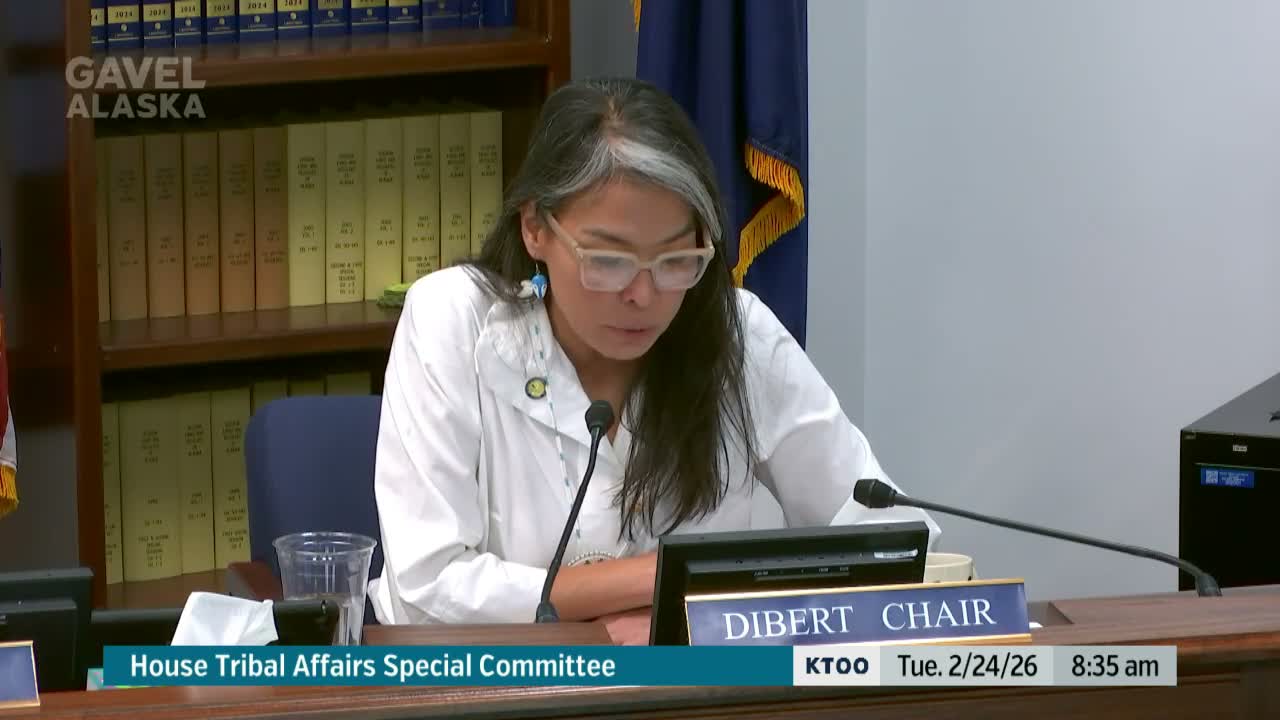
Summary
At a Feb. 24 House Tribal Affairs hearing, the Hatoosh Lakish Coalition described language classes, plant‑medicine curricula, intergenerational healing camps and a Quaker donation supporting a healing center in Kake, asking legislators for more resources to expand regional traditional‑healing programs.
Co‑chair Divert convened the Alaska House Tribal Affairs Committee on Feb. 24 in Capitol Room 106 to hear the Hatoosh Lakish Coalition present on traditional healing and cultural well‑being in Southeast Alaska. ATI Nacia, the coalition's executive director, told the committee the coalition works regionally to center Indigenous knowledge in healing programs and to respond to community requests for partnership and support.
"We need to work together. We need more resources. We need advocates with strong voices," ATI Nacia said in closing, asking legislators to help scale the coalition's programs. The coalition described a range of programs offered across Juneau and Southeast Alaska, including free Tlingit language classes, ocean dips and a Plants as Medicine curriculum designed to teach sustainable harvesting, traditional medicine identification and social‑emotional learning.
Elder Della Cheney offered a traditional chant and recounted historical harms including forced relocations and the 1896 bombardment of Kake, framing ceremony, gifting and public apologies as part of longstanding cultural practices that support community healing. Cheney described the practical challenges facing subsistence communities — rising fuel and equipment costs for fishing and processing fish — and tied those pressures to broader needs for food sovereignty and support for local healing centers.
Coalition manager David Abad opened with a land acknowledgement and highlighted intergenerational programs and school partnerships, naming the Alliance after‑school program and the Kasay Kutia healing totem pole project as examples of youth‑focused activities that bring elders and children together. Muriel Reed and Melody Music described the coalition's partner network (more than 35 organizations) and the coalition's transition to a nonprofit in July 2024 after work as a subsidiary of AWARE.
Naomi Leesk, regional healing catalyst, cited studies and international examples linking heritage‑language retention to declines in suicide and other harms: "If at least 50% of a community knows its heritage language, the suicide rate is essentially 0," she said, referencing research from Canada and outcomes observed among Māori and Hawaiian language programs. Leesk argued language work is a core protective factor and central to the coalition's prevention approach.
On fundraising and reparative steps, presenters said a national circle of Quaker friends provided a $93,000 contribution that helped launch an indigenous healing center project in Kake. The coalition said it has worked with First Alaskans Institute and the Association of Alaska School Boards to deliver leadership trainings and to support local initiatives such as Orange Shirt Day and school‑based supports tied to boarding‑school reparative processes.
During a short Q&A, Representative Story asked why the coalition gives ceremonial gifts to institutions implicated in past harms. Elder Cheney and coalition staff explained gifting and ceremony are cultural protocols used during apologies and reconciliation processes to acknowledge witnesses, honour ancestors and make space for community healing.
Committee members thanked presenters and connected the discussion to ongoing legislative work. Co‑chair Divert referenced measures the committee is following this session, including Senate Bill 210 (Indigenous culture heritage education), Senate Joint Resolution 22 (constitutional amendment on education and cultural heritage) and a tribal compact bill that would affect how Indigenous knowledge can be blended into public education. Presenters asked for continued legislative attention and additional resources to expand regional healing efforts.
The committee adjourned at 10:03 a.m.; the chair noted a follow‑up presentation by a regional corporation later in the week.
Sources: presentation and answers to committee members at the Feb. 24 House Tribal Affairs hearing, Hatoosh Lakish Coalition presenters (ATI Nacia, David Abad, Della Cheney, Naomi Leesk, Muriel Reed, Melody Music, Heather Evoy).