
Bill to return optional property‑exemption decisions to municipalities draws praise and caution from AML
Get AI-powered insights, summaries, and transcripts
Subscribe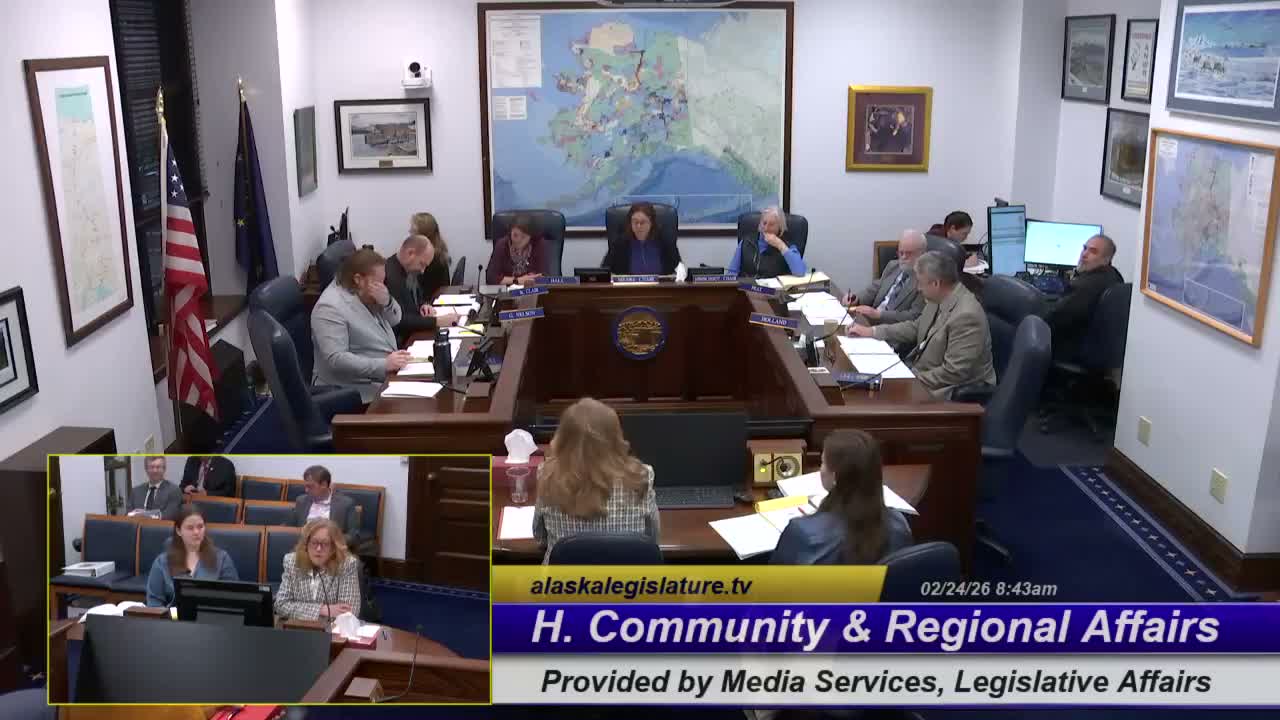
Summary
HB291 would repeal statutory limits on optional property tax exemptions so municipalities can decide local exemptions. The Alaska Municipal League supported local control but urged safeguards (grandfathering, fiscal-impact measures, voter fatigue protections and uniform definitions).
Rep. Julie Colombe introduced HB291 on Feb. 24, a bill she described as intended to restore local control by repealing numerous statutes that prescribe which optional property tax exemptions municipalities may adopt.
"HB291 is about local control," Colombe told the committee, saying the bill would remove the process that currently requires municipalities to obtain state permission through separate legislation to adopt certain optional exemptions. She said the bill does not touch constitutional or mandatory exemptions and that municipalities would still have to adopt any new exemptions in local ordinance.
Nils Andreassen, executive director of the Alaska Municipal League (AML), praised the intent to empower local decision-making but cautioned the committee to consider implementation details. He urged the committee to think about voter fatigue tied to the bill's $75,000 voter-approval trigger, to consider alternatives such as a percentage-of-value or revenue-impact trigger, and to prepare local fiscal-impact tools (exempted assessed value, projected revenue loss, mill-rate impact). "Thinking through how you want to approach those exemptions, and avoid voter fatigue, is probably something you want to think about," Andreassen said.
Andreassen also recommended clarity on grandfathering or phase-out options for existing exemptions, guidance to avoid tax shocks for fixed-income households, uniform definitions to ensure a level playing field across jurisdictions, and possible caps on aggregate exemption impacts.
Committee members asked whether nonprofit exemptions would be affected. Andreassen said nonprofit exemptions are constitutional and mandatory and, as such, fall outside HB291's scope. He also said the bill would help municipalities design economic-opportunity exemptions locally if they chose to do so.
Rep. Colombe and committee leadership said HB291 will require additional work and invited further testimony from mayors and local officials; they did not advance the bill during the Feb. 24 hearing.
Next steps: the committee plans extended review and invited testimony on local fiscal impacts and ballot/administrative design before deciding whether to move the bill forward.