
House committee advances bill to register home-based child-care providers, offer startup grants
Get AI-powered insights, summaries, and transcripts
Subscribe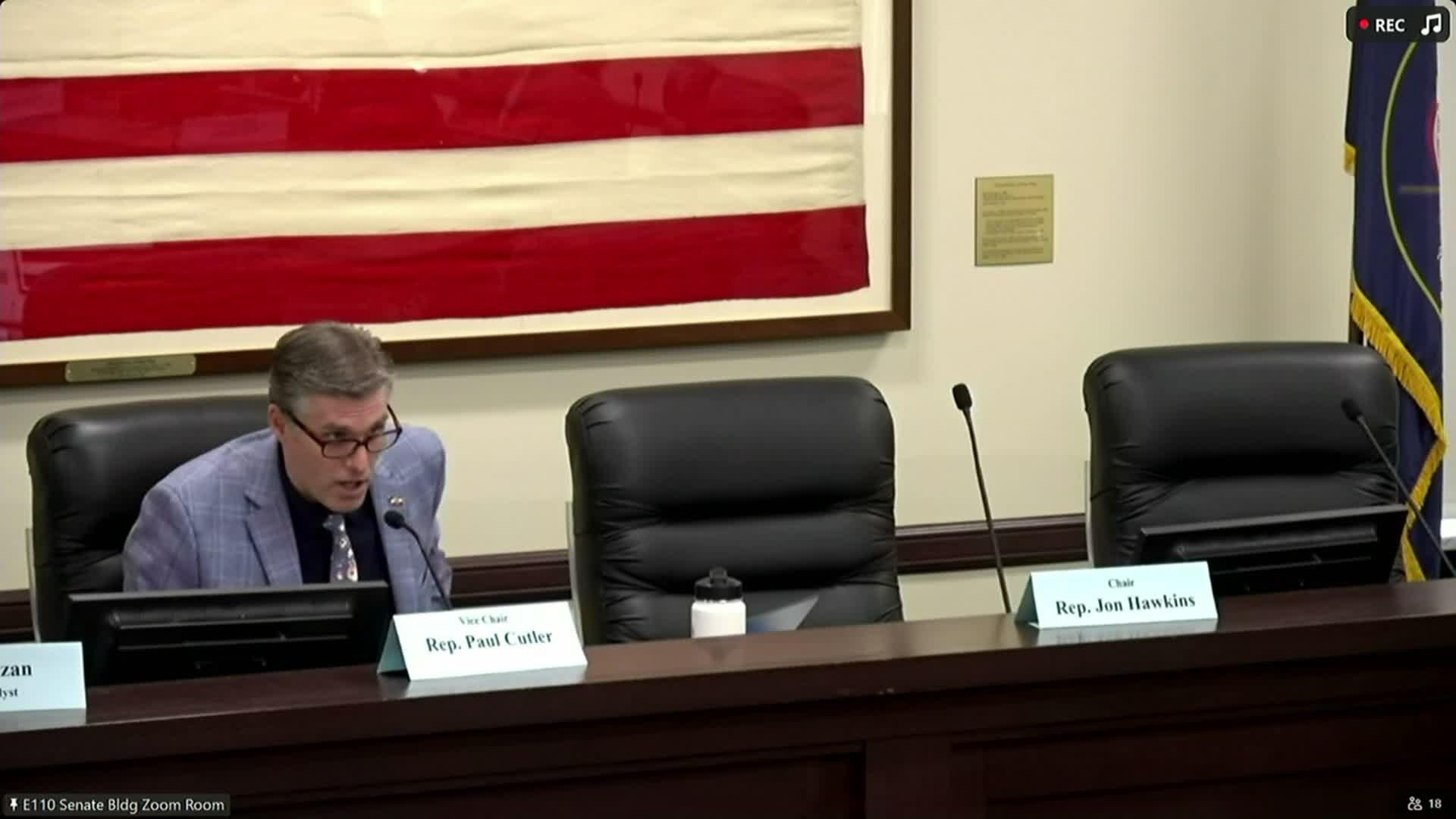
Summary
The House Economic Development and Workforce Services Committee voted 7–2 to favorably recommend SB 214, which would require registration and basic safety checks for nonrelative home child-care providers, raise the nonrelated-child threshold to 10, and create up-to-$5,000 startup grants targeted to childcare deserts with private matching funds.
Senator Escamilla urged the House Economic Development and Workforce Services Standing Committee on Feb. 26 to support SB 214, a proposal to expand and regulate home-based child care in areas with limited options. The bill would require providers operating as a business — caring for nonrelated client children — to register with the Department of Health and Human Services, submit to criminal background checks and fingerprinting, complete CPR training, and document how grant funds would be used.
Supporters said the bill aims to address childcare shortages in rural Utah by giving parents more choice and creating a lower-cost pathway for home-based providers to operate safely. "We spent the last few months looking at how we could really find solutions that honored the way that Utah likes to work," said Emily Bridal McCormick of the Policy Project, who described a public–private grant model in which donors match state funds to help providers buy safety equipment, fencing, cribs, or training.
The sponsor and witnesses described the grant as seed money: up to $5,000 per provider to cover start-up expenses and training. The bill’s fiscal note reported roughly $2.3 million in state funds (sponsors said private matching was expected); committee discussion noted the amount would be targeted to areas designated as childcare deserts. Senator Escamilla said the bill raises the threshold for nonrelated client children from eight to 10 (the statutory language distinguishes nonrelated client children from a provider’s own children) and that licensed providers’ rules remain unchanged.
Opponents, including representatives of early-childhood organizations and licensed providers, warned that increasing the number of nonrelated children per provider could reduce supervision and raise safety, liability, and insurance concerns. "More children allowed to be cared for by one individual means less overall supervision and an increased risk for serious harm," said Katie Rigard of the Utah Association for the Education of Young Children.
Several family providers and rural advocates testified in favor, saying the grants would make starting or expanding a home business feasible in lower-income rural communities. Amy Winder Newton, director of the Utah Office of Families, said she could not officially endorse the bill because it is not in the governor’s budget, but she applauded its approach and the added background-check protections.
The committee debated substitute language and an unsuccessful attempt to limit the counties covered. Representative Owens moved to favorably recommend the bill to the full House; the committee approved the motion by roll call, 7–2. The committee record shows recorded votes and a tally of yes=7, no=2; individual votes were partially recorded in the roll call as called on the floor.
Next steps: the bill is scheduled for consideration by the full House. If passed, the measure would require HHS to operate the new registration process and oversee grant administration in coordination with the public–private match described by sponsors.