Get AI Briefings, Transcripts & Alerts on Local & National Government Meetings — Forever.
COG maps PFAS Awareness Week priorities: wells, consumer products and community outreach
Loading...
Summary
COG members and Rick Radisky outlined plans for PFAS Awareness Week, recommending 2–4 priority messages (drinking‑water wells, fishing advisories, consumer products/cosmetics and household waste collection) and linking to vetted product lists for outreach.
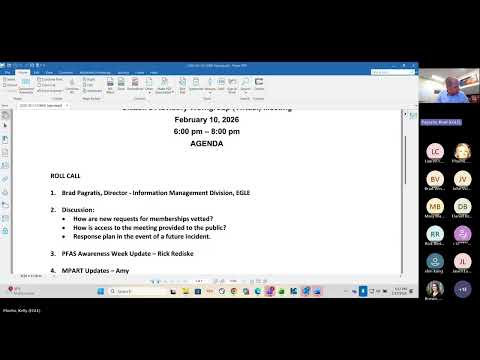
Rick Radisky presented the group's planning for PFAS Awareness Week, saying organizers will schedule events, recruit speakers from state agencies, universities and consultants, and focus messaging to be cohesive across the state.
"We've got, I'm working with universities, and at least for the Grand Rapids area, one of the local universities, Calvin, is giving a professor there some grant funds to sponsor PFAS awareness week events," Radisky said, describing collaboration with institutions and state partners.
Members urged narrowing the outreach to two to four consistent messages so statewide communications are not "scatter shot." Suggested priority topics included protecting drinking water wells, safe fish consumption, PFAS in consumer products and cosmetics, and collection of PFAS‑containing household items for proper disposal. Daniel emphasized reducing exposure pathways by prioritizing primary exposures such as drinking water and PFAS in food and cookware.
The group identified several vetted resources for public guidance: PFAS Central (University of California), the PFAS Project (Northeastern University) and the Environmental Working Group (EWG). Radisky said he would post links to PFAS‑free product lists in the meeting chat.
Members discussed outreach formats including in‑person events, speakers bureaus, continuing education for medical professionals and county hazardous‑waste collection campaigns. The COG plans to refine focus areas and coordinate with county and university partners ahead of awareness‑week activities.