Get Full Government Meeting Transcripts, Videos, & Alerts Forever!
Get email alerts on the Civic Governance Meetings topic
No spam. Unsubscribe anytime.
MPART COG keeps monthly schedule, affirms charter and plans outreach and training
Summary
At its January meeting the MPART community advisory group reaffirmed its charter to advise MPART on outreach to PFAS-impacted communities, decided to retain a monthly meeting cadence, and discussed expanding member-facing education, subcommittee reorganization, and an end-of-year outcomes summary.
Sandy, a member of the MPART Community of Government (COG), read the group’s charter and framed the meeting’s work: “It is a fundamental purpose of this work group to advise and assist MPART to partner proactively with PFAS impacted citizens and communities throughout Michigan,” she said, urging members to focus outreach and information-sharing.
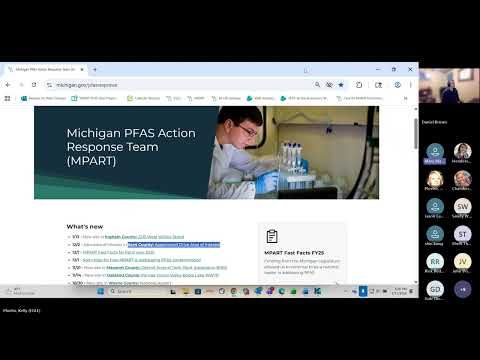
Members agreed the group adds value to MPART’s work and debated whether to keep monthly meetings. John asked how the COG has measured its success over the prior year and whether the group should develop simple metrics. MPART staff said the agency already reports annual “fast facts” (wells sampled, filters provided, sites assessed) but welcomed help summarizing COG accomplishments to demonstrate the advisory body’s value.
The group decided to keep a monthly cadence and cancel meetings as appropriate, rather than shift to a regular every-other-month schedule. Several members argued that monthly meetings maintain engagement for ongoing sampling and outreach efforts; one member said switching to bimonthly meetings could leave people disengaged for up to four months.
Members proposed a small number of structured changes to agendas: occasional dedicated educational presentations for newer members, followed by a member-update meeting; an outcomes-orientation for reporting (updates and outcomes rather than only community updates); and consolidating or re-energizing subcommittees where there is leadership interest. Suggested future topics included groundwater/surface-water monitoring, microplastics, and legal/policy updates.
The meeting closed with volunteers offering to help produce a brief end-of-year summary of activities and outcomes to show the COG’s contributions to MPART and communities.
The chair said follow-ups and assignments would be circulated by email and the group adjourned.