
Bill would allow challengers and watchers during in‑person absentee voting in larger counties; supporters cite 2024 confusion
Get AI-powered insights, summaries, and transcripts
Subscribe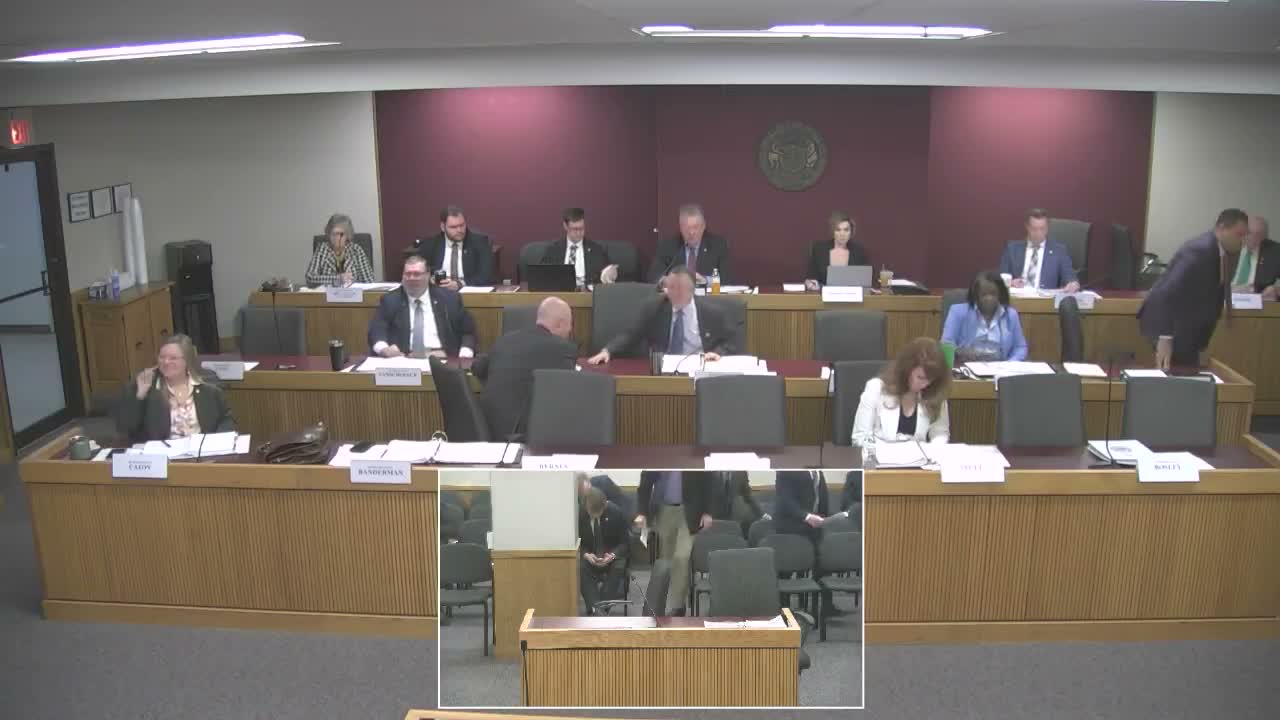
Summary
Rep. Matheson told the committee HB 1802 would let certified challengers and watchers observe in-person absentee voting in first-class and charter counties to provide consistent transparency after differing county practices and a 2024 legal dispute in St. Charles County.
Representative Matheson presented House Bill 1802 (House Committee substitute), saying the measure would allow certified poll challengers and watchers to be present during in-person absentee voting in first-class and charter counties to create statewide consistency. He said counties interpreted statute differently in 2024, producing disputes and, in one county, a court injunction attempt.
Matheson said the bill was narrowed to first-class and charter counties to address space and logistical concerns in smaller courthouses. Committee members questioned training and the potential for disruption; Vice Chair McGaugh and others urged that parties training challengers must ensure civility and that county election authorities retain authority to remove disruptive individuals. Representative Barnes and others asked for clarity on roles and protections for voters’ privacy.
Kurt Barr, St. Charles County director of elections, testified in support and described the statutory distinction between challengers (party-certified, with specific rights) and watchers (historically observers of tabulation). Barr said some counties allowed watchers in practice while others did not and recounted a 2024 legal challenge that briefly sought to halt absentee voting in his county; a subsequent judge allowed voting to continue. Another witness cautioned that treating counties differently could create legal challenges and urged careful drafting.
The committee closed the hearing on HB 1802 without taking a vote.