Get Full Government Meeting Transcripts, Videos, & Alerts Forever!
Get email alerts on the Special Assessment Private Roads topic
No spam. Unsubscribe anytime.
Rep. J. DeBoer proposes bill to let cities create special assessment districts for private roads
Summary
House Bill 43‑349 would amend the Home Rule City Act to let cities establish special assessment districts for maintenance of private roads, matching authority townships already have under MCL 41.722; proponents said residents would repay costs on tax bills over up to 60 months and petitions would determine assessment apportionment.
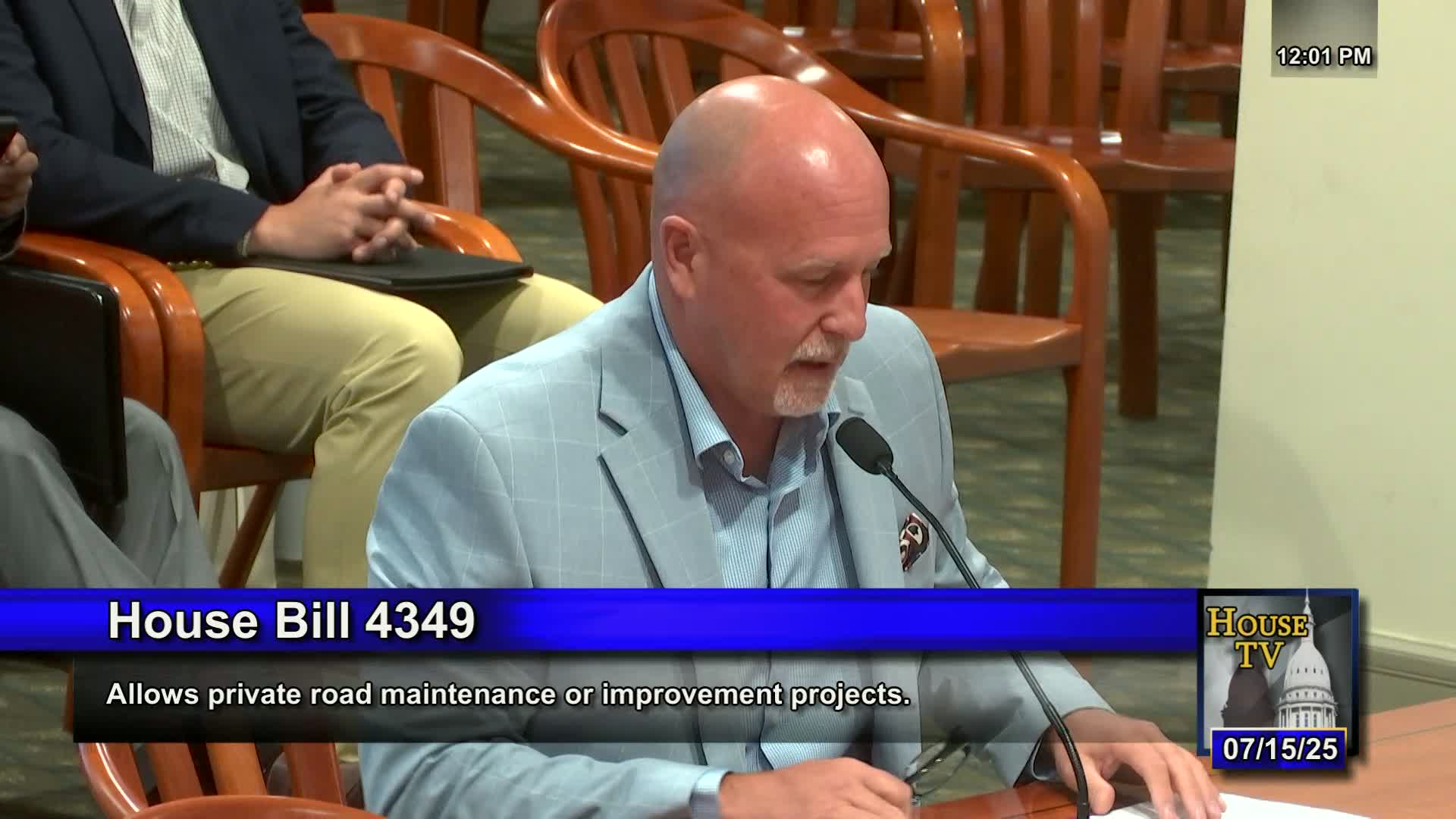
Representative J. DeBoer introduced House Bill 43‑349 to the House Transportation Infrastructure Committee, saying the bill would amend the Home Rule City Act to authorize cities to create special assessment districts for maintenance and improvement of private roads.
"Essentially, what it does is it amends the Home City Rule Act by granting cities the authority to issue a special assessment district for maintenance and improvement for private roads," Rep. J. DeBoer said. He told the committee the change is intended to allow city residents who live on private roads to finance repairs through annual assessments spread over up to 60 months.
Supporters and the sponsor framed the bill as aligning city authority with existing township powers under the Public Improvements Act (MCL 41.722). DeBoer noted that townships can form special assessment districts for private roads if a petition exceeds a 50% threshold of affected residents; the bill would allow cities to use the same mechanism.
During questioning, Representative Koontz asked whether assessments must be based strictly on frontage. DeBoer replied that the petition language would determine how costs are apportioned and that residents pursuing an assessment could specify apportionment in the petition; he reiterated the 50% petition threshold would still apply.
The committee did not take a formal vote on HB 43‑349 during the session. The bill was presented for committee consideration and members asked clarifying questions about petition mechanics and implementation.
Next steps: The committee took no recorded final action on the bill at this meeting; staff and members may request drafting clarifications or fiscal analyses before reconsideration.