Get Full Government Meeting Transcripts, Videos, & Alerts Forever!
Get email alerts on the Rezoning Meijer topic
No spam. Unsubscribe anytime.
Strongsville residents urge council to reject rezoning that would allow Meijer at Pearl and Rockland
Summary
Dozens of residents told the Strongsville City Council on Dec. 15 that rezoning parcels at Pearl and Rockland to allow a Meijer would worsen traffic, threaten nearby senior facilities and set a long-term land‑use precedent; council did not vote on the rezoning at this meeting.
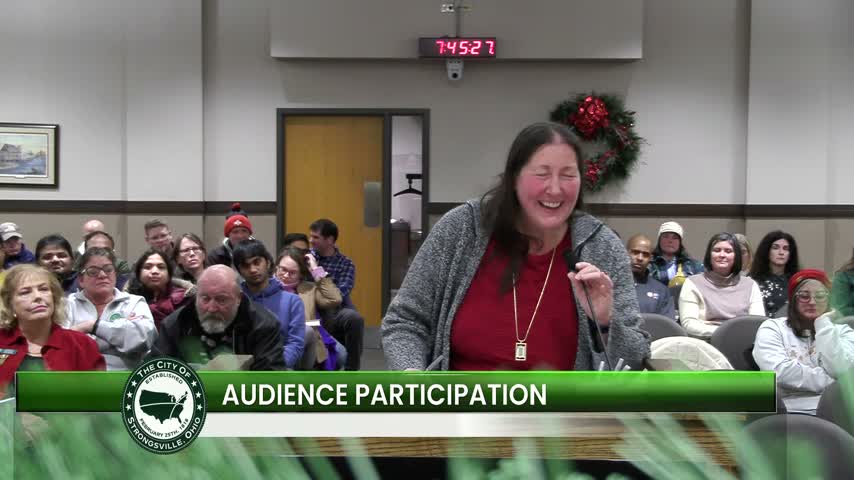
Dozens of residents addressed the Strongsville City Council on Dec. 15 urging a no vote on Ordinance 2025-0128, a proposed rezoning of parcels at Pearl Road and Rockland Drive to permit a large-format Meijer store.
At the meeting, Christa Heckman (20788 North Greystone Drive) told council, “I respectfully ask you tonight to vote no on the proposed rezoning of the property at Rockland and Pearl Road,” saying the site is already zoned commercial public facility and that adding a big-box store would exacerbate traffic and neighborhood impacts. Other neighbors raised similar points: concerns about increased delivery trucks, 6 a.m.–midnight operating hours, light and noise pollution near senior housing, and potential declines in property values.
Several speakers cited code and planning conflicts. Sydney Mertz reviewed zoning code provisions and asserted that a 75,000‑square‑foot store would fail to meet minimum zoning and parking requirements under Section 1240.02 and Section 1270.05, saying the submitted plan “shows significantly fewer” parking spaces than the code’s food‑store requirement. Steven McJunkins and others emphasized safety risks where the proposed access would intersect neighborhood streets and warned that neighborhood streets could be used as cut‑throughs.
Speakers also warned of long-term consequences if the council approves a rezoning. Shannon Murphy said rezoning is not tied to a single applicant and would “set a long lasting precedent for how Strongsville manages land use along one of its most important corridors.” Multiple residents noted that once zoning is changed, the land remains rezoned even if the original developer leaves.
Council did not act to approve rezoning at the Dec. 15 meeting; the public‑comment period concluded after residents’ five‑minute remarks. Several speakers asked council to require more detailed traffic and site analyses and to consider alternatives that better protect adjacent residential and institutional uses.
What happens next: The proposed rezoning and any required hearings remain on the administrative track; residents and council members will receive related submittals and code analyses before any final legislative action is taken.