Faith-based foster-placement bill draws sharp divisions over oversight and child safety
Loading...
Summary
House Bill 2241 would let certain faith-based, license-exempt residential providers register with a qualified association and a state-appointed oversight board to accept foster placements; proponents cited placement shortages and religious freedom, while child-welfare advocates warned the bill would weaken safeguards established after documented abuses.
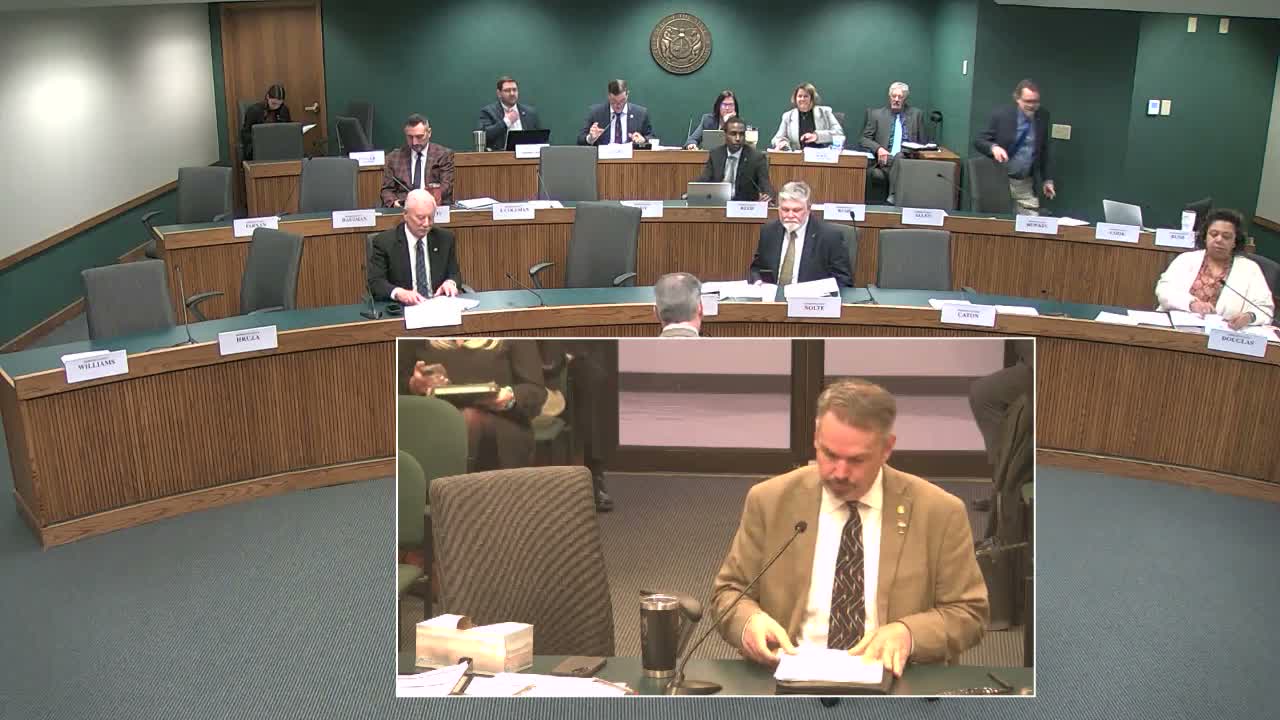
Representative Jamie Gregg introduced House Bill 2241 as an attempt to expand placement capacity for children in foster care by allowing qualified faith-based, license-exempt residential facilities to register with a qualified association and operate under a private accreditation-type oversight panel instead of full state licensure. "We have to make sure there's a good fence between the chickens and my dogs," Gregg said by way of analogy, emphasizing the need to build reliable oversight while partners help fill bed shortages.
Proponents including Chad Puckett, president of the Missouri Association of Christian Child Care Agencies (MACA), argued the bill provides an additional layer of protections while preserving religious mission and cited the recent state and federal initiatives to partner with faith-based providers. Puckett said MACA accreditation requires inspections, staffing disclosures, background checks, and that members generally waive government funding. Several witnesses with private agencies said their accreditation processes include detailed standards similar to licensure and that they would be willing to submit those standards to the Department of Social Services.
Opponents spoke strongly about child-protection risks. Jessica Seitz, executive director of the Missouri Network Against Child Abuse, urged the committee to reject HB 2241, saying it would shift oversight to provider-controlled bodies and weaken safeguards established in the 2021 Residential Care Facility Notification Act (House Bill 557). Forensic interviewer Ashley Belcher recounted patterns she saw in multiple forensic interviews with children previously placed in unregulated residential settings (for example, allegations of prolonged restraint, untreated injuries, and patterns of isolation) and argued independent external oversight is essential.
Personal testimony illustrated the split. Gracie Brodersen, who said she later lived at Show Me Christian Youth Home, described Show Me as life-changing and supportive; other witnesses recounted historic abuses in facilities such as Agape and Circle of Hope and said those events motivated the 2021 reforms. Committee members repeatedly asked whether existing state licensure could accommodate faith-based providers and probed why some organizations prefer to remain license-exempt; proponents cited conflicts with mission-based activities (such as mandated religious observance) as a principal barrier to full state licensure.
The hearing produced no immediate vote. Members emphasized the need to reconcile child-safety provisions, fiscal analyses for state placements, and the precise role of the proposed oversight board before further consideration.