
Committee hears divided views on HB 2353 to let licensed interior designers sign and seal nonstructural plans
Get AI-powered insights, summaries, and transcripts
Subscribe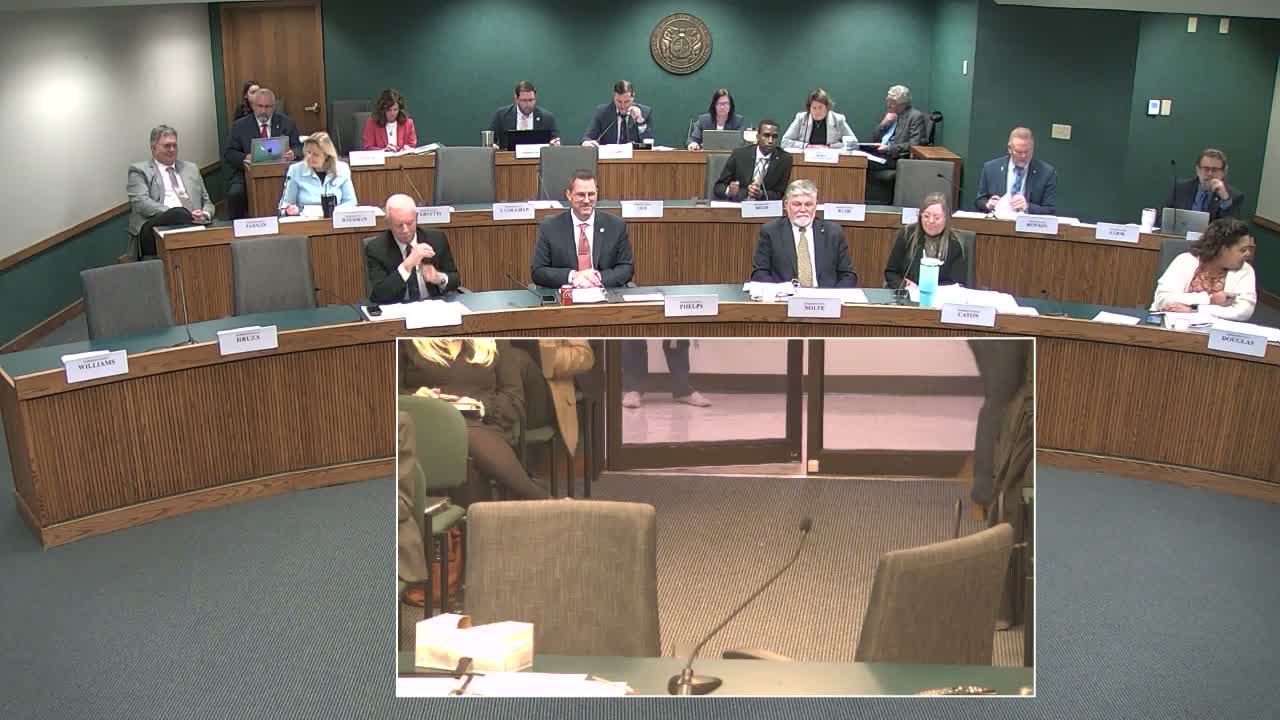
Summary
Supporters said HB 2353 modernizes regulation and gives qualified interior designers sign-and-seal authority for nonstructural projects; engineers and some architects warned ambiguous language ("all interior design") could create scope overlap and unintended fiscal consequences for public projects.
Representative Sherry Gallick (District 62) introduced House Bill 2353 to modernize Missouri's regulation of interior designers by moving licensed interior designers under the technical professional board (the Missouri Board of Architects, Professional Engineers, Professional Land Surveyors, and Professional Landscape Architects) and abolishing the separate Interior Design Council. "This bill modernizes that system," Gallick told the committee, adding the bill defines what licensed interior designers may and may not do.
Proponents from the design community said the measure protects public health and safety while removing an economic barrier. Kelly Kirtland, an NCIDQ-certified interior designer, said the bill "gives credibility to what interior designers do" and would let qualified designers sign and seal nonstructural commercial plans without hiring an architect to take legal responsibility for work they designed. Carrie Schutte, firm owner and registered interior designer, told members the proposal would reduce extra costs for consumers and allow firms to assume accountability for their drawings.
Students and educators also testified in support. Amani Vaughn, a junior interior design student at the University of Central Missouri, told the committee coursework includes building systems, fire-rated assemblies, and ADA standards, and that sign-and-seal authority would allow graduates to practice in Missouri.
Opponents, including the Missouri Society of Professional Engineers (MSPE), urged changes to specific statutory language. Mark Rhodes (MSPE) said the society "has no problem with licensing interior designers" but warned the bill's drafting could create overlapping responsibilities with architects and engineers; MSPE's written concerns and witnesses asked the committee to limit broad phrases such as "responsible charge of all interior design of buildings that can affect health, safety, and welfare." Engineers advocated replacing the word "all" with a narrower phrase such as "publicly occupied buildings" or restricting responsibility to drawings a designer actually stamps.
Committee members pressed sponsors and witnesses on technical drafting, fiscal notes and which agencies were consulted. Several witnesses said a Senate committee substitute and further negotiation may produce clarifying language; the chair asked the sponsor to return with a baseline document showing changes in redline for the committee's review.
No committee vote was taken; the hearing closed after multiple proponents and opponents had testified.