Get Full Government Meeting Transcripts, Videos, & Alerts Forever!
Get email alerts on the Landscaping Trees topic
No spam. Unsubscribe anytime.
Residents urge alternatives as Saginaw weighs medians, turf and removal of mature trees on McElroy
Summary
At an open house, residents pressed city staff about removal of mature trees for McElroy’s raised median and utility work; the city said some trees conflict with a main water line and pledged near-term replacements while soliciting public input on landscaping options (native plantings, artificial turf, stamped concrete).
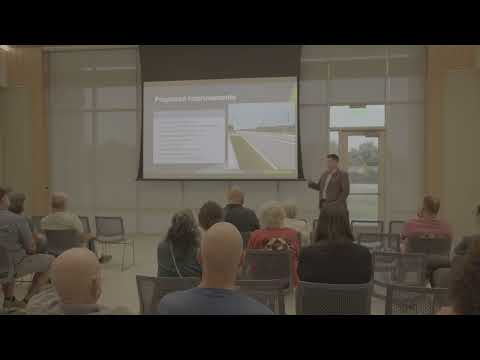
Residents at a Saginaw open house expressed concern about the planned removal of mature trees and asked the city to consider less-invasive median landscaping options as part of the McElroy Road Phase 3 design.
A resident said the presentation to council had noted "36 old grown trees have to be taken out." That same resident and others outlined specific clusters — "6 or 8 trees in front of the police department" and roughly 31 trees between Knowles and Roberts Drive — and urged the city to preserve large specimens when possible.
City Engineer Trenton Tidwell replied that some mature trees conflict with a large water main that runs under the corridor and with planned utility relocations. He said the city has revised its street-tree ordinance and is trying to plant trees with appropriate mature sizes; during the meeting staff said nearly 30 new trees are planned to be included in the project’s landscaping plan.
Tidwell presented multiple median treatment options and their trade-offs. Native-plant and low-irrigation options have lower ongoing maintenance but may look less tidy initially and attract weeds; pollinator-friendly native plantings reduce irrigation needs but can divide public opinion. Artificial turf was presented as an option with a manufacturer-claimed design life of 20–30 years and lower routine maintenance; the engineers said lifecycle breakeven versus irrigated bermuda could be on the order of 12 years depending on mowing and weed-control costs. Hardscape options such as colored stamped concrete are more expensive up front but have low ongoing maintenance; residents and council members asked about repairability if road repairs or utility cuts are required later.
Residents also raised safety and visibility issues: one attendee said same-color concrete medians and lanes can be difficult to see at night; Tidwell said the city will use pavement markings, contrasting materials or beacons where warranted and will follow state and local requirements for pedestrian beacons and button placements.
No final design decision was made at the open house; the city collected sticker votes and comment cards to guide a recommendation that will return to council for final approvals. Tidwell invited people to continue one-on-one conversations at the display boards and to leave written comments.
The next procedural steps are completing design by year-end, soliciting bids early next year and then returning to council for contract approval and final landscaping selections.