
Liquor enforcement presents revised tobacco licensing/seizure emergency rule; committee secures reporting change for retailers
Get AI-powered insights, summaries, and transcripts
Subscribe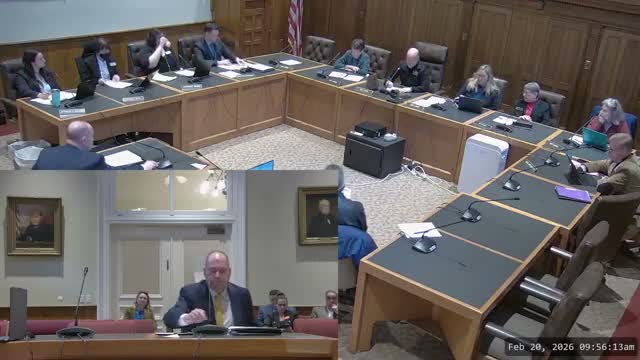
Summary
Chief Mark Armaganian of liquor enforcement presented emergency tobacco licensing and seizure rules tied to a transfer of vaping‑store licensing; the committee objected to proposed monthly retailer reporting down to cigarette counts and the chief agreed to a rolling quarterly schedule for retailers while keeping manufacturers/wholesalers on monthly reporting.
The Rules Committee considered emergency rule 14,515 from the Department of Liquor (Liquor Enforcement Licensing) that implements licensing and seizure provisions connected to transferring vaping‑store licensing to liquor enforcement under last year's Senate Bill 80. Chief Mark Armaganian, director of liquor enforcement licensing, said the consolidation required extensive rule changes and a total rebuild of licensing and tax collection processes.
Armaganian told the committee the administration has worked closely with industry partners and that reforms were necessary to fix deficiencies in tax collection and process. He acknowledged the filing had a reporting requirement that would have required 1,500 licensees to submit monthly reports down to the cigarette level, which the chair and committee found burdensome. "I convinced the chief instead to do it on a rolling quarterly basis," the chair said, describing a compromise in which roughly 500 retailers would report each month on a rotating quarterly schedule; manufacturers and wholesalers — the taxable persons — would remain on a monthly schedule so the state can preserve tax collection.
Committee members also urged the department to include the standard appendix and specific RSA citations in the emergency filing; one member said the appendix was missing from the initial submission and volunteered to share suggested RSA references. The chief said the department would present a modified version of the rule that replaces the last two pages of the original form and includes the requested clarifications.
The committee did not adopt the original emergency filing at this meeting; instead, members discussed the process for repealing and readopting emergency rules where necessary and signaled support for a revised filing that reduces the burden on small retailers while preserving monthly reporting for manufacturers and wholesalers.