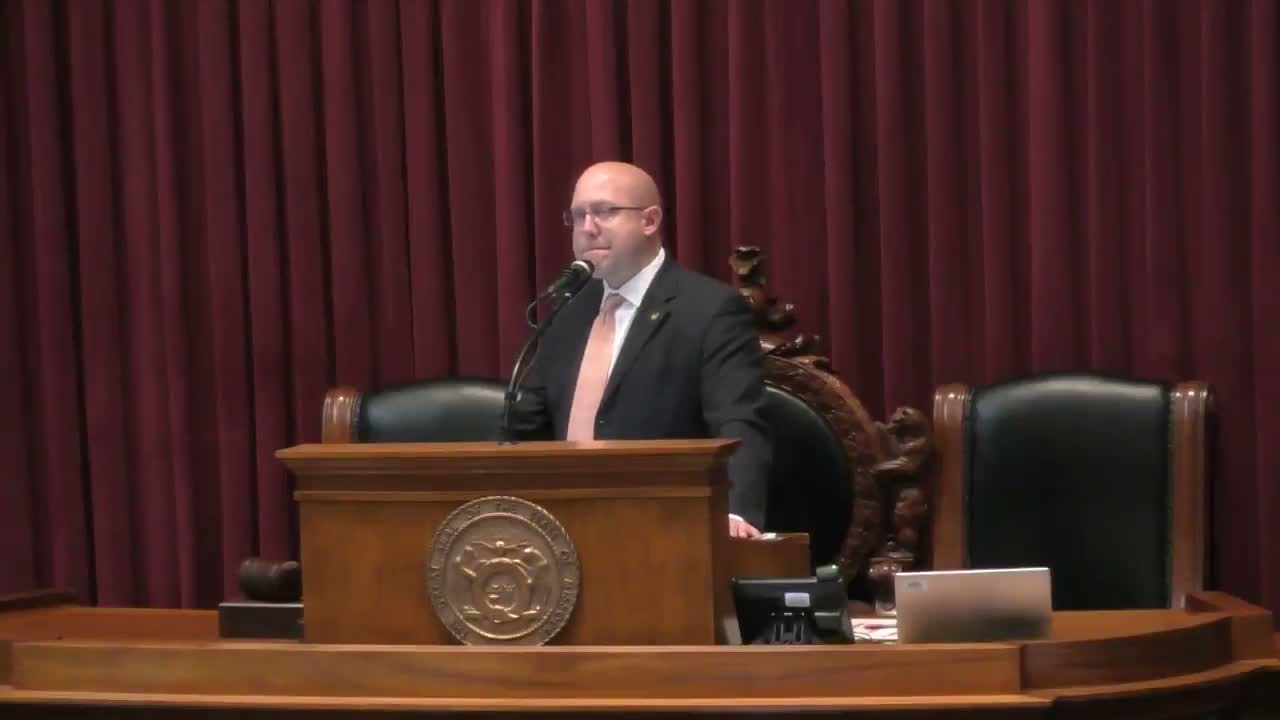
House approves sentencing "truth-in-sentencing" measures after debate over mandatory minimums
Loading...
Summary
Lawmakers passed House Committee Substitute for HB 2637 and HB 3155 to clarify and standardize how much time offenders must serve before parole eligibility; supporters called it transparency, critics said it increases mandatory minimums and expands dangerous-felony definitions.
The House voted on and passed a set of measures (House Committee Substitute for HB 26 37 and HB 31 55) described by the sponsor as providing "truth in sentencing" and clearer guidance about how long offenders must serve before parole eligibility.
Sponsor remarks emphasized transparency for victims and communities, saying courtroom participants should know the minimum time an offender must serve and whether credit for time served applies; proponents included law enforcement and some prosecutors (SEG 1972–1981, SEG 2130–2135).
Opponents said the change functions as an increase in mandatory minimum time served, moving some offenses from roughly 15% credit to 25% and expanding the definition of "dangerous felony" in ways that would increase incarceration lengths for nonviolent and lower-grade offenses. Members warned of mass-incarceration and fiscal impacts for the state and asked for carve-outs for lower-grade offenses (SEG 2003–2024; SEG 2141–2150).
The House recorded passage (tally reported 102 yea, 45 nay, 2 present). Sponsors said the bill clarifies credit-for-time-served rules, including for certified youth time, and intends to give victims clearer expectations about when offenders may first be eligible for parole.
What's next: The bills will be transmitted to the Senate. Members flagged potential downstream effects on Department of Corrections population and costs; questions remain about specific sentence adjustments and which offense classes are most affected.