
Committee reviews bill to expand master agreements and raise procurement thresholds for small design and maintenance projects (House Bill 2906)
Get AI-powered insights, summaries, and transcripts
Subscribe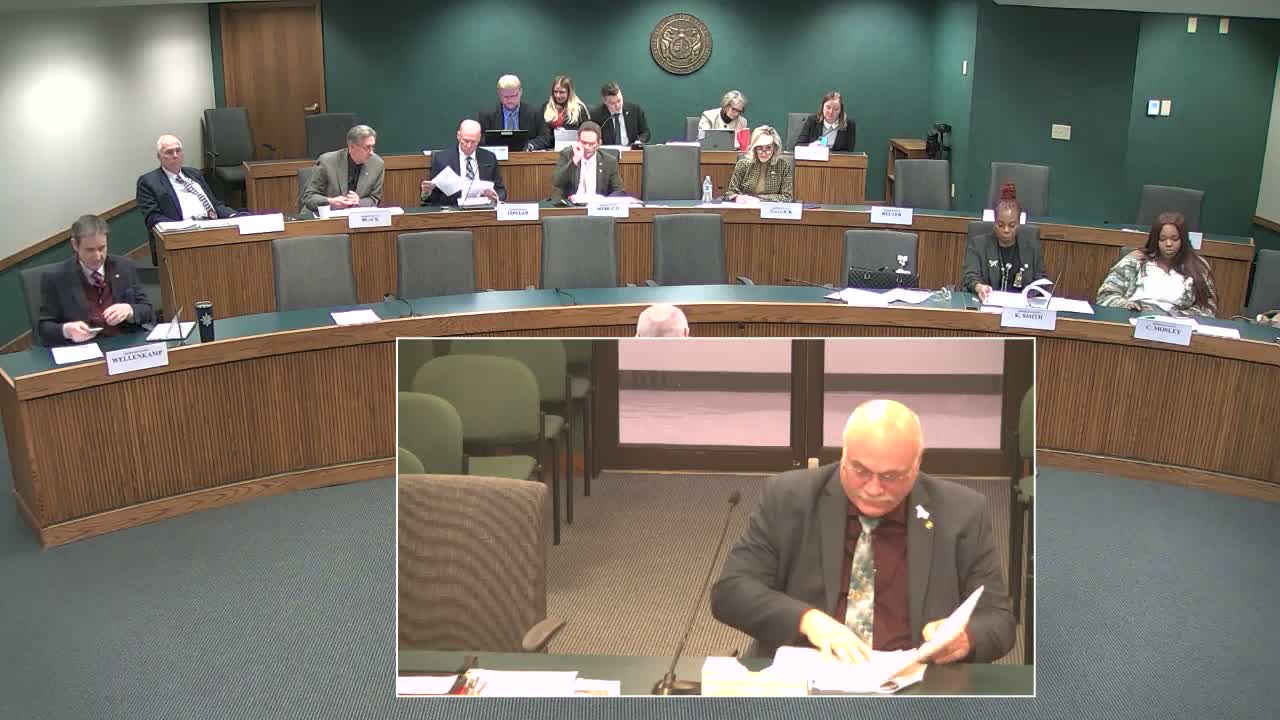
Summary
House Bill 2906, presented by Representative Don Mayhew, would increase dollar thresholds for standing contracts and authorize "master agreements" so the Office of Administration can prequalify architecture, engineering and surveying services and aggregate small projects for efficiency; OA and industry groups testified in support.
Representative Don Mayhew described House Bill 2906 as an efficiency measure to update dollar thresholds and allow the Office of Administration to establish master agreements for architecture, engineering and land surveying services so the state would not have to run an RFQ for every small project. "This allows for the office of administration to contract with a provider or providers without having to go through the RFP process," Mayhew told the committee.
Mayhew and committee members used a "bullpen" analogy to explain the master-agreement approach: prequalify firms through a qualifications-based process, then select from that list for individual project task orders. Members discussed details including limits per project, aggregate caps per master agreement (one exchange referenced a $1,000,000-per-year cap per master agreement), and whether master agreements would lock out competition. Mayhew said projects would still be subject to oversight and standard quality-based selection criteria.
Hannah Swan (OA) testified that OA currently has standing contracts for narrowly defined maintenance and repair services but lacks authority to set up standing qualification-based contracts for architecture and engineering; OA requested adjusted dollar limits to keep pace with inflation and reduce administrative delay. Mark Rhodes of the American Council of Engineering Companies of Missouri testified in favor, calling the bill "a good government efficiency bill" and offering additional materials on qualifications-based selection (QBS).
Committee members sought clarity on fee structures under master agreements (flat fee vs. hourly), how per-project caps would interact with proposed increased thresholds, and how to prevent favoritism; sponsors said the statutory selection process and oversight remain in place.
The hearing concluded with no opposing witnesses and no committee action recorded.