
Missouri committee hears proposal to put state property-sale proceeds into a dedicated real-estate fund (House Bill 2289)
Get AI-powered insights, summaries, and transcripts
Subscribe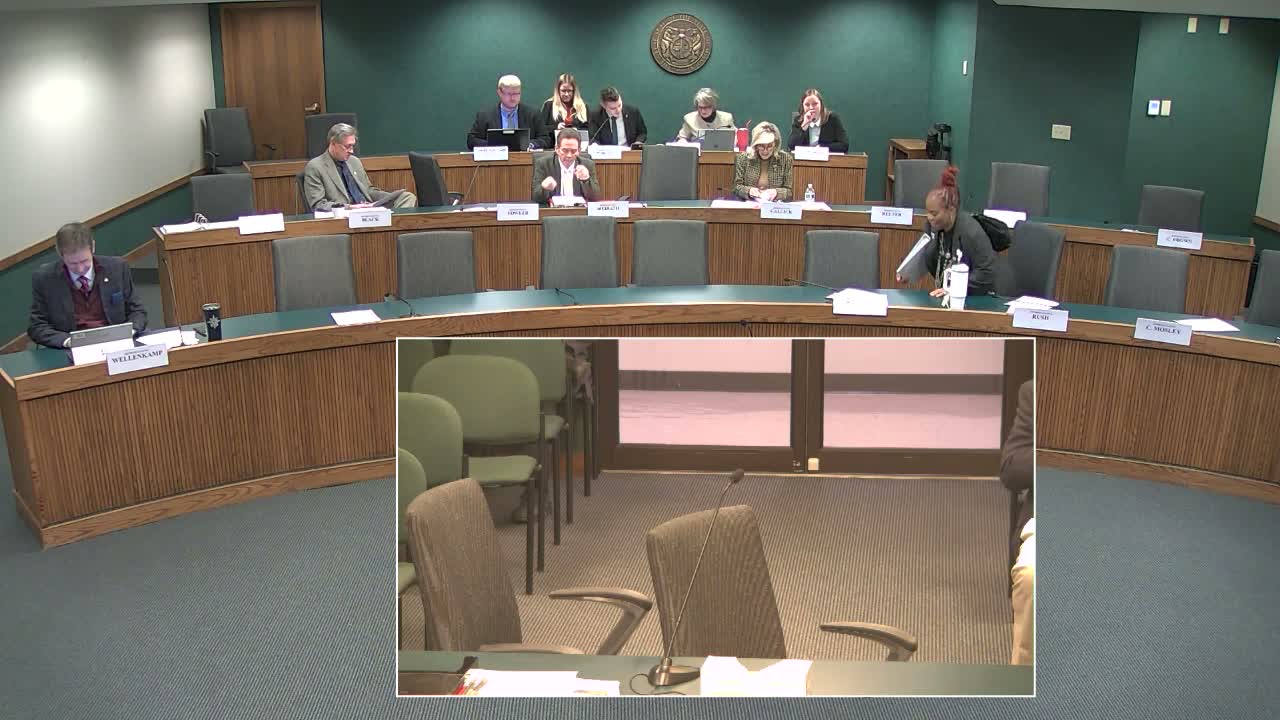
Summary
Representative Bill Owen told the committee HB 2289 would create a fund to hold proceeds from sales of state-owned property so the Office of Administration can buy and sell state real estate more quickly; OA staff said the current year-long appropriation process causes the state to lose potential acquisitions.
Representative Bill Owen (R.), sponsor of House Bill 2289, told the Special Committee on Intergovernmental Affairs that the state's current process for buying and selling real property is "cumbersome" and often prevents timely purchases. "The process that the State has currently for the buying and selling of real property is cumbersome at best and it makes it very hard for the state to, in a timely fashion, buy and sell real estate," Owen said at the committee hearing.
Owen said the bill would create a designated fund into which proceeds from sales of state-owned real estate could be deposited and held for reinvestment in state property. He said the goal is to "move more nimbly" so the Office of Administration (OA) could consolidate locations, reduce leasing costs and acquire properties that meet agency needs.
Hannah Swan of the Office of Administration told the committee the practical problem the bill intends to solve: the state often must wait roughly a year for an appropriation to buy property, by which time a deal can dissolve. "Right now, we have to go through a year long process to get an appropriation to be able to move on that," Swan said. She said OA seeks authority to deposit proceeds from sales into a fund and to obtain standing appropriation authority to make timely purchases.
Committee members pressed on limits and fiscal details. Representative Washmore asked whether the proposal would "handcuff" proceeds by restricting them to real estate when the state faces tight budgets; Owen replied the fund is intended to preserve flexibility for OA to manage the state's property portfolio and avoid recurring lease payments. Swan said the filed language would not strictly require every sale's proceeds to go into the fund and that the agency anticipates a committee substitute with clarifying exclusions for properties managed by conservation or parks.
Members noted a lack of a fiscal note and asked about investment risk. Swan said invested proceeds would not have to be placed solely in equities: "you can get into fixed instruments, you can get into treasuries, you can get into agency securities," and that the treasurer would oversee investments. Committee members also asked how often monies would be available for acquisition; a committee exchange indicated periodic availability rather than immediate unlimited withdrawal.
No witnesses testified in support or opposition outside OA, and the committee concluded the public hearing with no formal action taken.
Next steps: the committee may consider a house committee substitute and requests for a fiscal note before advancing language to the floor.