
House approves committee substitute for 'Taxpayer Protection Act' after lengthy debate
Get AI-powered insights, summaries, and transcripts
Subscribe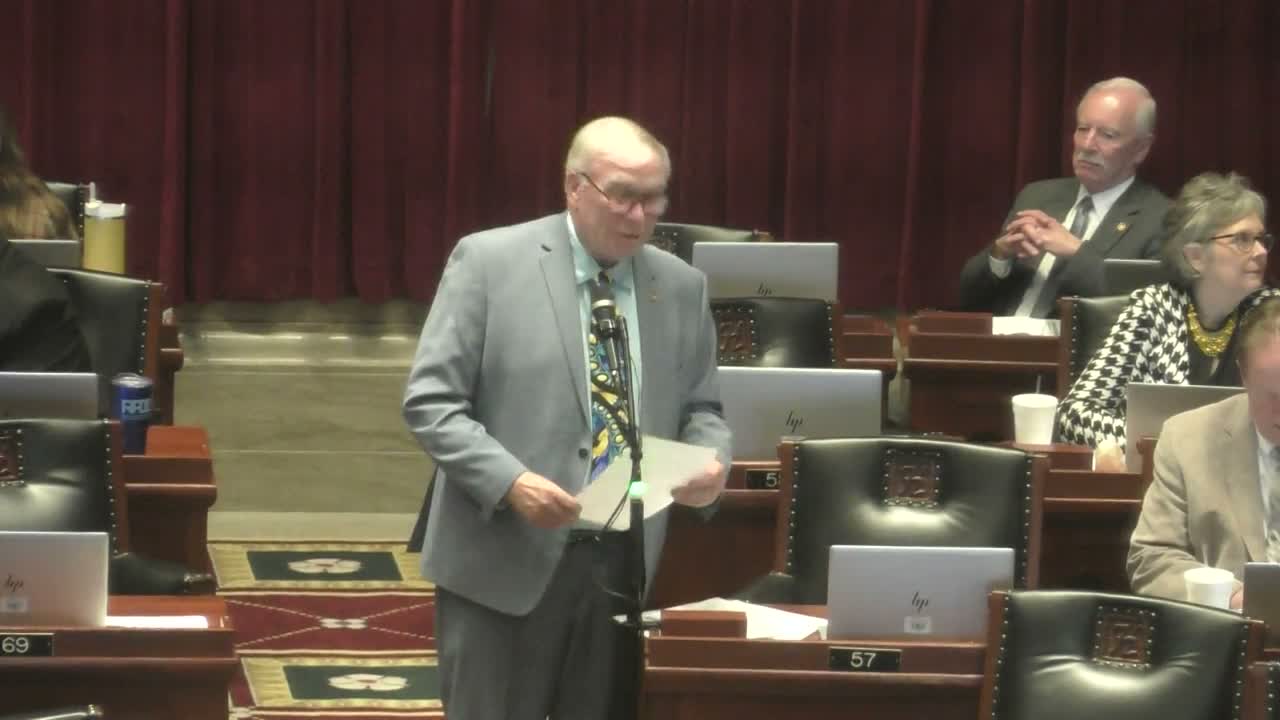
Summary
Lawmakers adopted a committee substitute for House Joint Resolution 169 proposing a TABOR-style constitutional measure to cap state and local spending growth at inflation plus population growth and require voter approval for increases. Supporters said it reins in government; opponents warned it could constrain local services and hurt schools.
Jefferson City — The Missouri House on Feb. 24 approved a committee substitute for House Joint Resolution 169, a voter-bound measure dubbed the "Taxpayer Protection Act," which would limit state and local fiscal-year spending to the prior year plus inflation and population growth and require voter approval for increases beyond that baseline.
"Government has to live within its means," the gentleman from Saint Louis County, sponsor of the substitute, said on the floor and described the proposal as a way to give taxpayers a voice and rein in unchecked spending. He said the proposed baseline would allow growth for inflation and population and would permit voter-approved levies or bonds to reset local baselines.
Supporters compared the plan to long-standing measures elsewhere and said it would restore fiscal discipline. "Had we done this earlier," the sponsor suggested, "we would have saved substantial sums over decades," citing an analysis tied to Colorado's experience.
Opponents raised concerns about local control and practical impacts. Members asked how the measure would affect federal pass-through funds, special districts and school funding when state support changes. Several members cited Colorado's experience, warning of declines in specific public services and education funding if the baseline is set too low; the sponsor said the resolution includes mechanisms to correct flaws and that the legislature could later adjust statutory details.
The House moved the previous question and carried it by a roll-call tally of 82 yeas to 43 nays, then adopted the committee substitute and ordered the substitute perfected and printed. The resolution now moves through constitutional-amendment procedures and would ultimately require voter approval to take effect.
Next steps: If the resolution continues to advance, it will be placed on a statewide ballot for voters to approve or reject.