
Missouri House adopts substitute to extend free-speech protections for K–12 student political, ideological clubs
Get AI-powered insights, summaries, and transcripts
Subscribe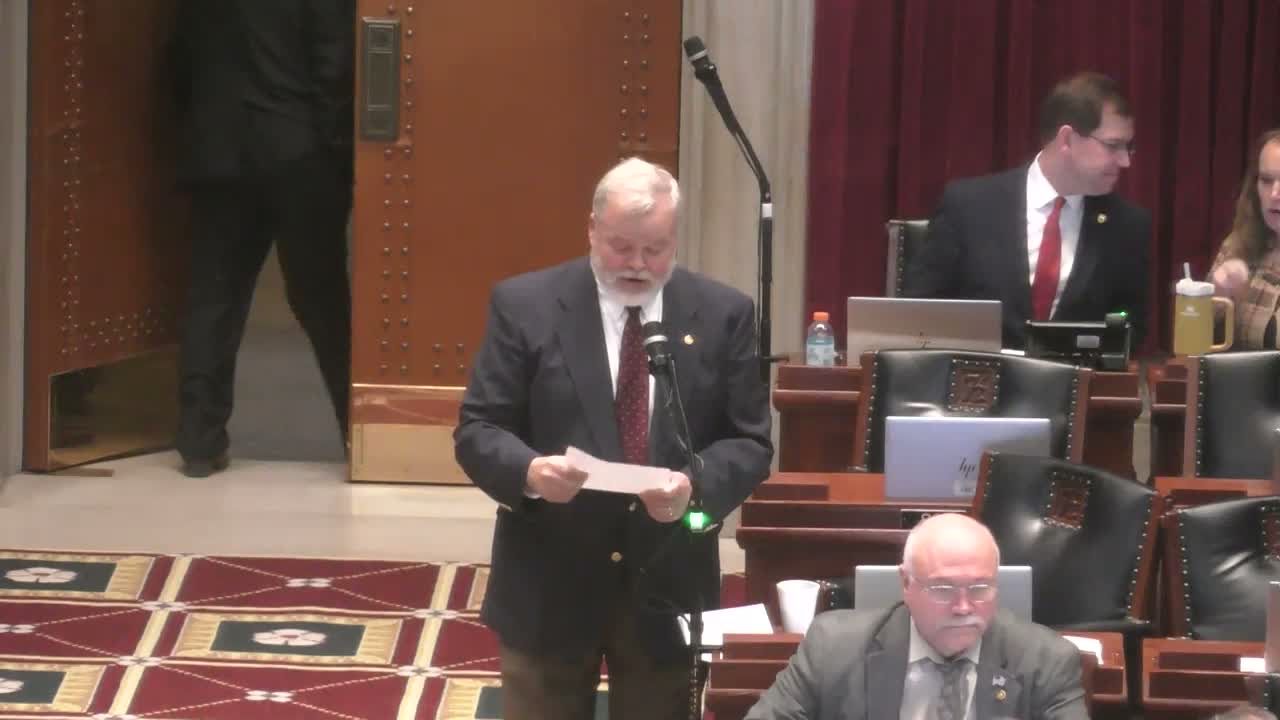
Summary
The House adopted a committee substitute for House Bill 26 82 to extend First Amendment protections for political and ideological speech to K–12 public school students while retaining guardrails for disruptive or unlawful conduct. Supporters said courts have already held students do not lose First Amendment rights at school; opponents warned it could protect hate groups and complicate school discipline.
Jefferson City — The Missouri House on Feb. 24 adopted a committee substitute for House Bill 26 82 to recognize political and ideological speech rights for students in K–12 public schools, the sponsor said, while preserving existing limits on disruptive or unlawful conduct.
"We don't want anybody harming anybody, and we don't want anybody disrupting the educational process," the gentleman from Greene County, the bill sponsor, said in remarks explaining the substitute. "The answer to bad speech is more speech." He said the measure mirrors a higher-education law passed last year and would put the same protections in statute for younger students.
Supporters said the bill codifies established First Amendment principles in state law and gives parents a remedy when a school interferes. "The state waives immunity and consents to be sued in federal court for claims relating to public schools arising under this section," the sponsor said, describing a provision that removes sovereign immunity and allows parents to seek judgment if a school violates a student's rights.
Opponents pressed the sponsor on practical effects and edge cases. "So this bill would protect Nazi student clubs?" asked a representative during questioning; the sponsor replied the law protects speech equally and suggested that extreme views would be countered by more speech in schools. Other members raised concerns the bill's broad "ideology" definition could permit hateful or bullying speech and that captive student audiences make schools a different environment from college campuses.
Lawmakers also questioned penalty and enforcement provisions. One member asked who would determine when speech "could lead to intimate, lawless actions" and how administrators would apply the standards. The sponsor said the exception tracks long-standing First Amendment doctrine (for example, the restriction on falsely shouting "fire" in a crowded theater) and that administrators and courts would be involved where speech crosses into unlawful conduct.
The substitute was adopted on the floor after extended debate. The House agreed to the committee substitute and ordered it perfected and printed; the sponsor renewed his motion and the body adopted the measure by voice vote.
Next steps: The committee substitute will proceed through the legislative process for further consideration and must be reconciled with the Senate if passed there.