Alaska Miners Association tells Legislature mining pipeline is growing but faces workforce and permitting bottlenecks
Loading...
Summary
The Alaska Miners Association told the Senate Resources Committee the state’s mining pipeline is the strongest in decades, citing 12,400 industry jobs and new federal permitting coordination (FAST‑41), but speakers warned of workforce shortages, demographic headwinds and the need for state data and capacity investments.
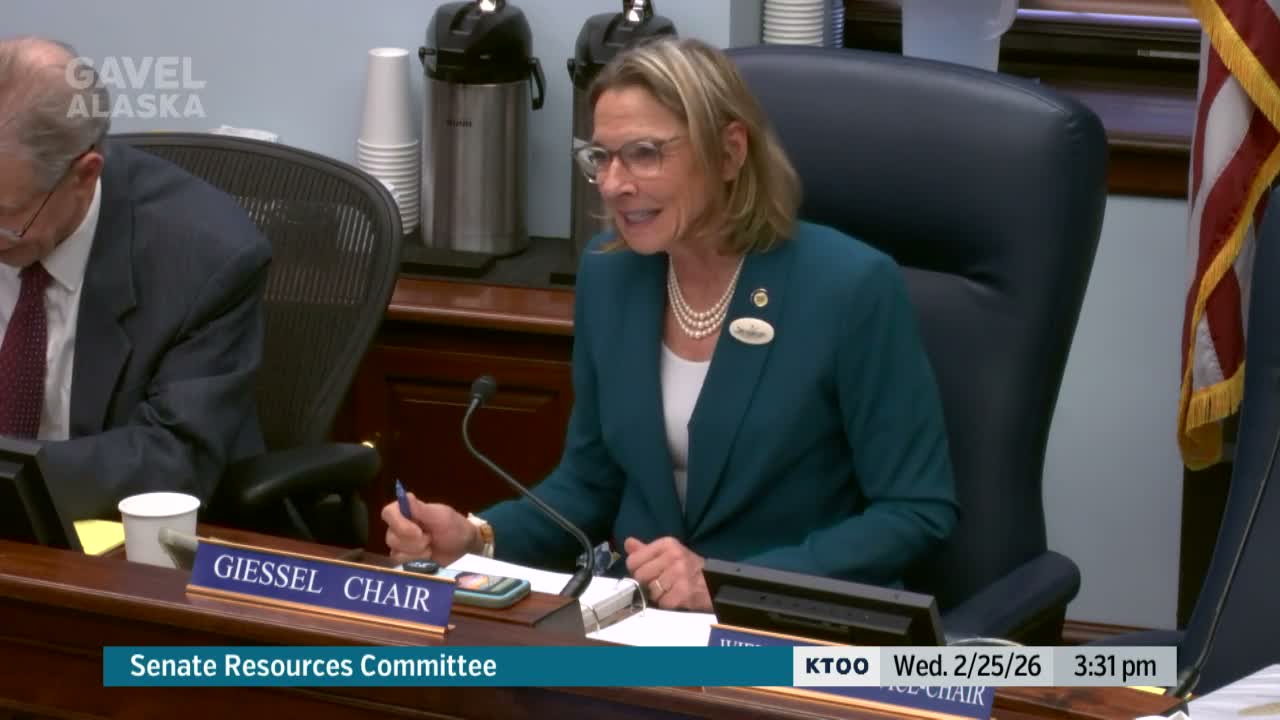
Deantha (Dantha) Skovinski, executive director of the Alaska Miners Association, told the Senate Resources Committee on Feb. 25 that Alaska’s mining industry is entering a structural shift driven by federal and state policy changes and rising national demand for critical minerals. "We are looking at one of the strongest development pipelines Alaska has had in decades," she said, citing an updated industry map that shows more active exploration projects in 2026 than in 2024.
The association presented economic figures from a contracted McKinley Research Group study: 12,400 jobs attributed to mining statewide with an average wage of about $122,000; roughly $92,000,000 in state revenue and $47,000,000 to local governments in the previous year; and approximately $240,000,000 paid to Alaska Native corporations last year, with ANCSA revenues totaling about $3.6 billion since 1989. Skovinski directed senators to the full McKinley report in the committee packet for details.
Industry witnesses — including Mike Satri of Hecla Mining and Dave Larimer of Contango — emphasized that permitting remains a major timeline risk and highlighted the Federal Permitting Improvement Steering Council process known as FAST‑41. They said mining was added to FAST‑41 in 2021 and that projects that meet NEPA requirements and a high-investment threshold can be placed on a public permitting dashboard with agreed timetables and dispute-resolution tools. "We were able to get a notice of decision six months later," a presenter said citing a Greens Creek surface‑exploration example that followed FAST‑41 listing, which the industry credited with reducing uncertainty and enabling additional exploration spending.
Committee members pressed industry witnesses on workforce trends. Senators noted an increasing share of nonresident employees in metal mining (reported in the residency data as about 44.2% nonresident in the most recent report). Industry witnesses attributed the trend to Alaska’s stagnant or declining population and an aging workforce, and described industry investments in training, university partnerships and regional workforce programs to recruit and retain local workers.
On environmental performance, AMA representatives said modern mines operate under strict, continuing oversight, including state-required reclamation plans and financial assurances, and cited recent reclamation sign‑offs (Grama Mine, Poker Flats, True North) as examples. AMA recommended state actions including protecting technical staffing levels in agencies, clarifying jurisdictional controls, aligning state permitting processes with federal timelines such as FAST‑41, and creating a state geologic data repository to prevent loss of exploration data and reduce duplicative surveys.
The meeting record includes questions about the Pebble Project litigation; AMA described a recent Department of Justice filing defending EPA action and characterized that litigation as part of the permitting phase rather than a settled outcome.
The committee did not take formal action on policy during the session; presenters asked for continued engagement with legislators on capacity, data and permitting reforms.