
Senate panel adopts substitute for bill to speed removal of unauthorized occupants, sets it aside for more review
Get AI-powered insights, summaries, and transcripts
Subscribe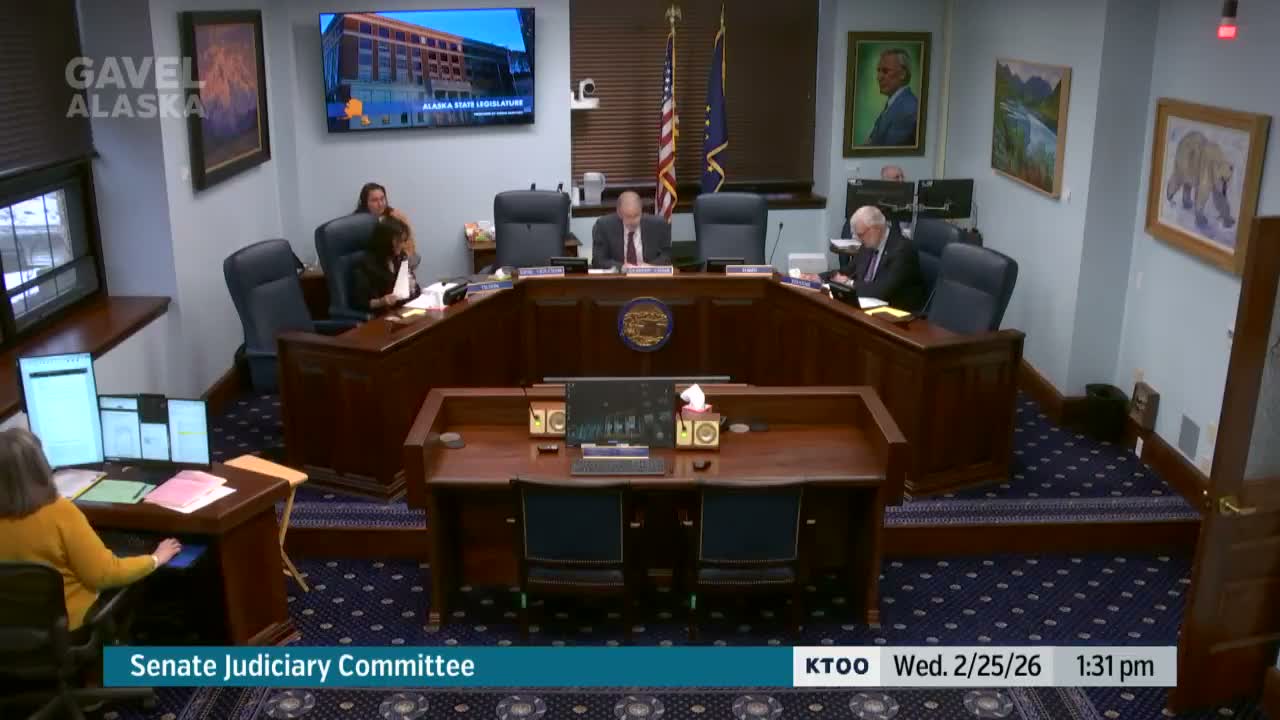
Summary
The Senate Judiciary Committee adopted a committee substitute for SB 207, which would create an expedited process for owners to seek law-enforcement help removing unauthorized occupants and raises certain damage thresholds and criminal classifications; the committee then set the bill aside for further review.
The Senate Judiciary Committee on Feb. 25 adopted a committee substitute as its working document for Senate Bill 207, which would establish an expedited process allowing property owners to request law-enforcement assistance to remove unauthorized occupants.
Sponsor staffer Matt Churchill told the committee the bill "aims to establish a process that allows property owners to seek prompt enforcement assistance in removing unlawful occupants," including authorization for officers to serve an immediate notice to vacate when statutory criteria are met. The draft requires an owner to attest under penalty of perjury that the occupant had no rental agreement or ownership interest and is not an immediate family member, and it creates liability for owners who wrongfully use the process.
Committee aide Brianna Kukaruk summarized the committee substitute’s substantive changes from version A to version N: it replaces a previously proposed Class B felony with a Class C felony in section 2, lowers a monetary threshold from $1,000 to $750, removes section 8 entirely, and conforms section 10 to reflect the removal. Kukaruk said, "we replace class b felony with class c felony" as part of that summary.
Realtors and property managers who testified supported the bill as narrowing a gap in current law that can require lengthy, expensive civil proceedings. Deborah Hensley, a realtor and trustee with Alaska RPAC, said she has seen situations in which owners faced large repair bills; "there was $100,000 in damage done to the property," she said, describing one case where handlers removed copper piping and keys and required major repairs. Charlene Aronson, an associate broker from Southeast Alaska, urged the committee to advance the bill to give remote property owners a practical tool to protect investments and to require officer verification before action is taken.
Committee members raised drafting and liability questions. Senator Tilton asked whether subsection 6 could unintentionally sweep in realtors who are victims of fraud; Nancy May, identified as general counsel for the Alaska court system, advised the committee to consider whether a specific mens rea term such as "knowingly" should be inserted or whether Title 11 mens rea provisions already supply the required mental state for deceptive-business-practice allegations.
Members also probed how the bill treats personal property left on-site, cleanup costs and whether civil-storage or abandoned-property rules apply. Sponsor staff said the draft cross-references landlord-tenant abandoned-property provisions and contains language limiting owner/agent liability for loss or damage resulting from a lawful removal, and that significant damage could trigger criminal trespass charges under the draft’s damage threshold.
Fiscal and operational questions remained. Senators referenced inconsistent fiscal notes: some agencies reported no fiscal impact while Department of Law figures suggested roughly 300 referrals. DPS representatives said criminal calls would take priority and acknowledged they do not currently have an invoicing system in place to collect the reasonable-fee receipts contemplated in the draft; they offered to provide follow-up information from their finance director.
After testimony and questioning, the committee agreed to set SB 207 aside for further review rather than moving it forward that day. No roll-call vote was recorded on the adoption of the committee substitute; the chair announced it had been adopted by unanimous consent and the bill was placed on hold pending further staff work and follow-up on drafting and fiscal questions.